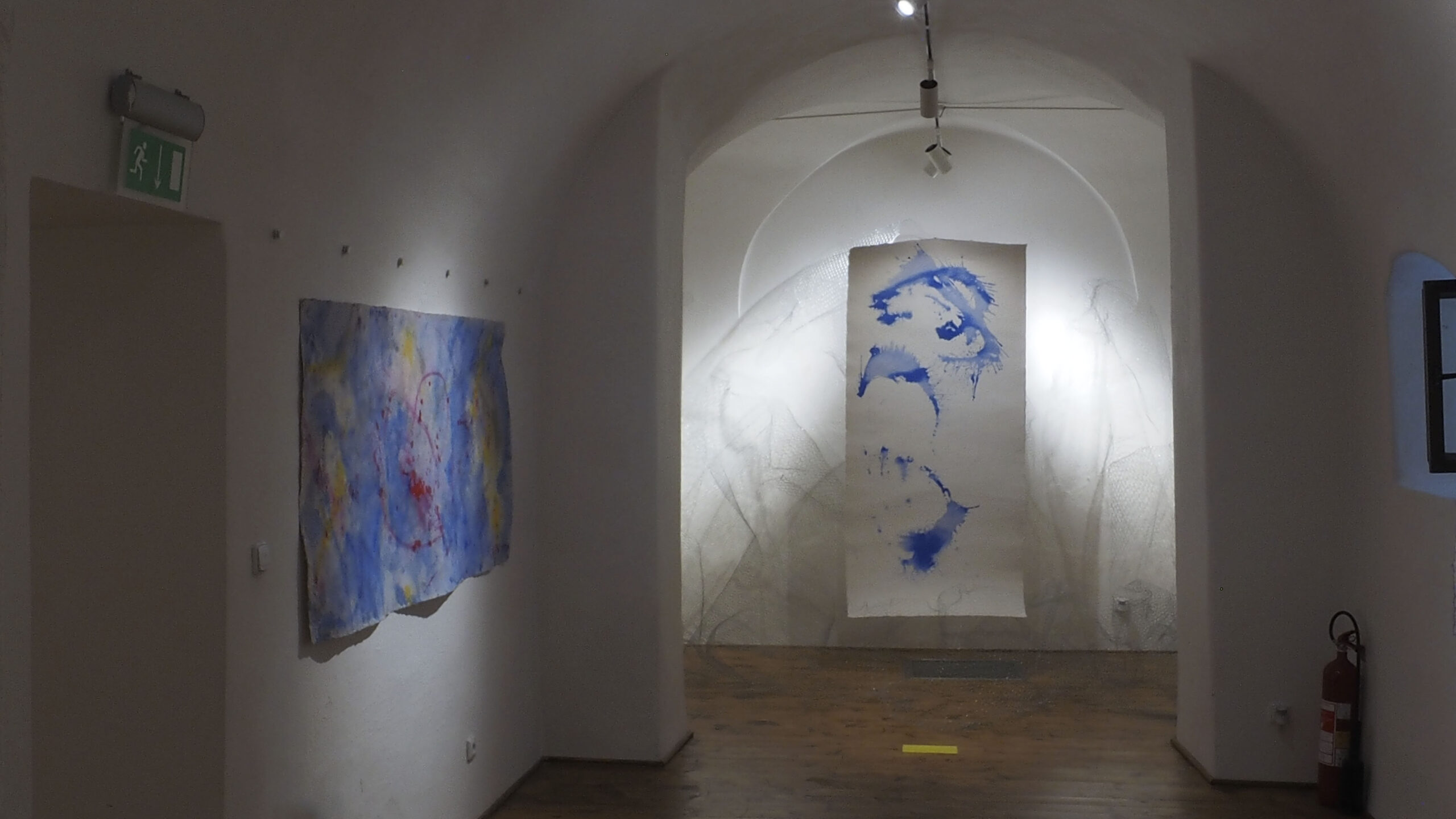
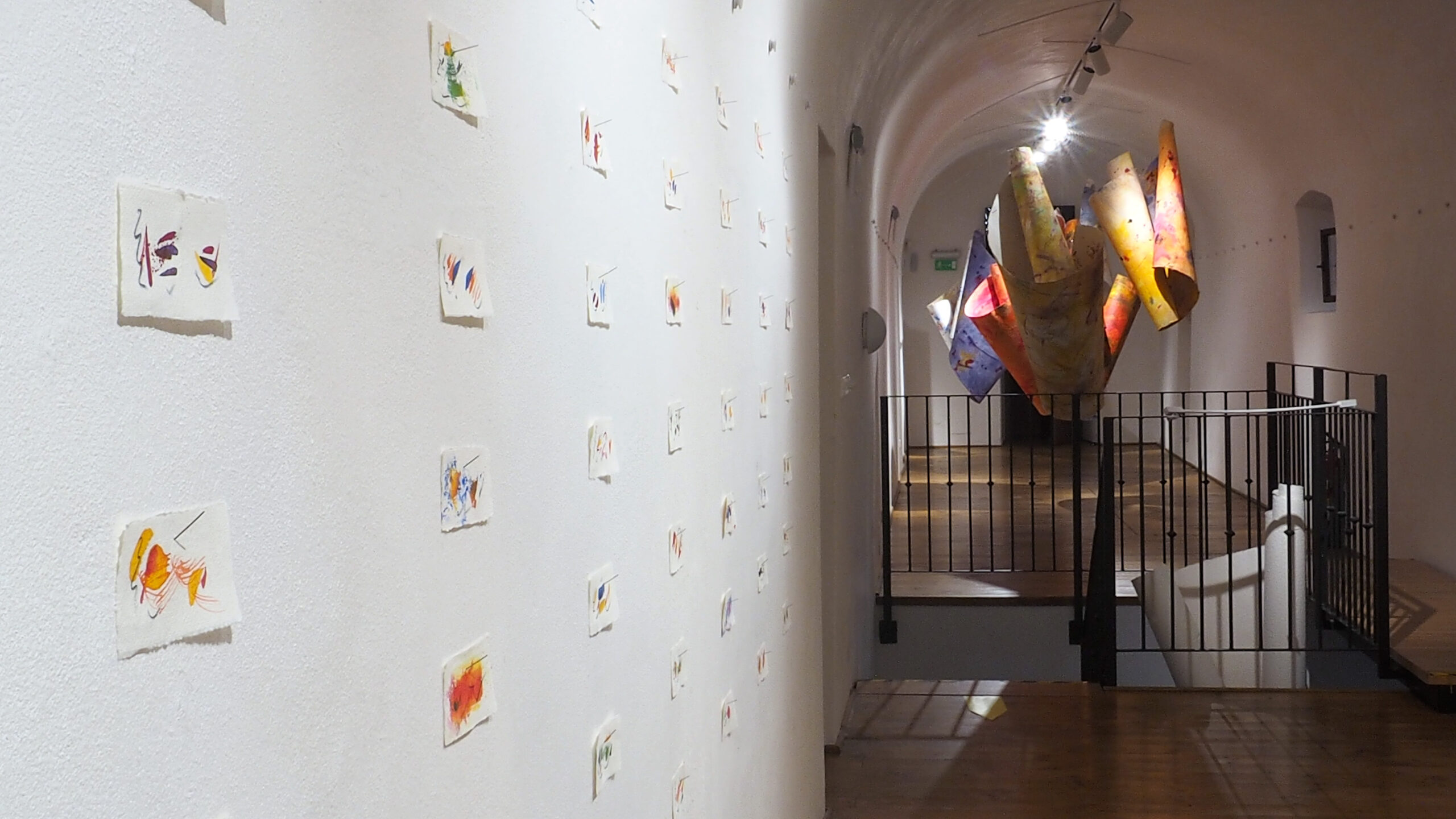
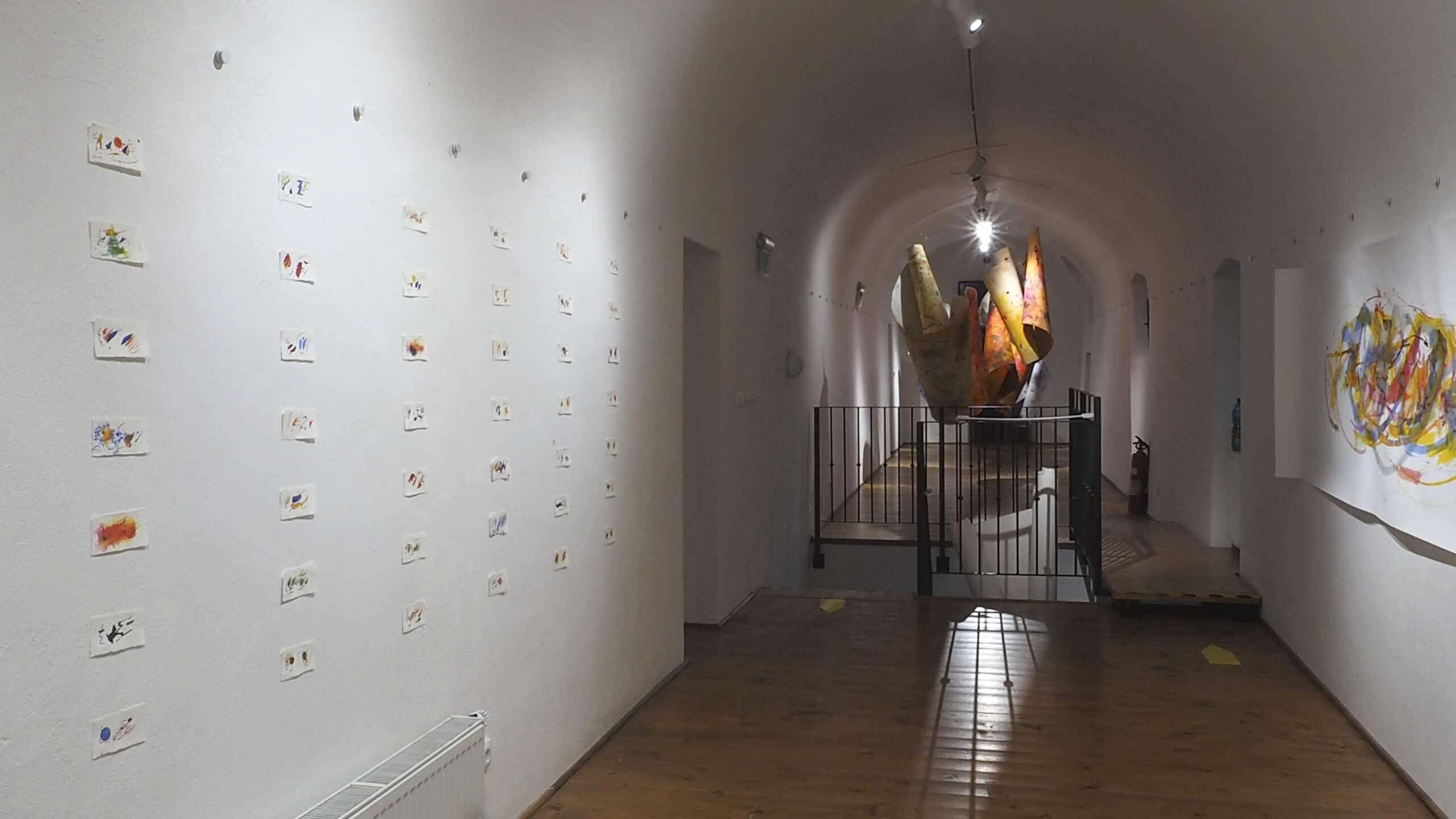
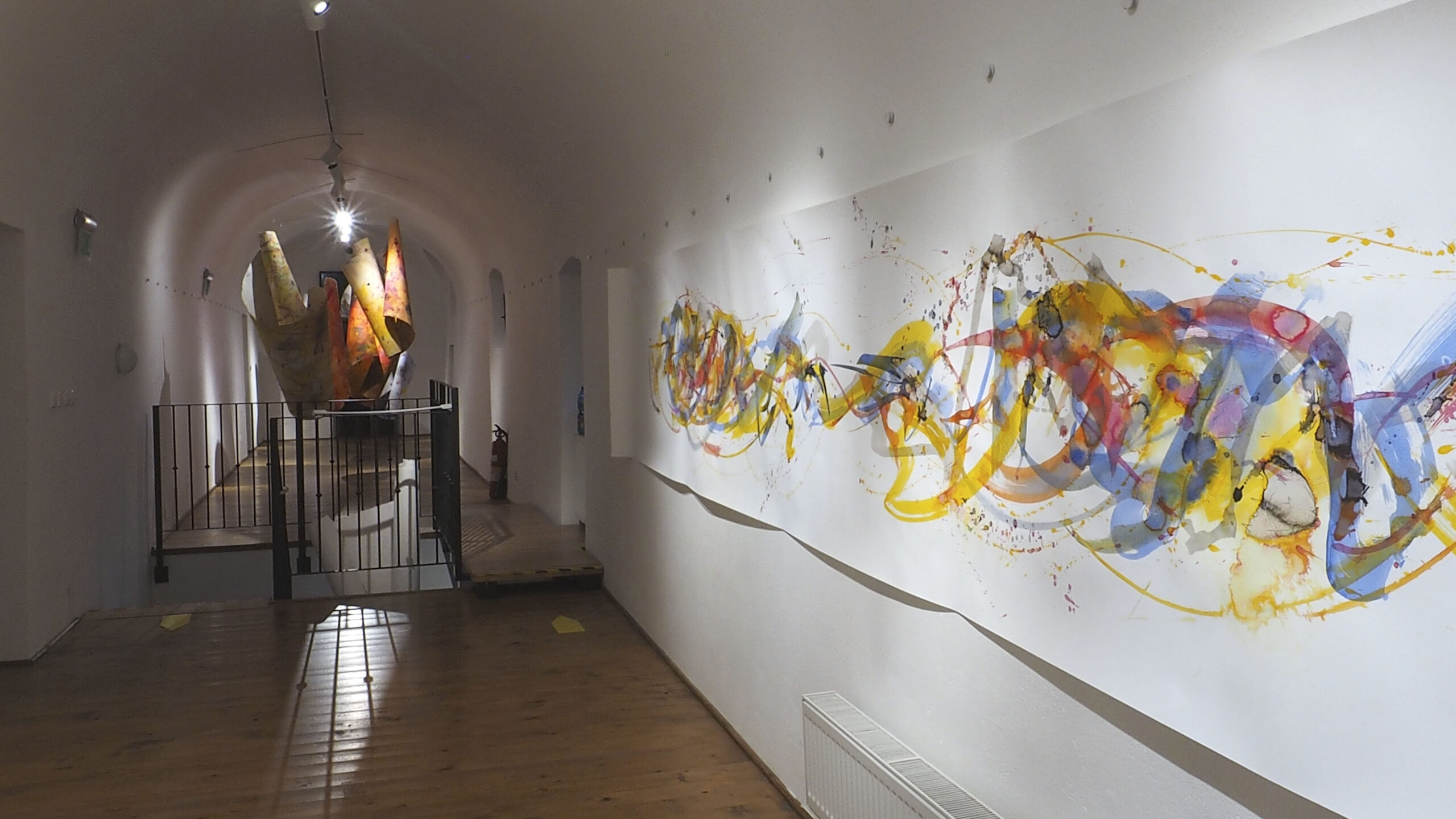
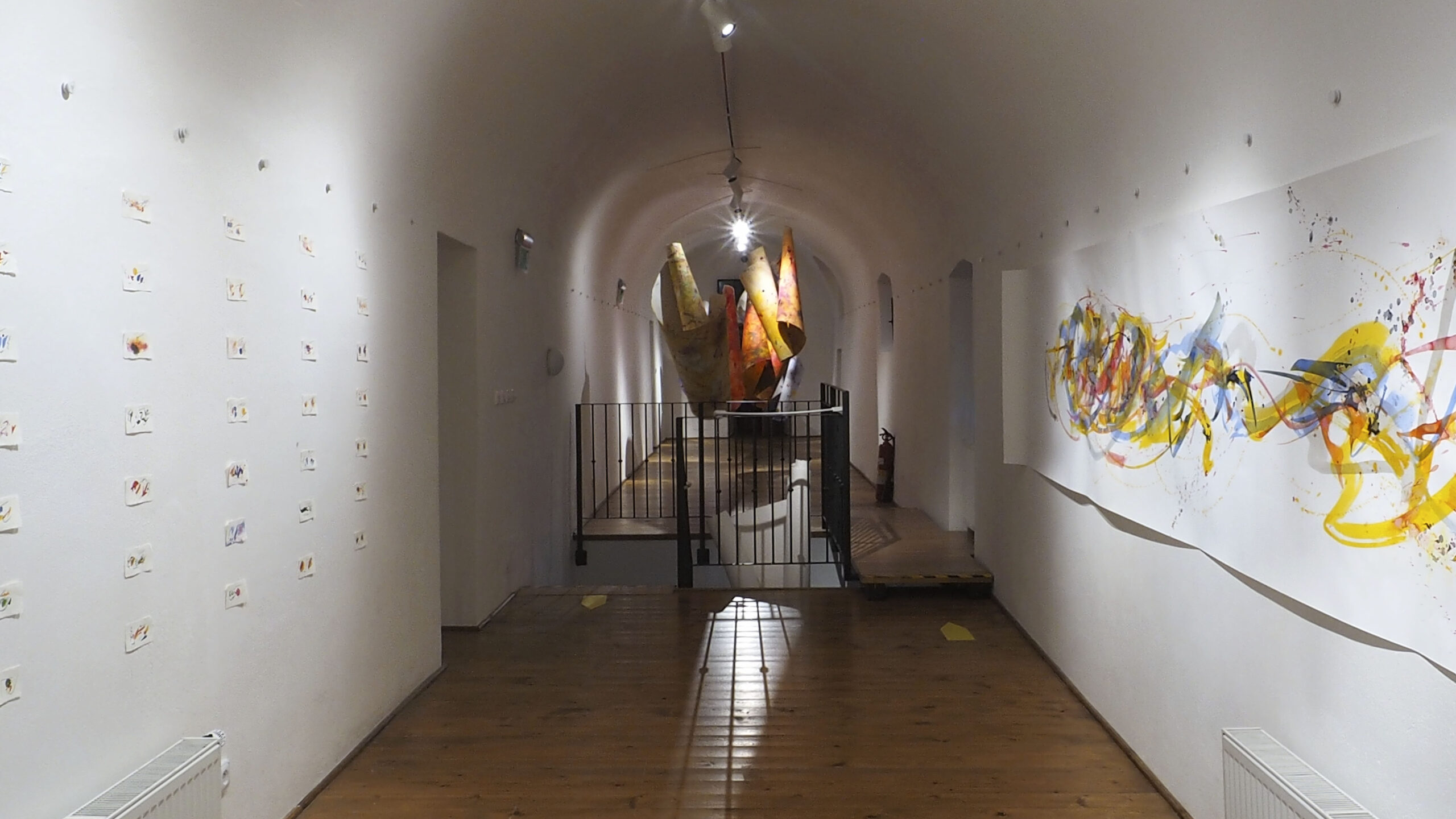
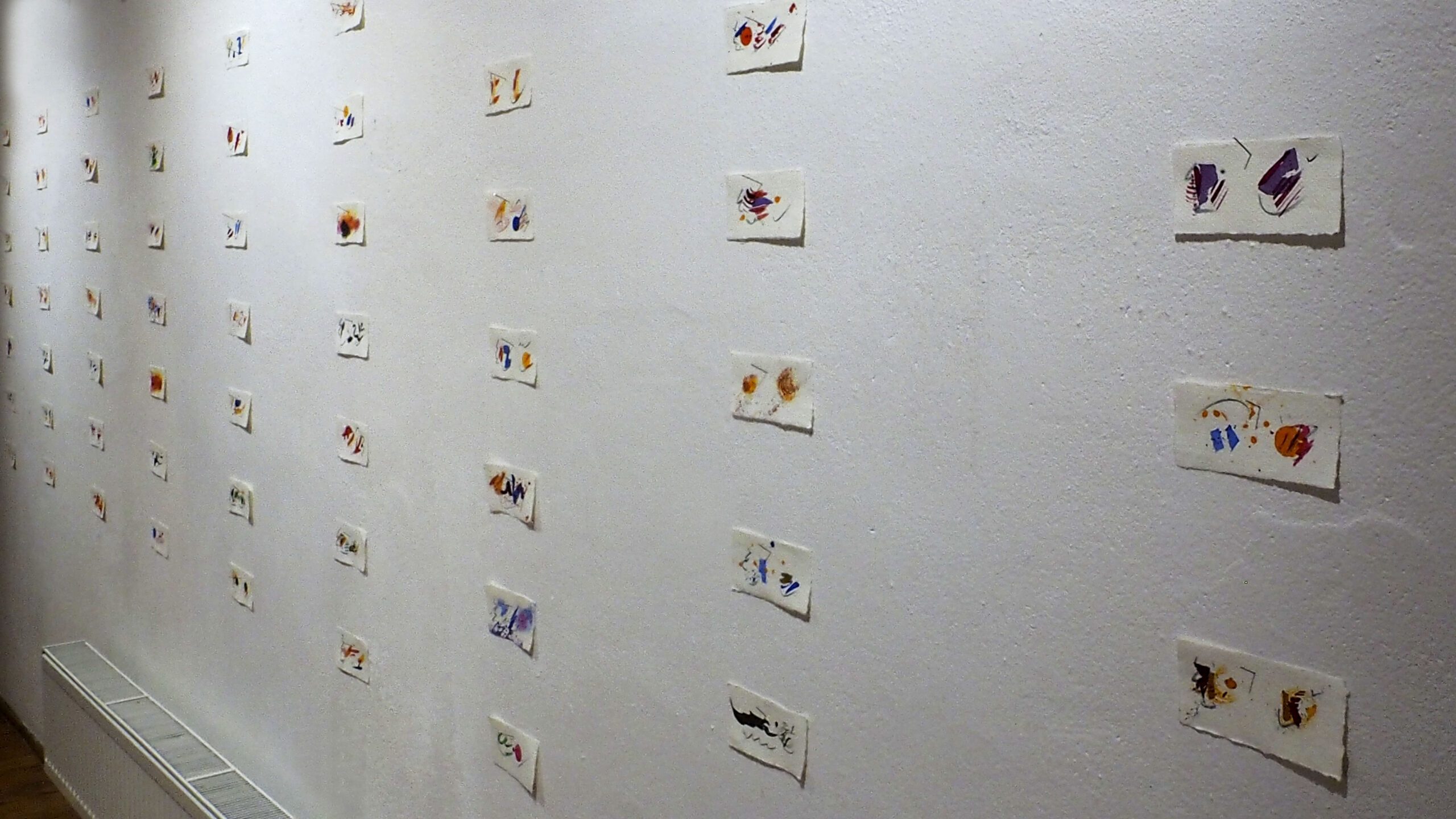
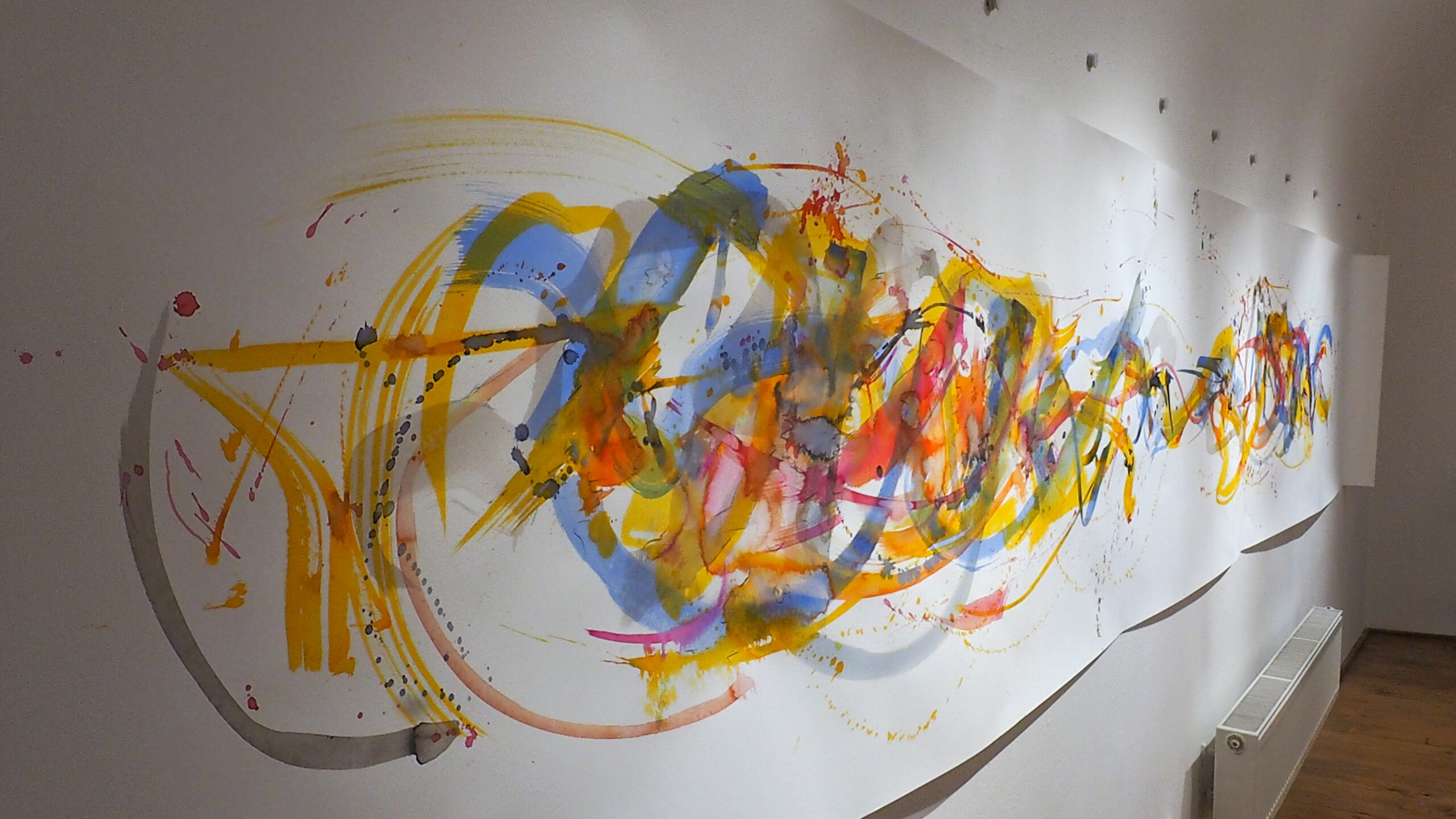
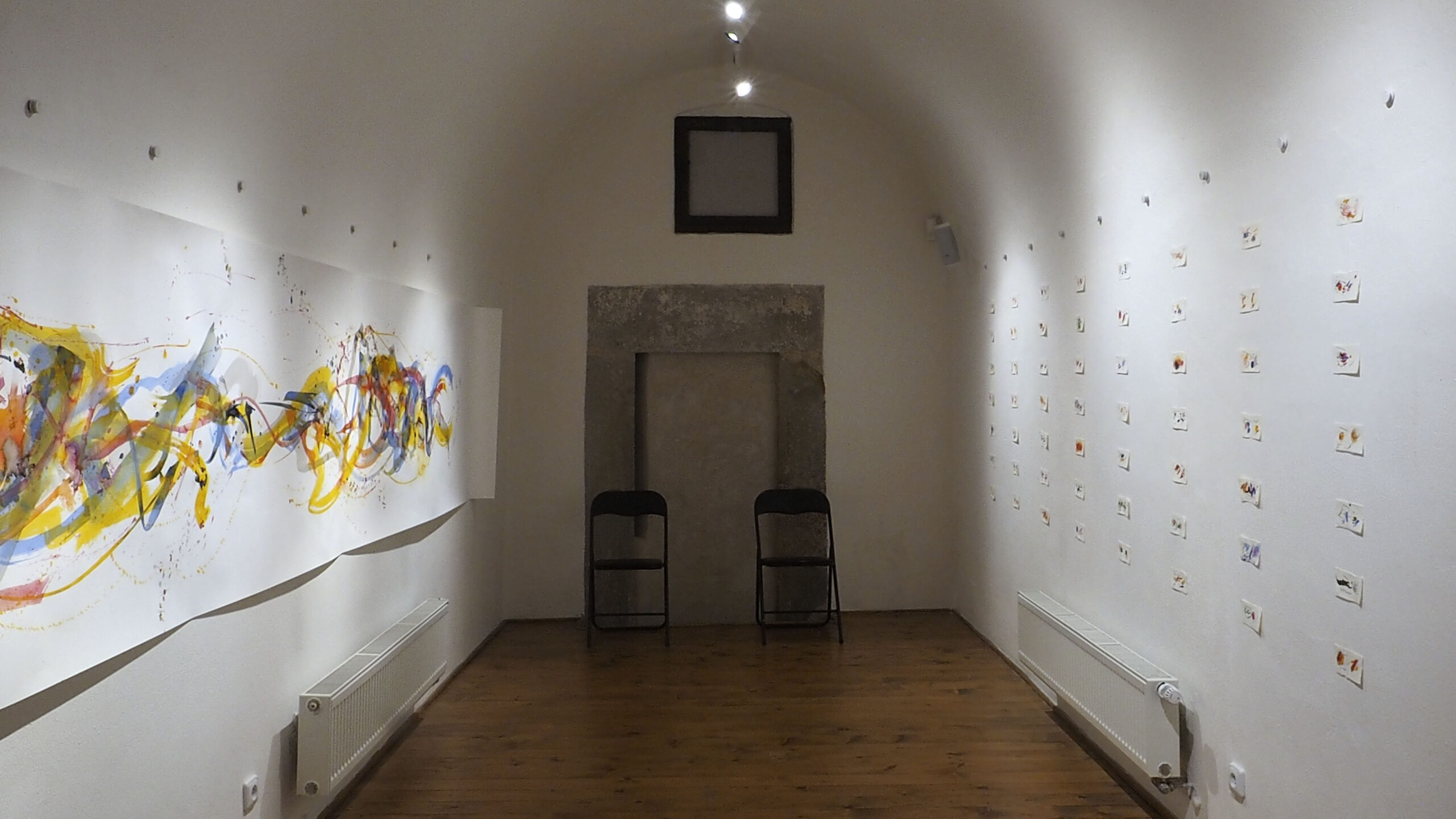
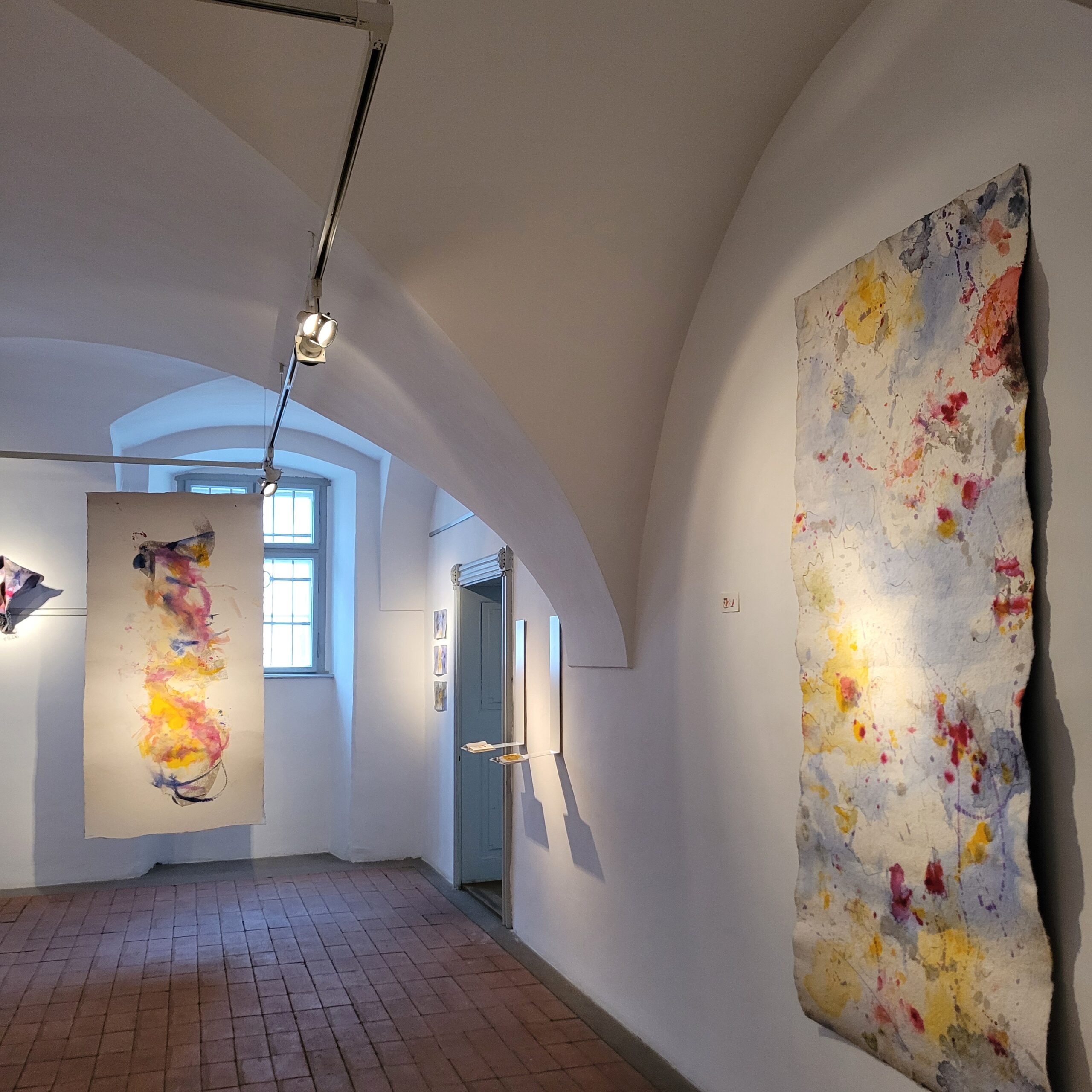
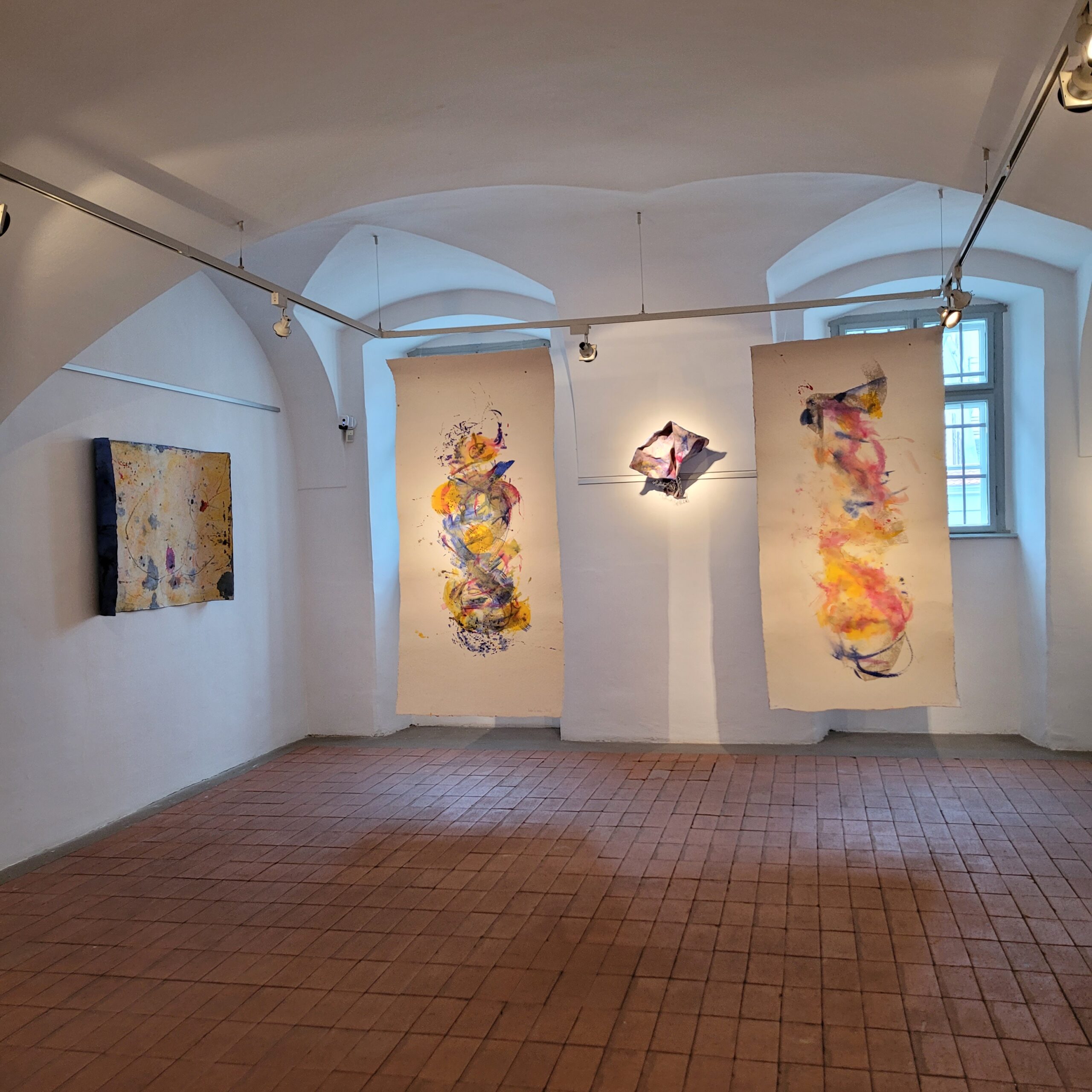
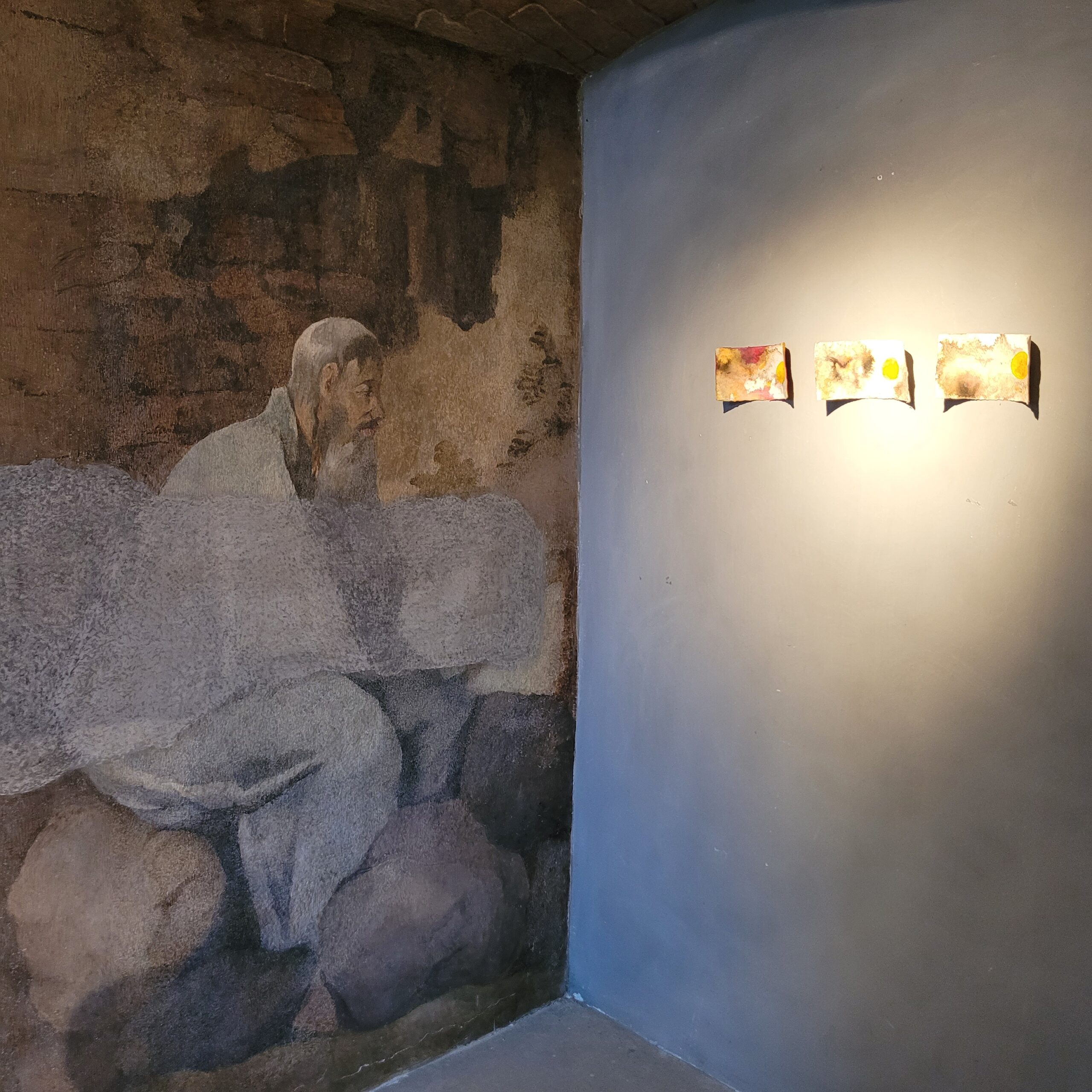
Creative work, art, and dialogue are at the center of my life. After holding leading positions in the human rights sector, where I institutionally shaped Europe – I was the first female director of an EU agency ever, today’s EU Agency for Fundamental Rights, which I built up and led for a long time – I dedicate myself to my life’s themes of “transformation, change, transition, and spaces of possibility” through art. I am fascinated by the “art of possibility”: being creative, connecting the unconnected, changing perspectives, finding new forms of perception – in art as well as in society. This fascination accompanies me from the creation process of my works to their mediation and the social dialogue that is an integral part of my projects. For me, art also provides an impulse to think anew again and again – like in front of a blank white sheet.
Katalog: The art of possibility – the possibility of art
I implement this attitude in dialogue in projects and exhibitions that are expanded through workshops, discussions, interactions, and other forms of collaboration between art and society. I understand art as a space of possibility – especially in times of profound change.
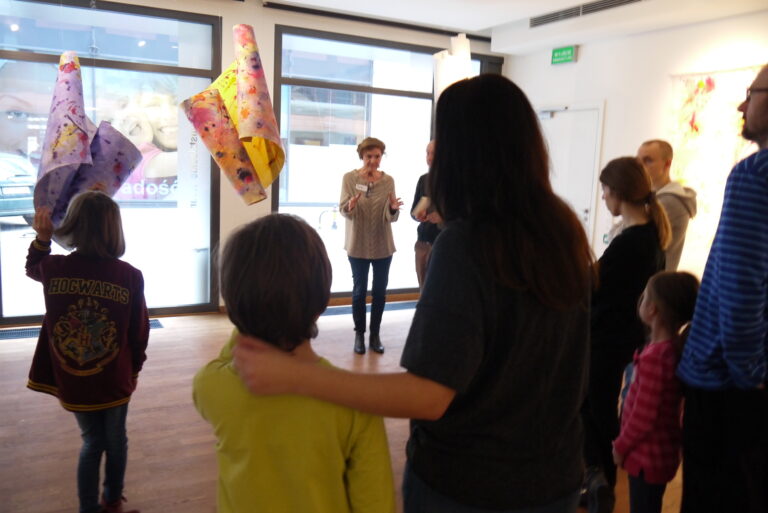
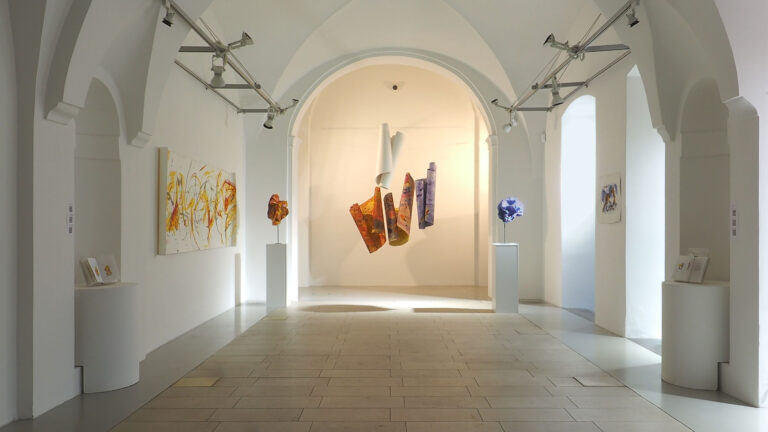
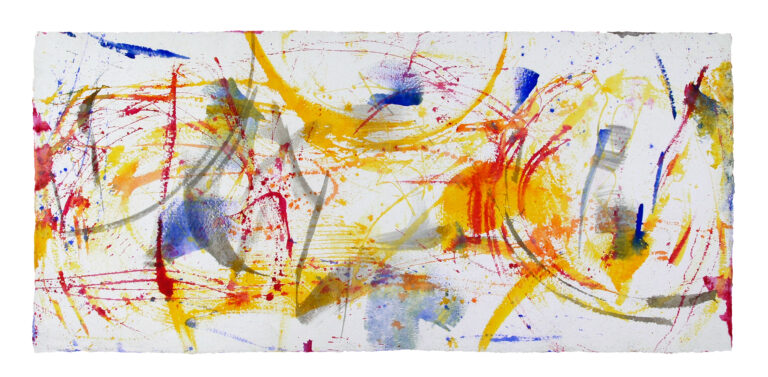
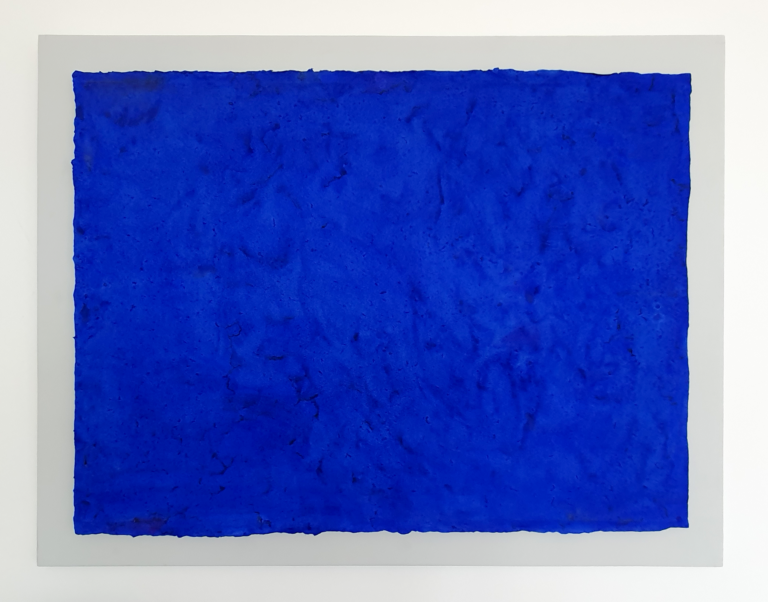
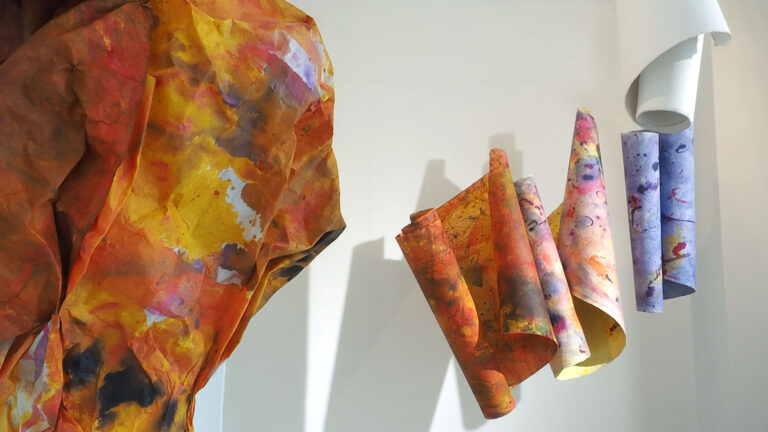
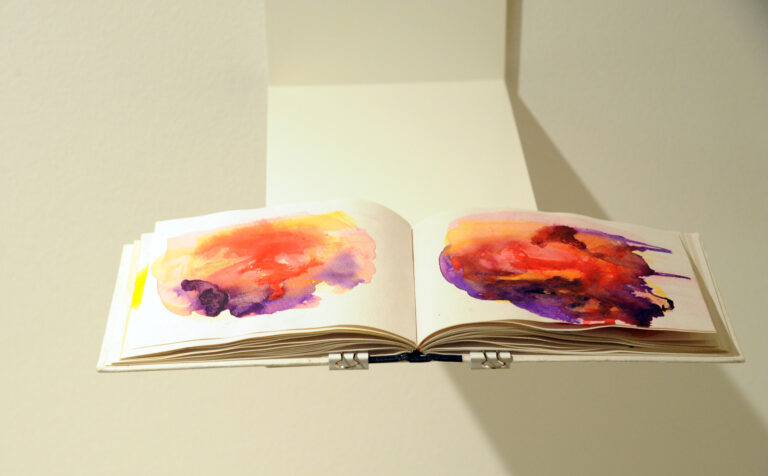
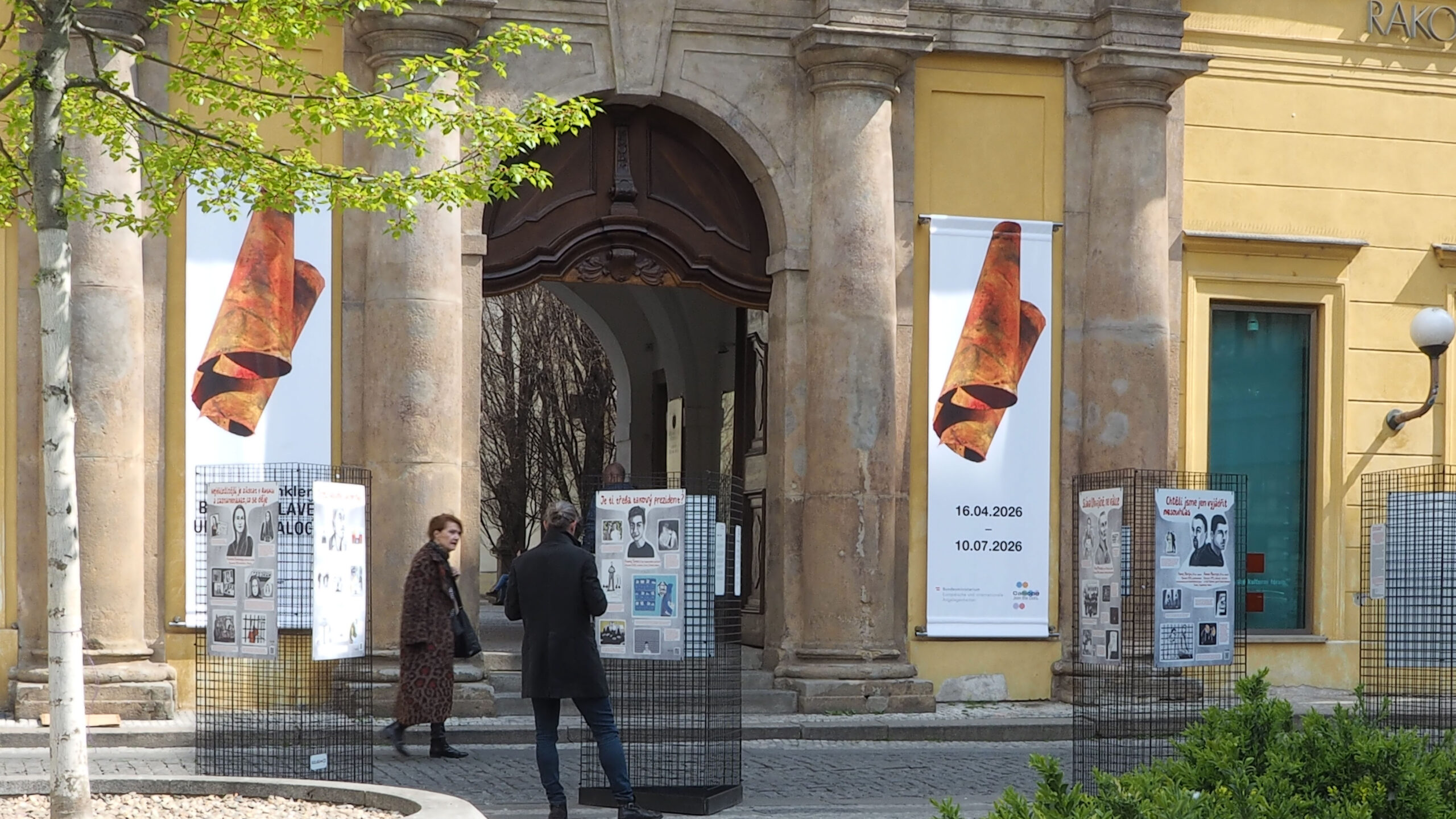
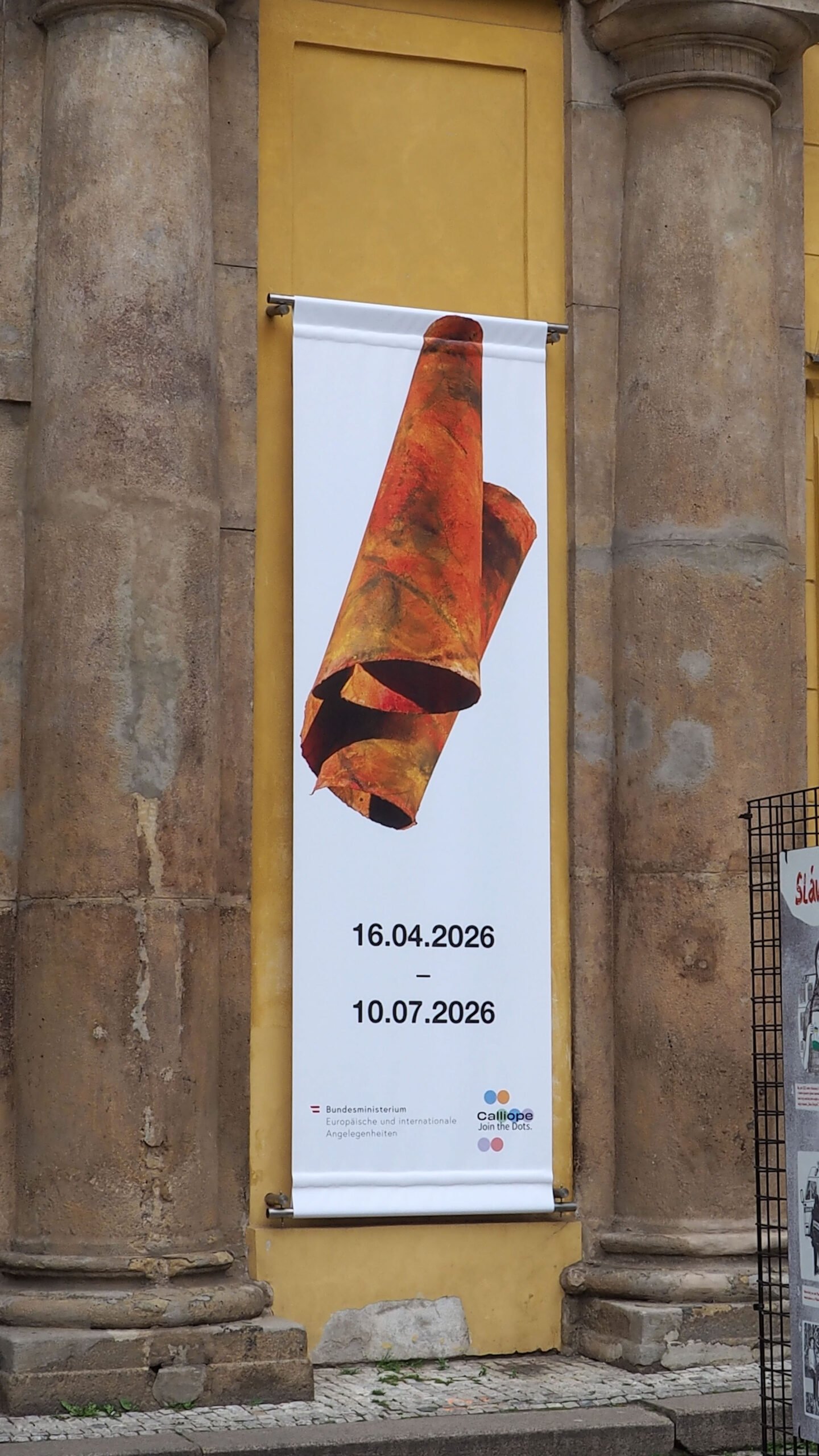
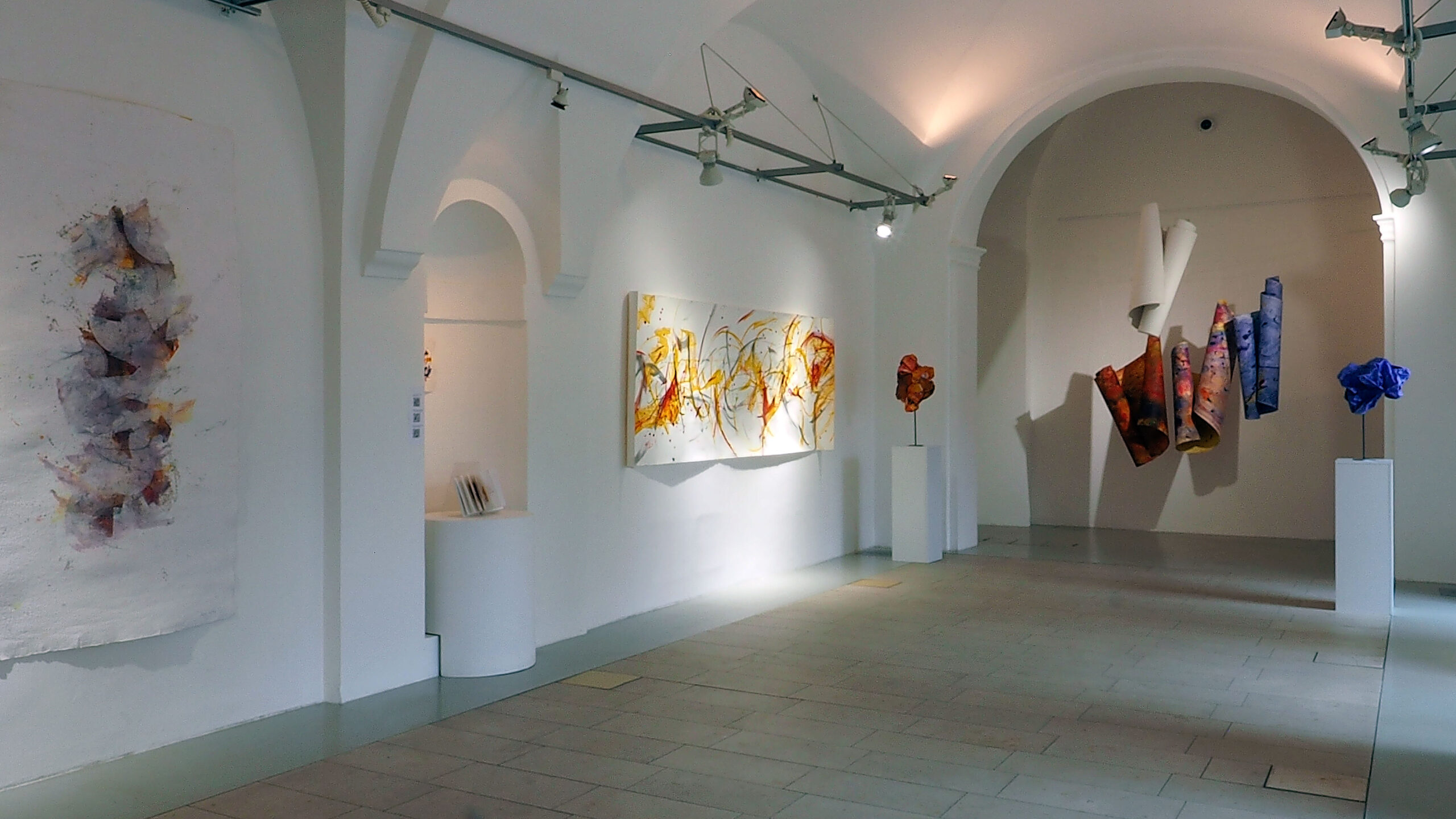
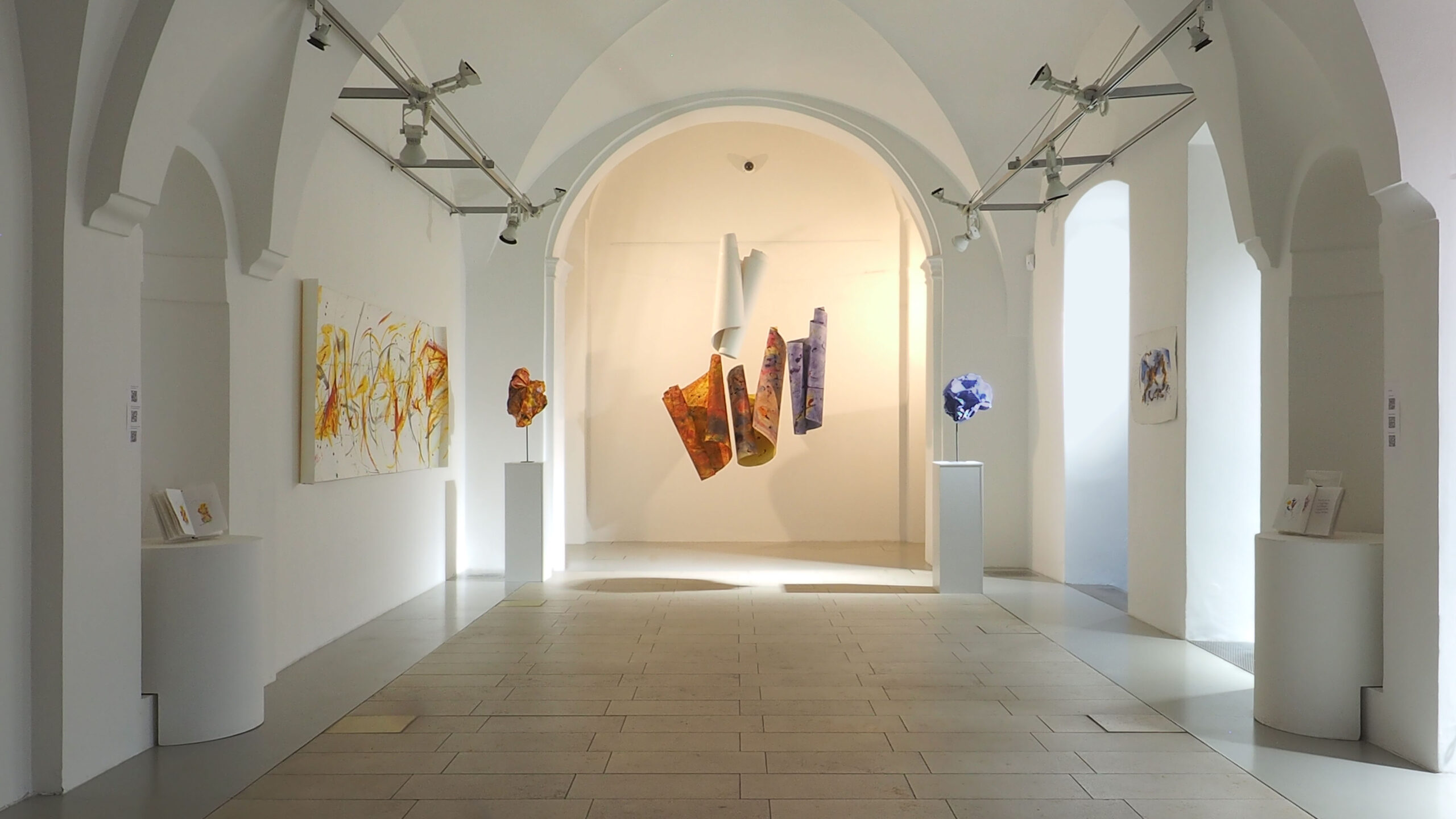
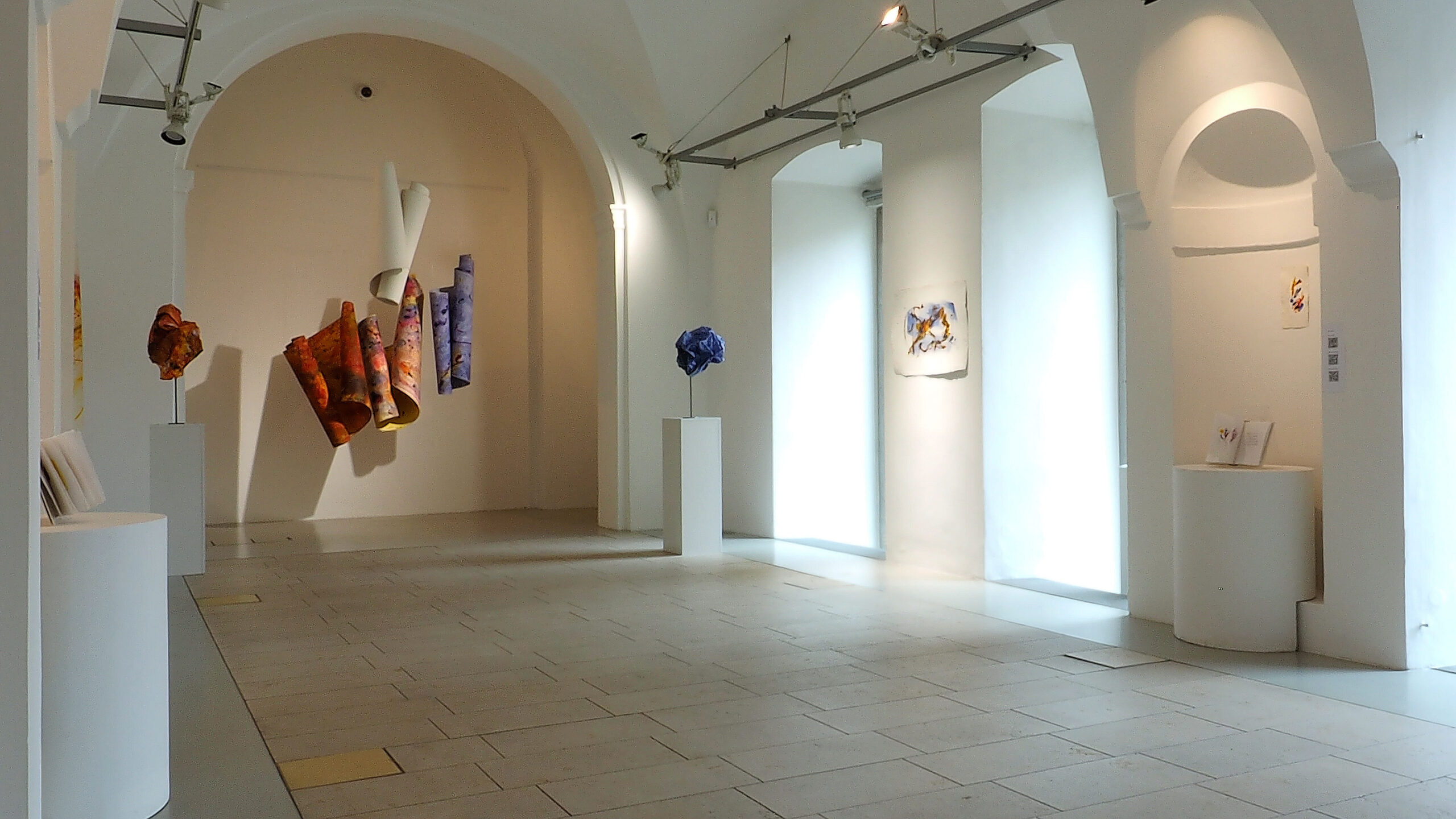
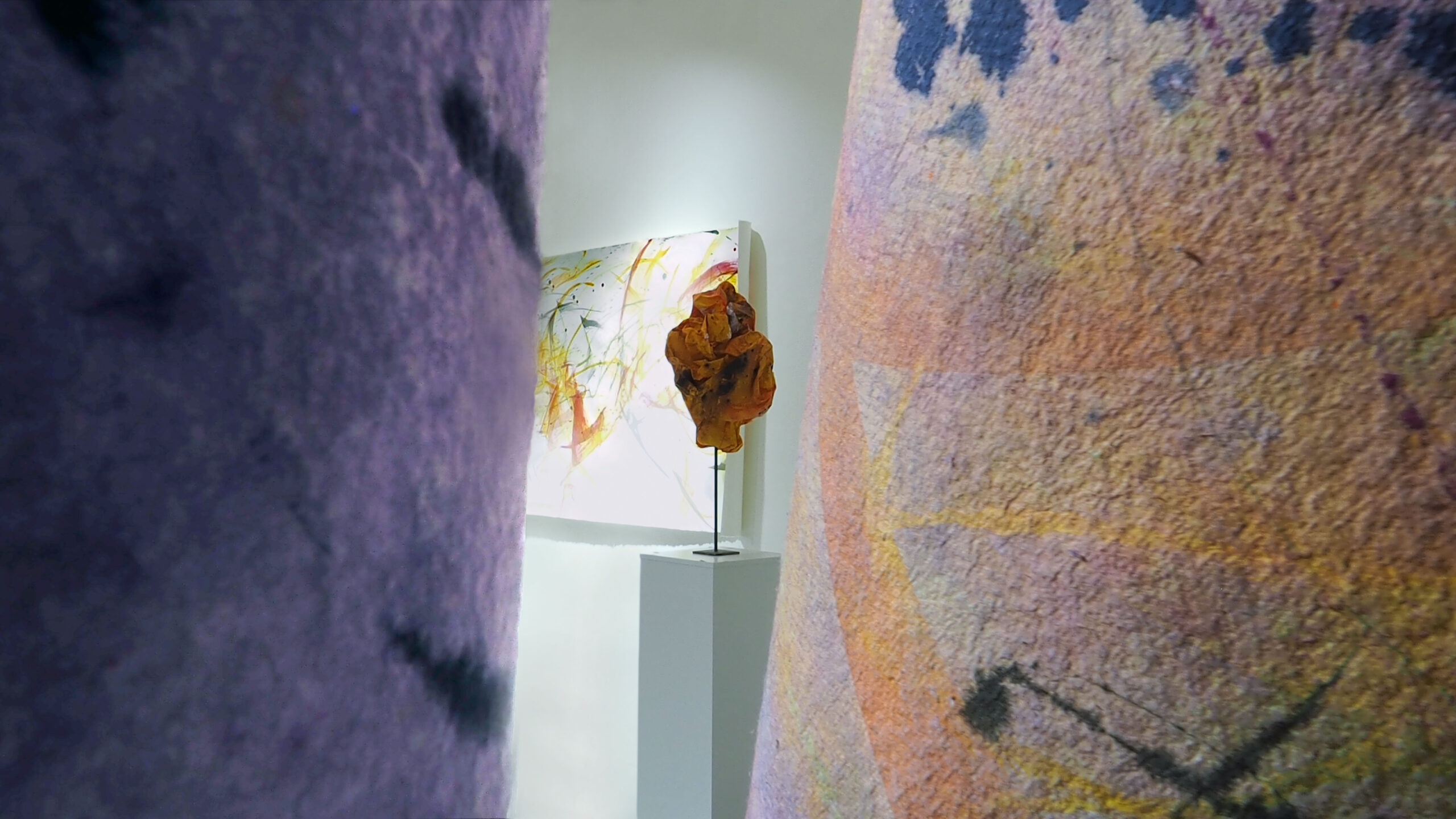
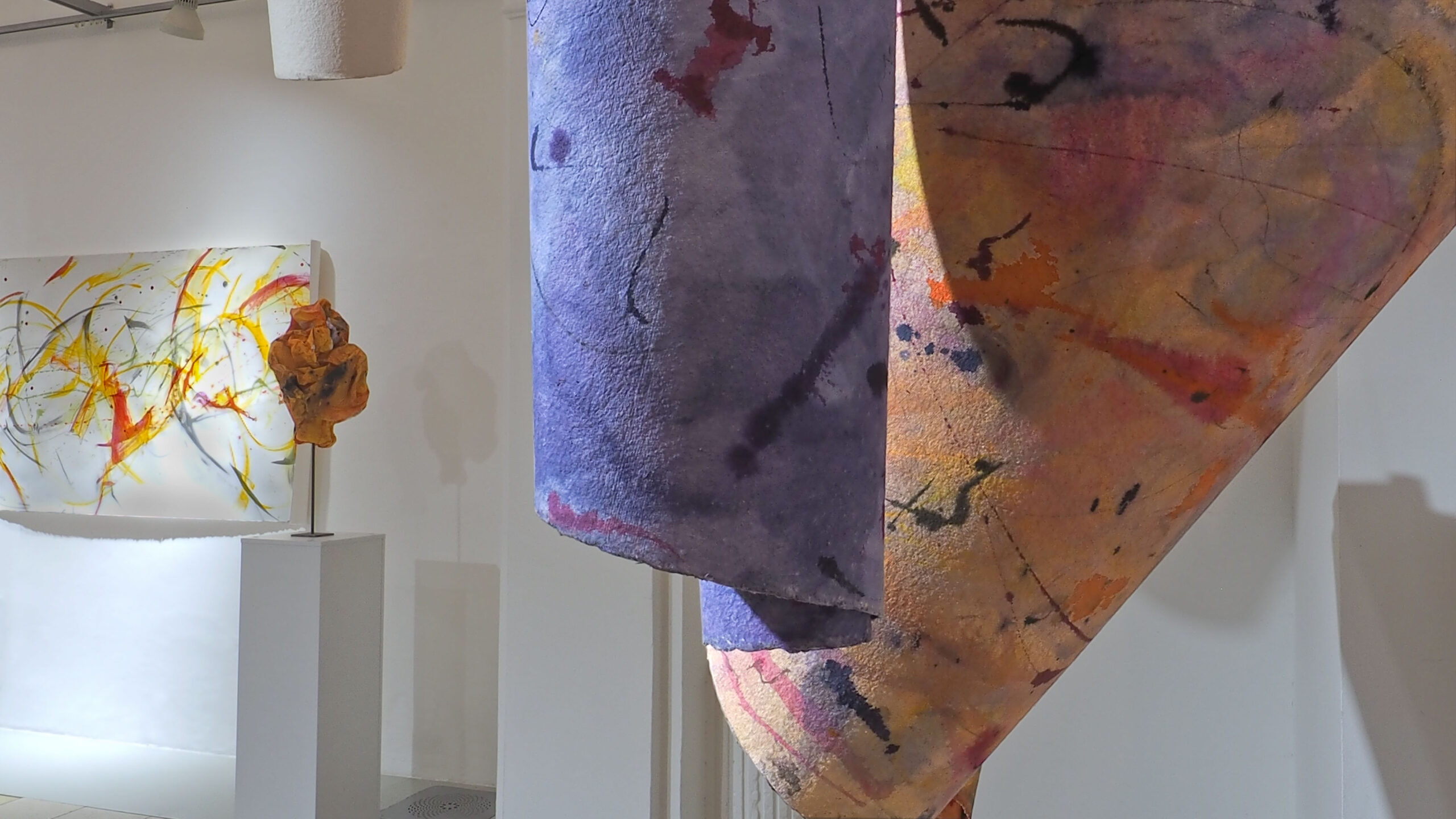
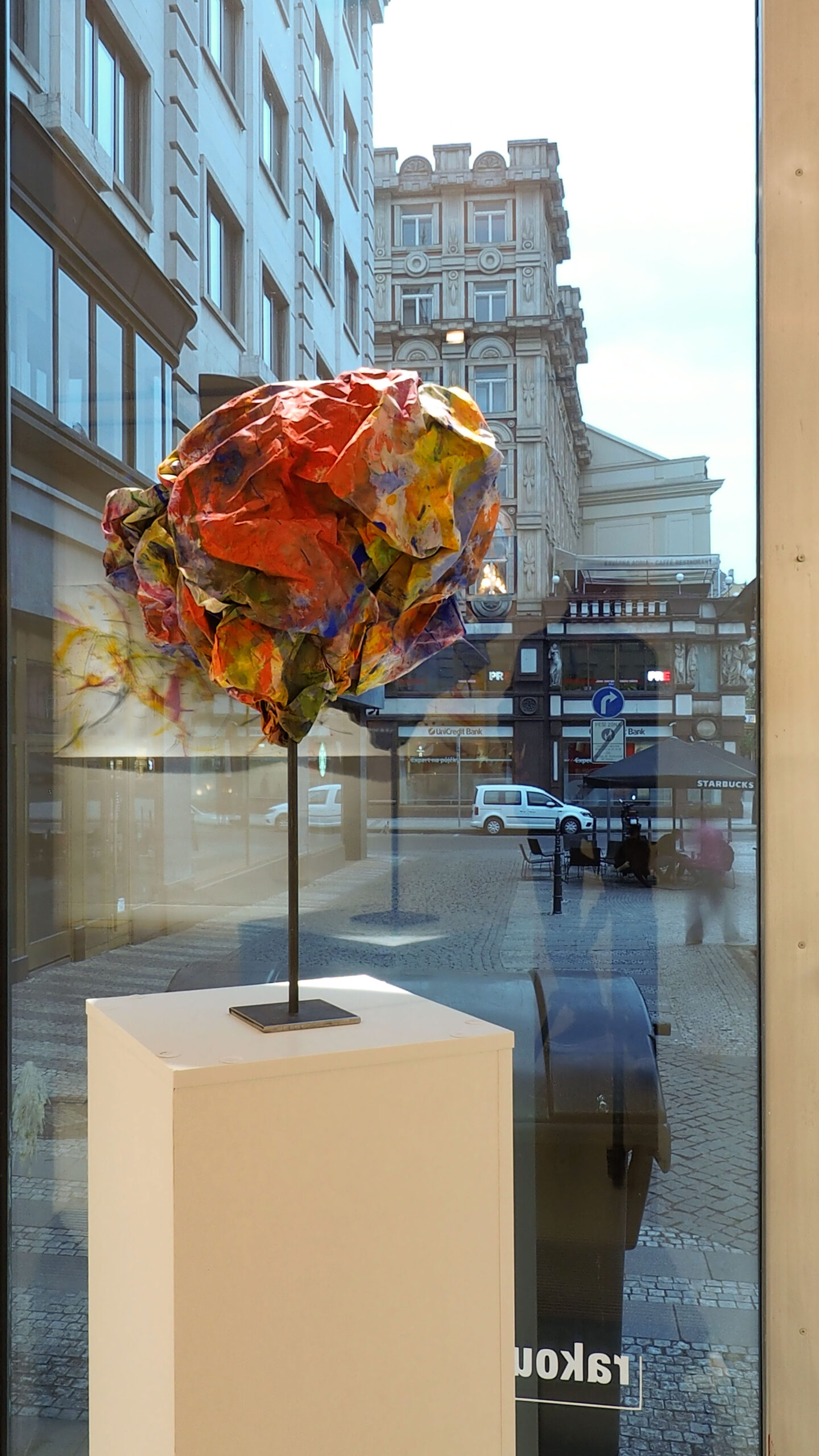
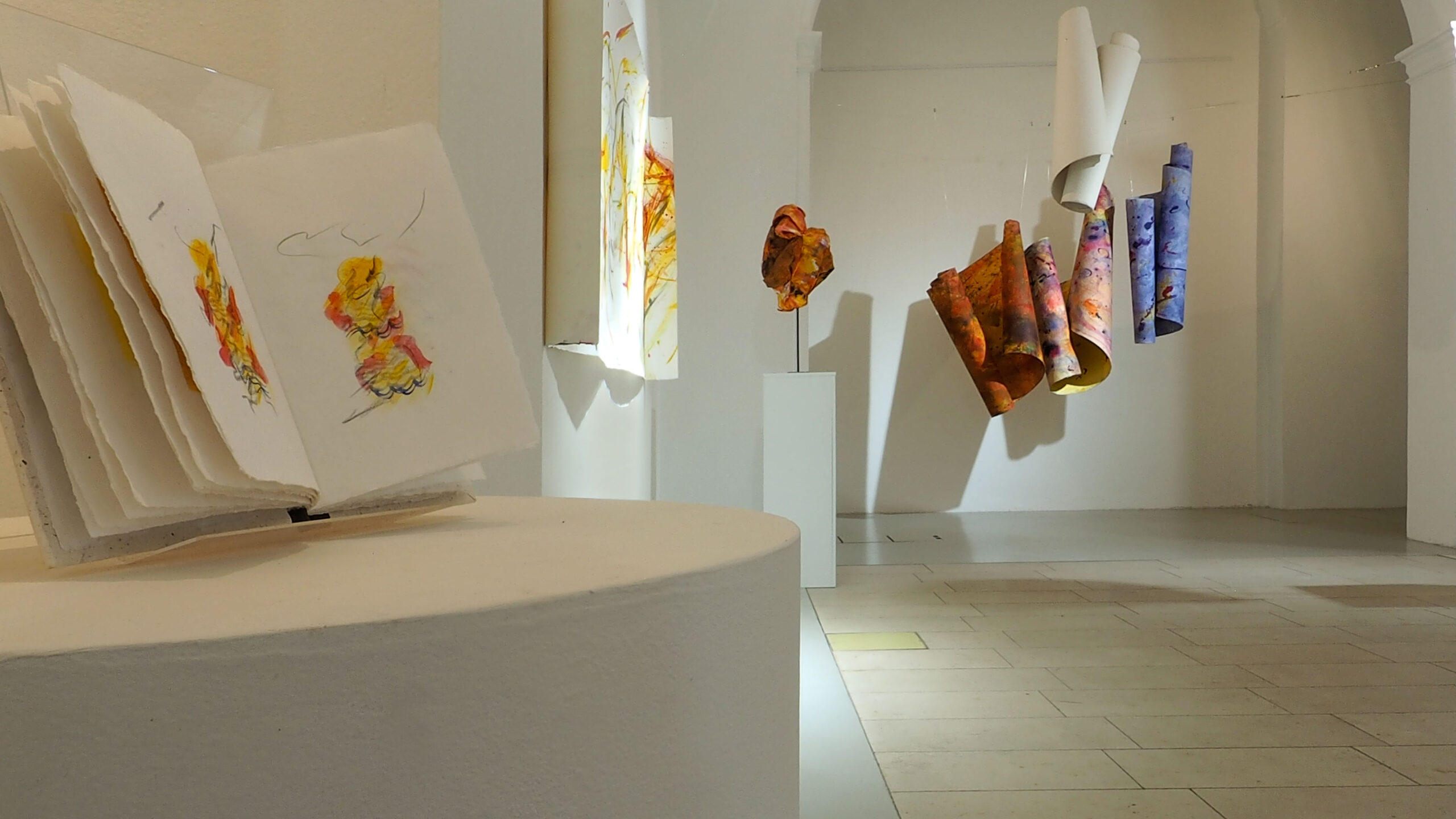
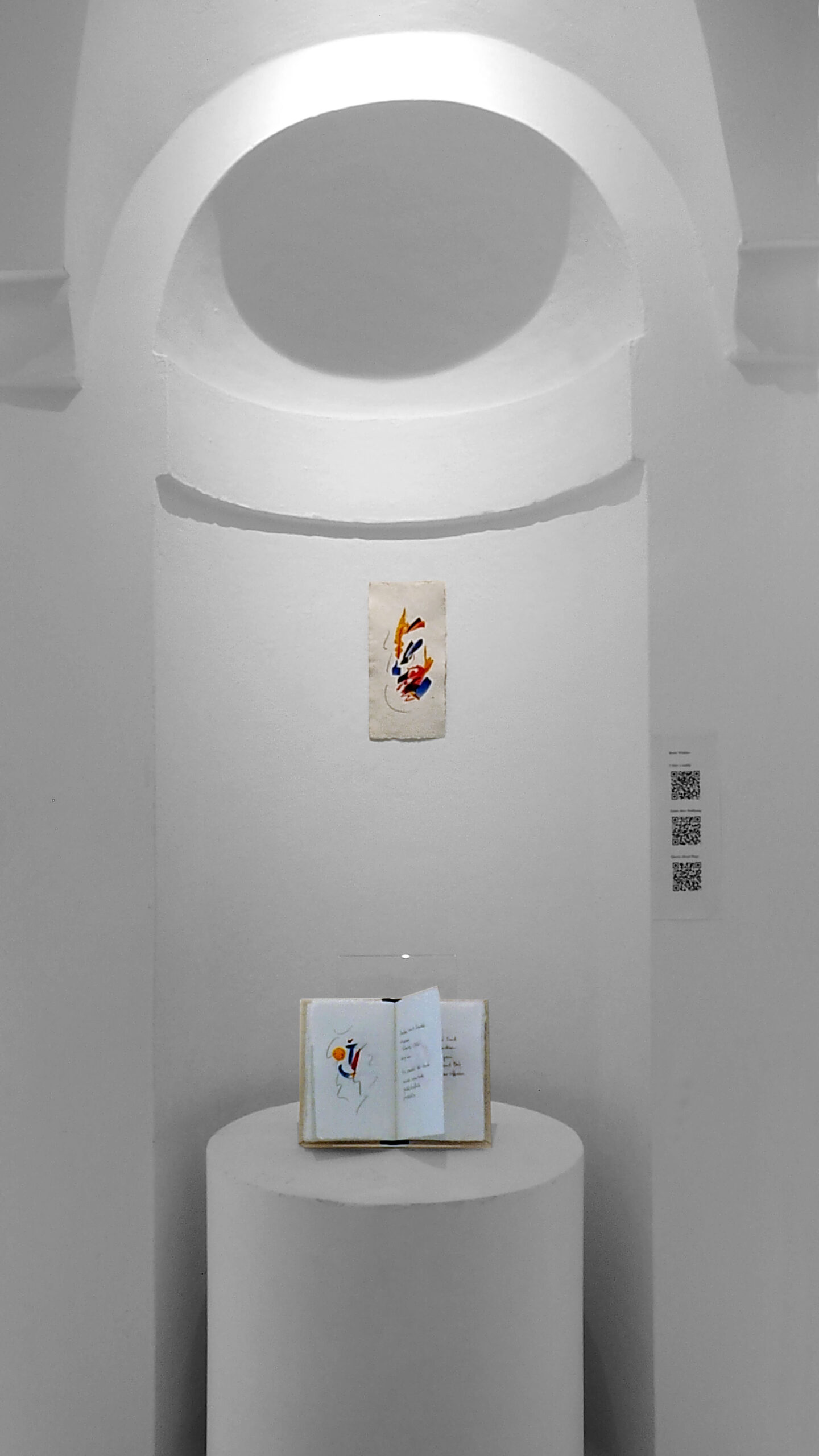
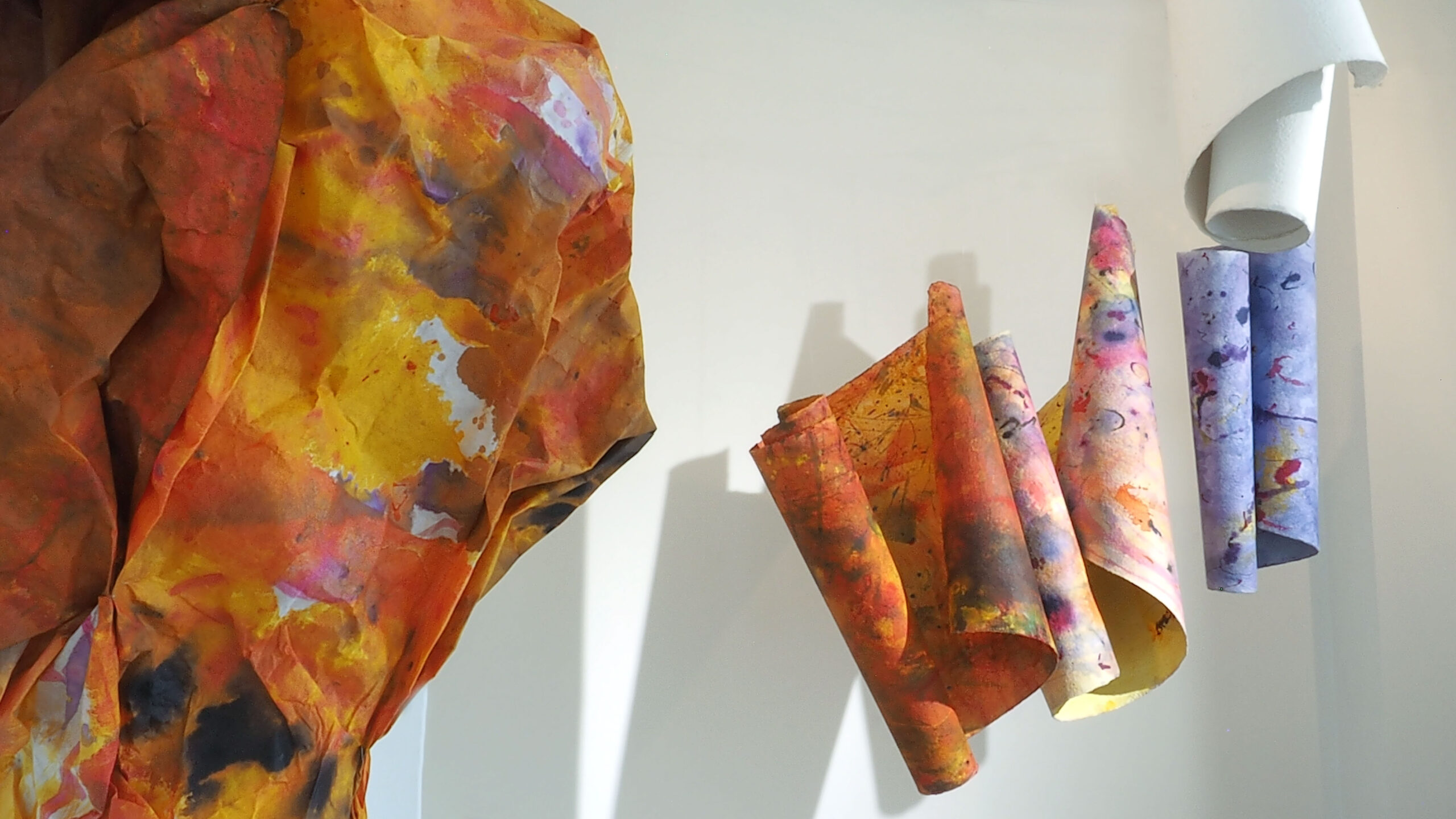
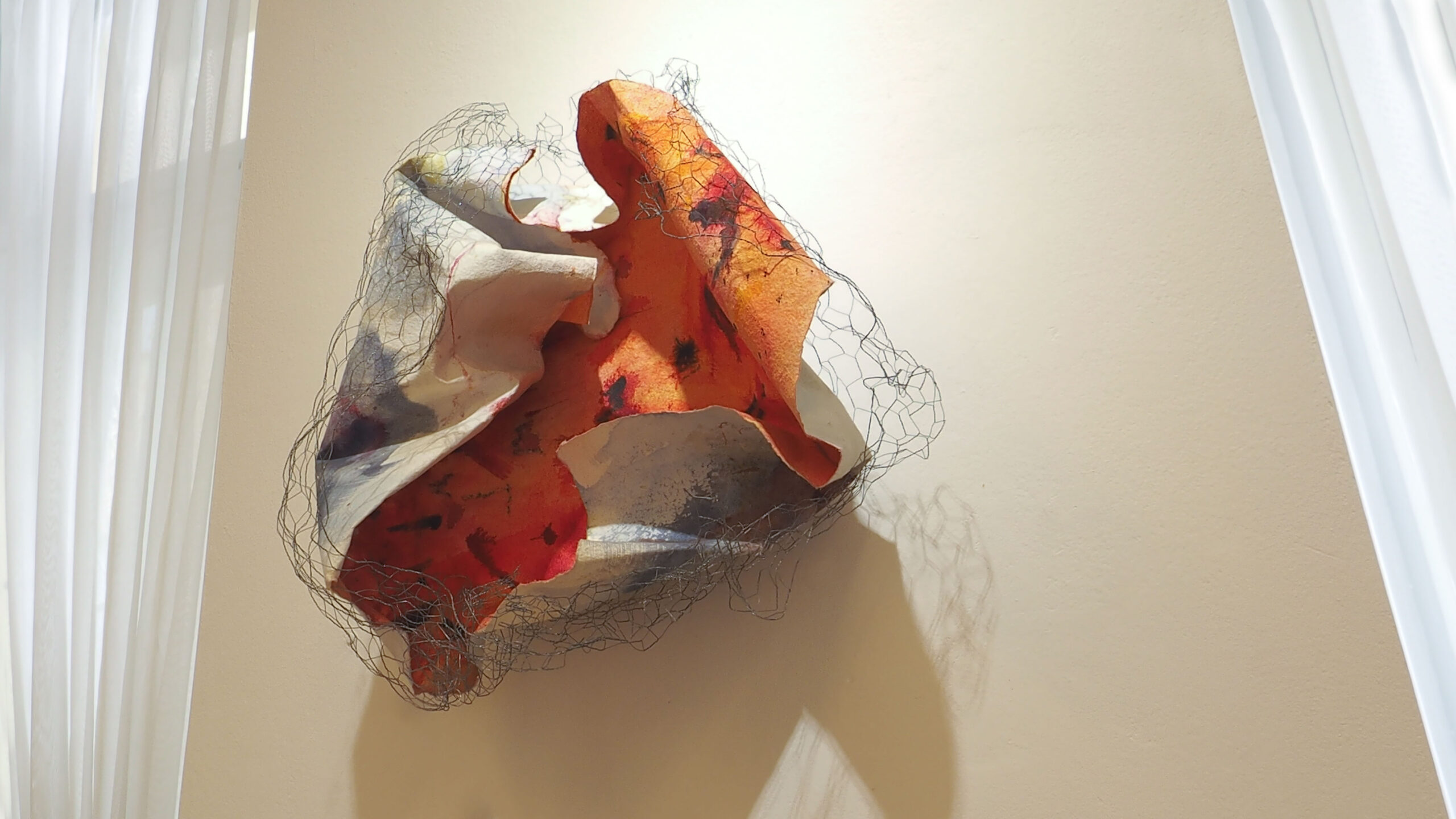
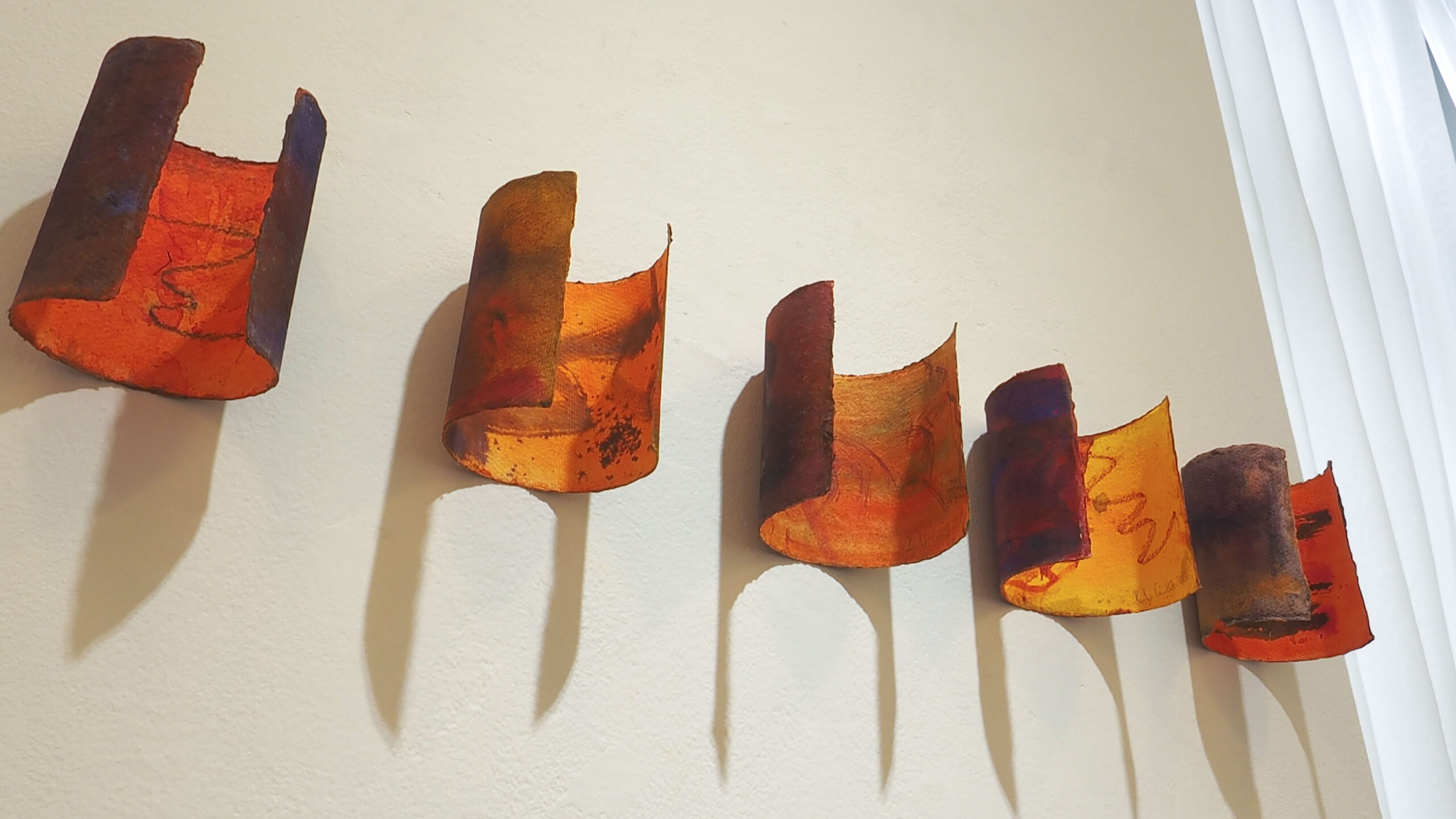
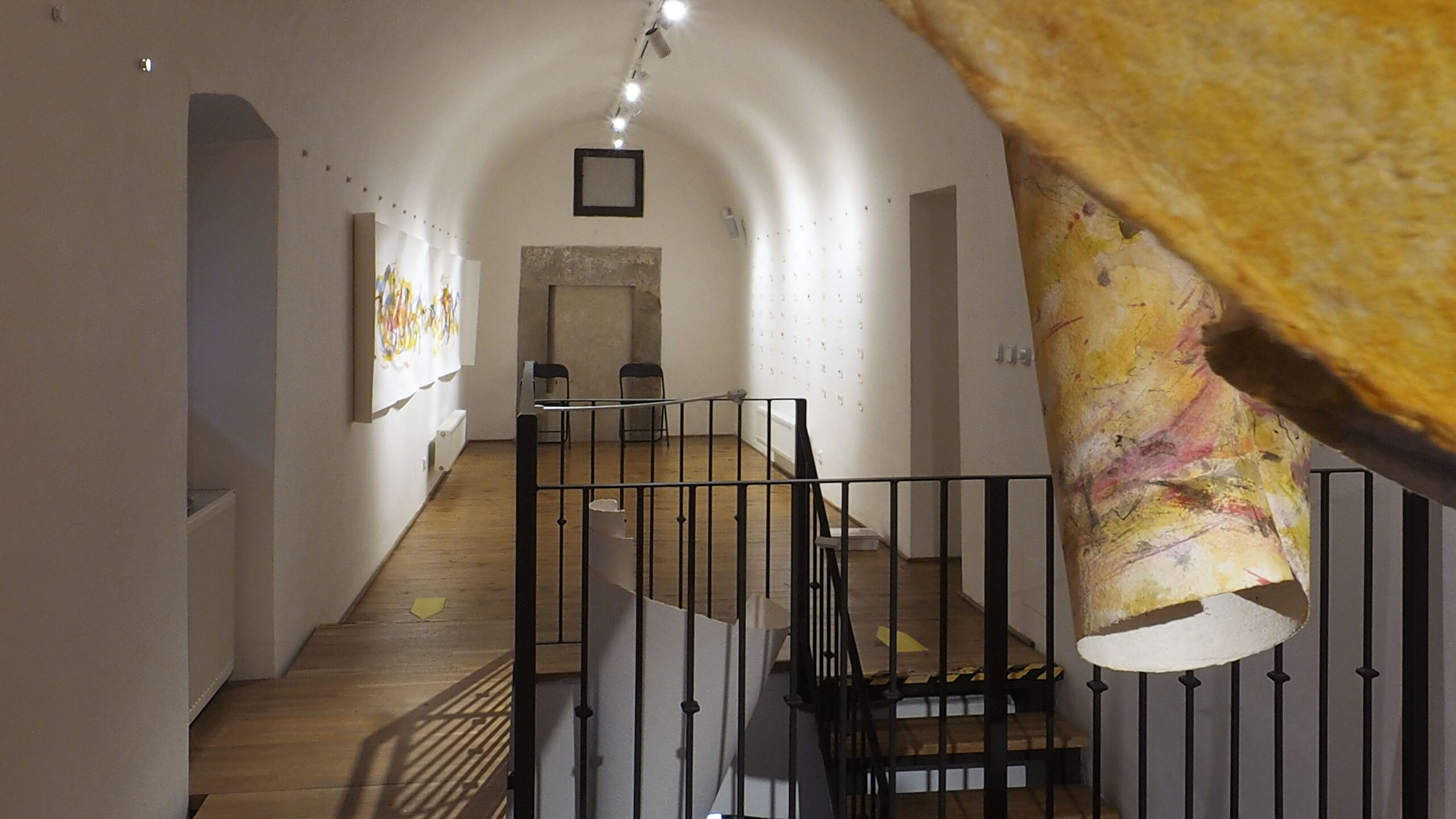
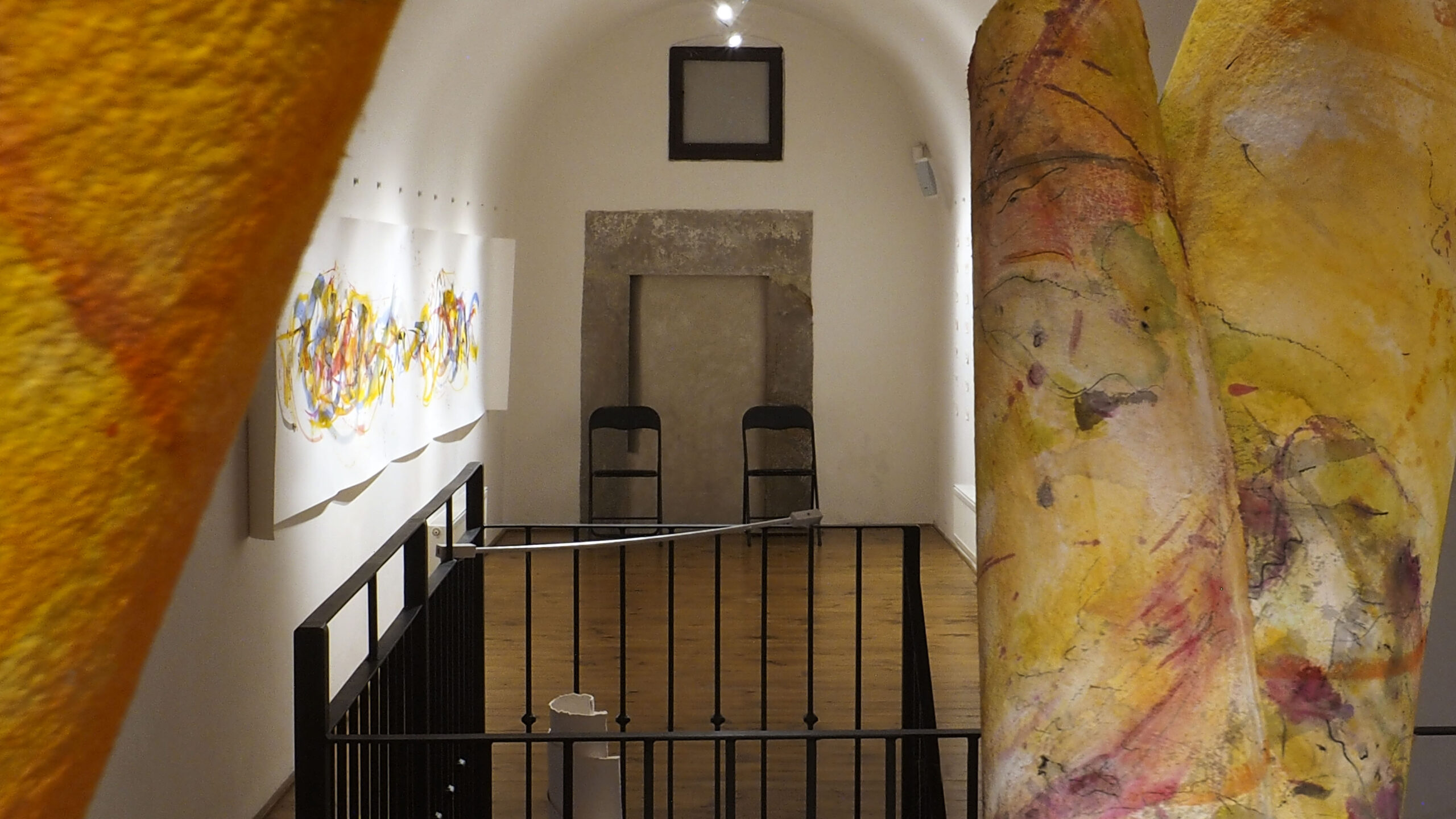
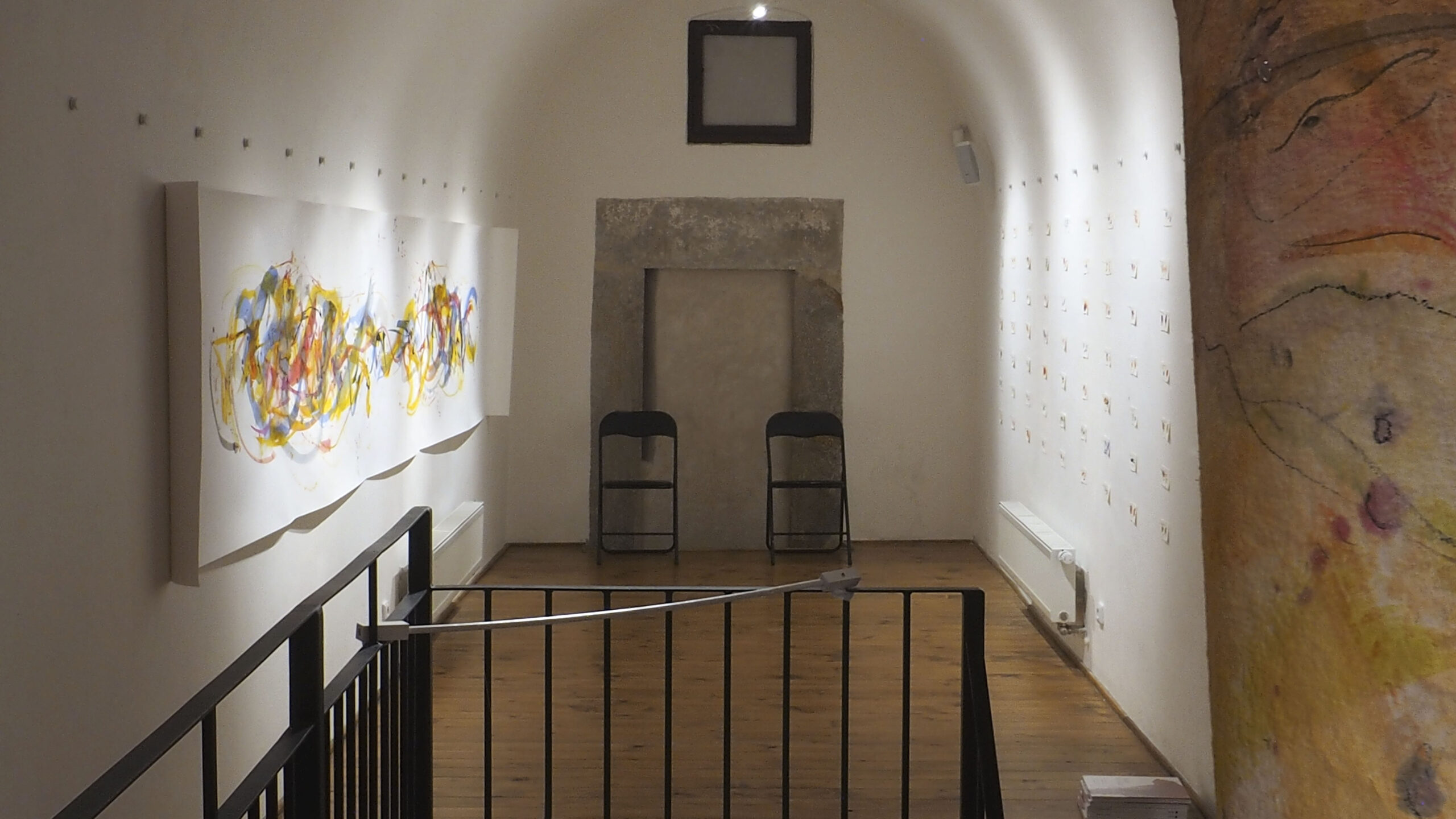
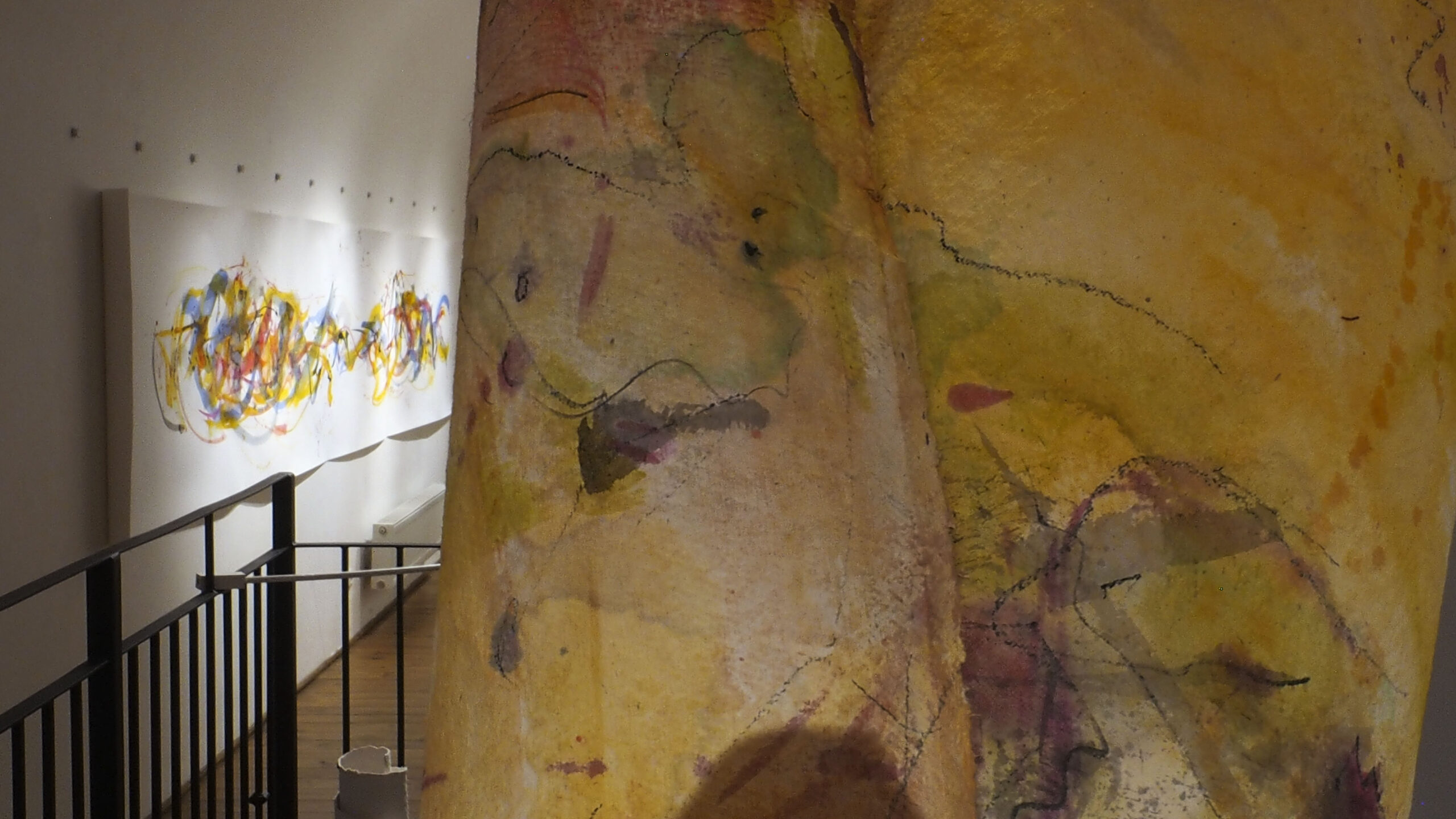
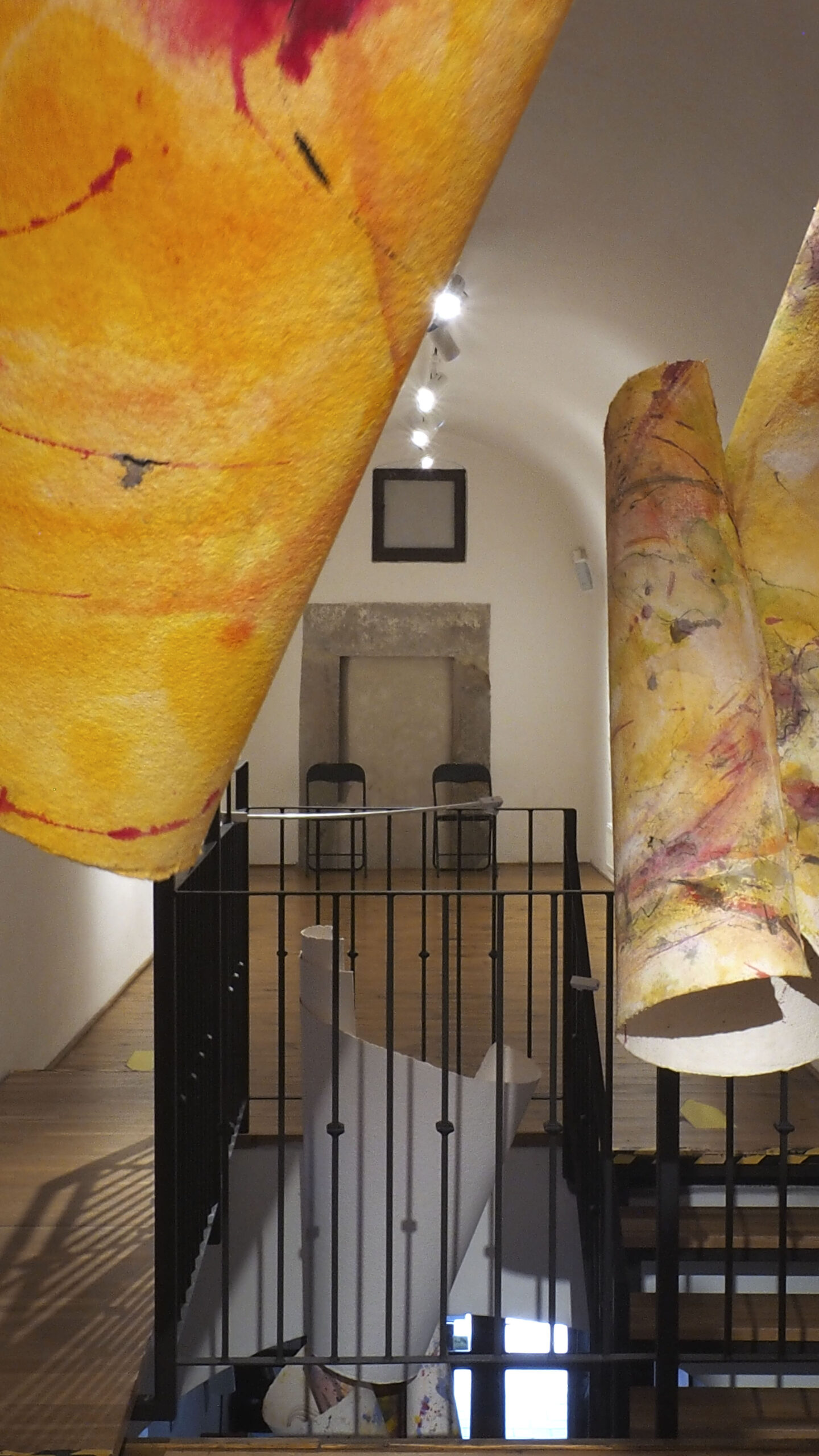
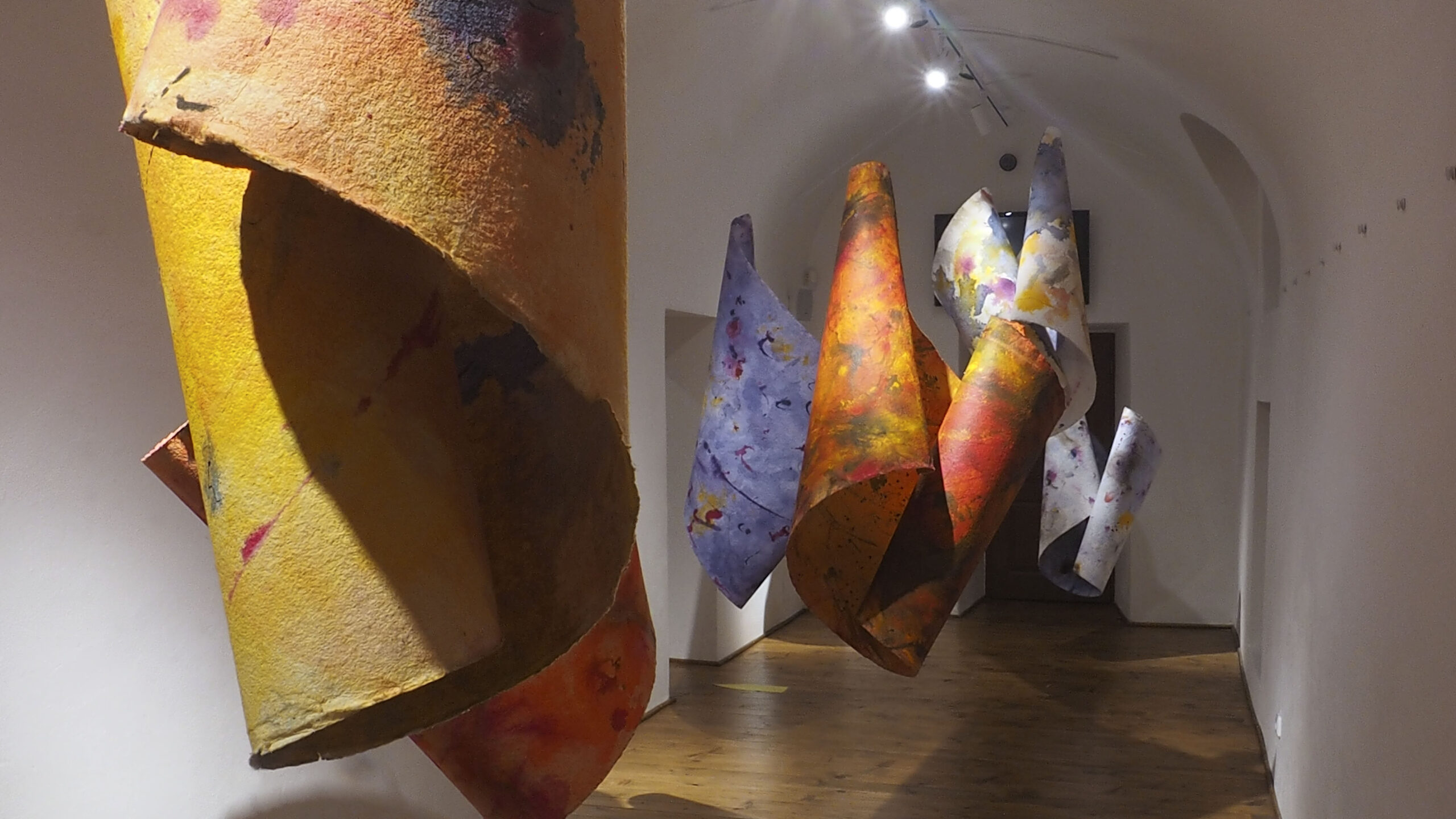
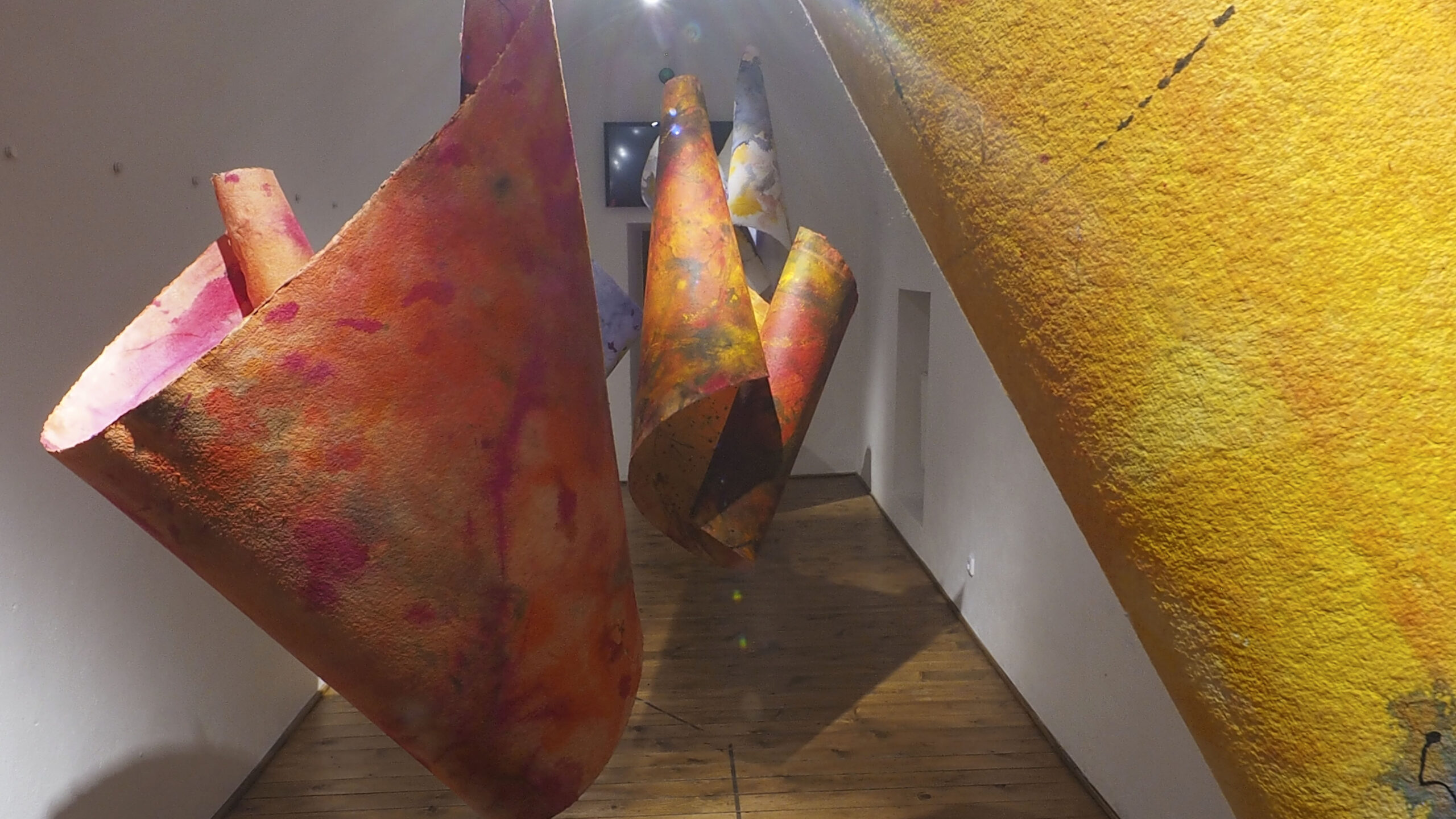
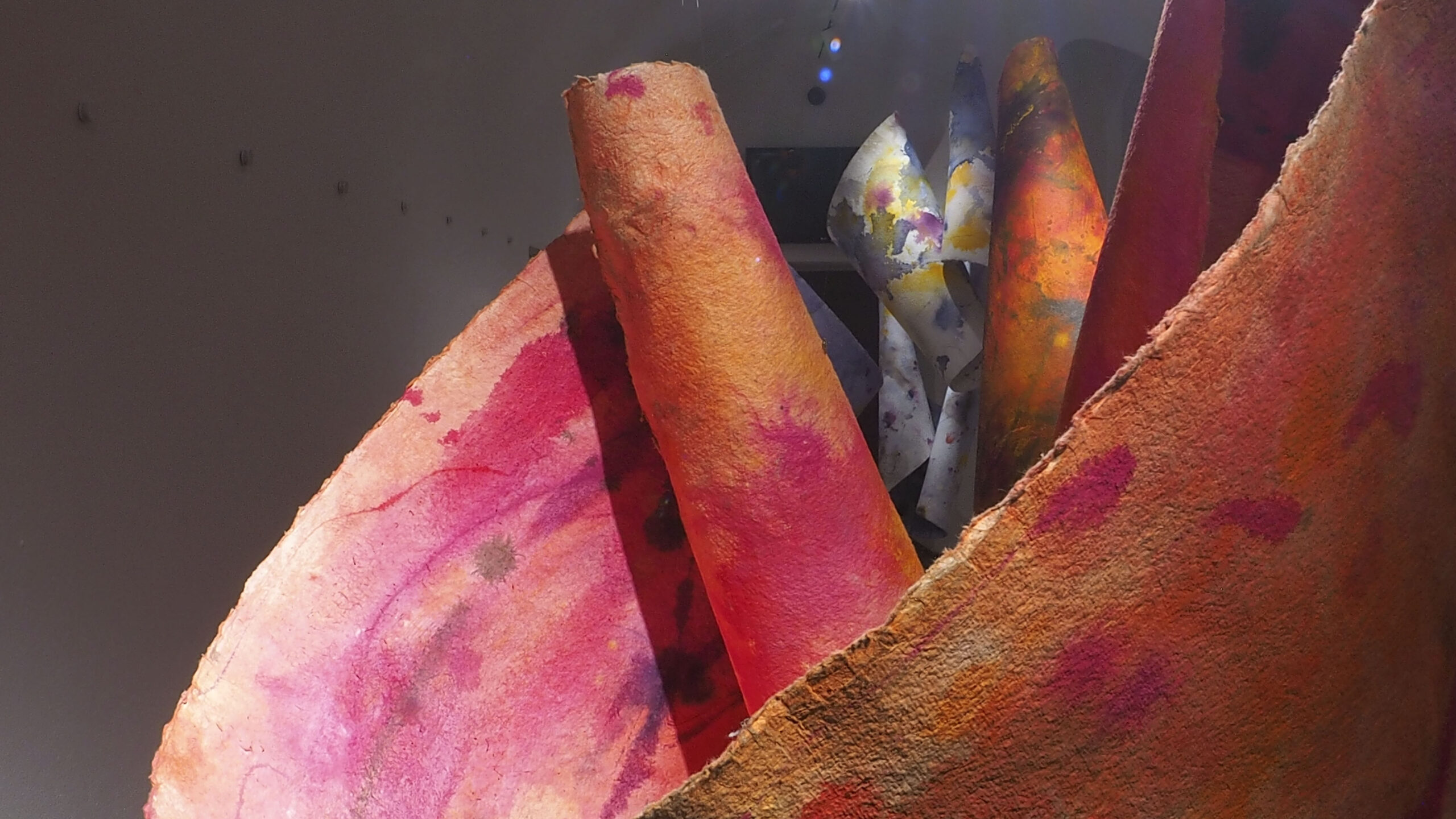
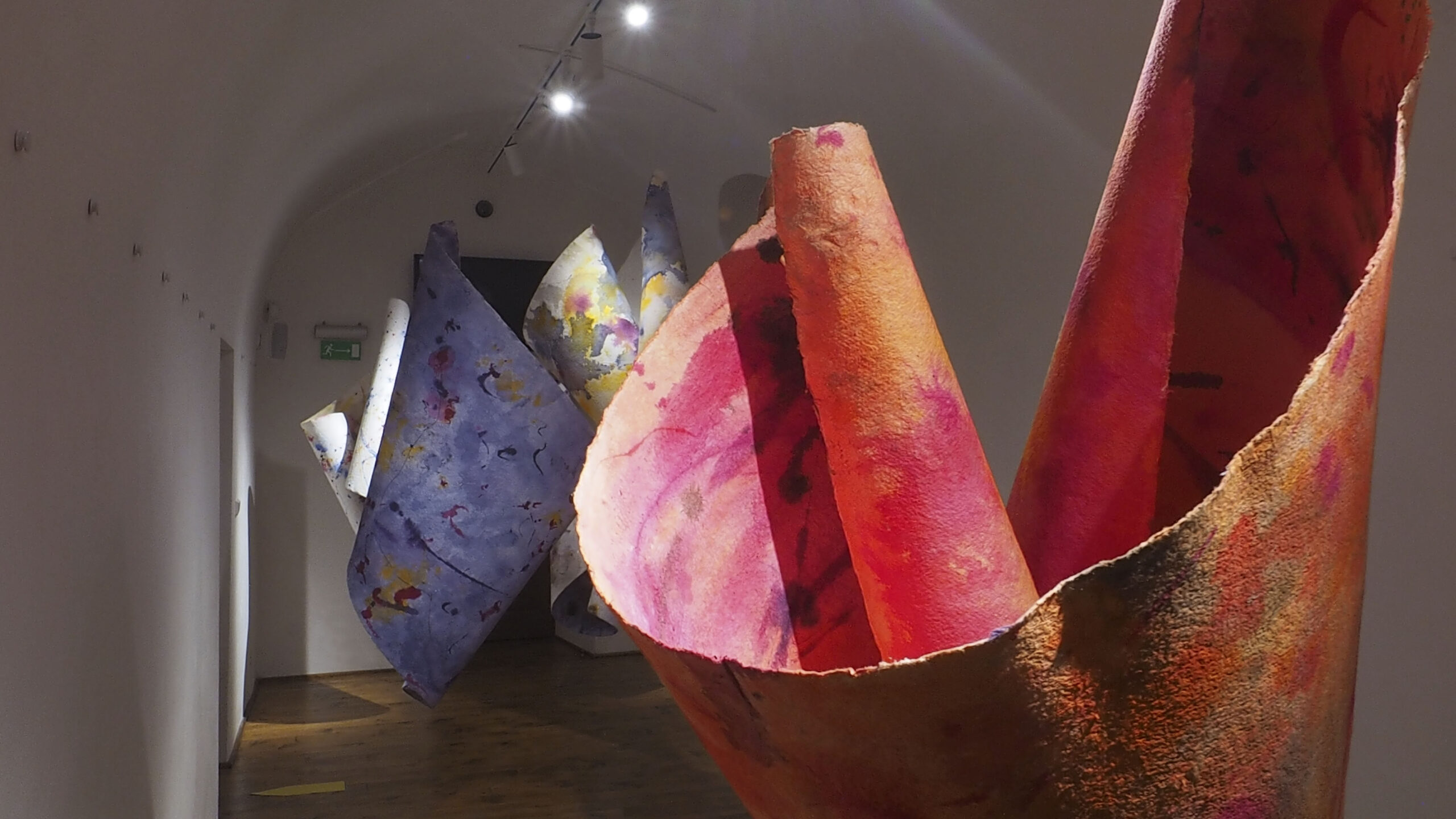
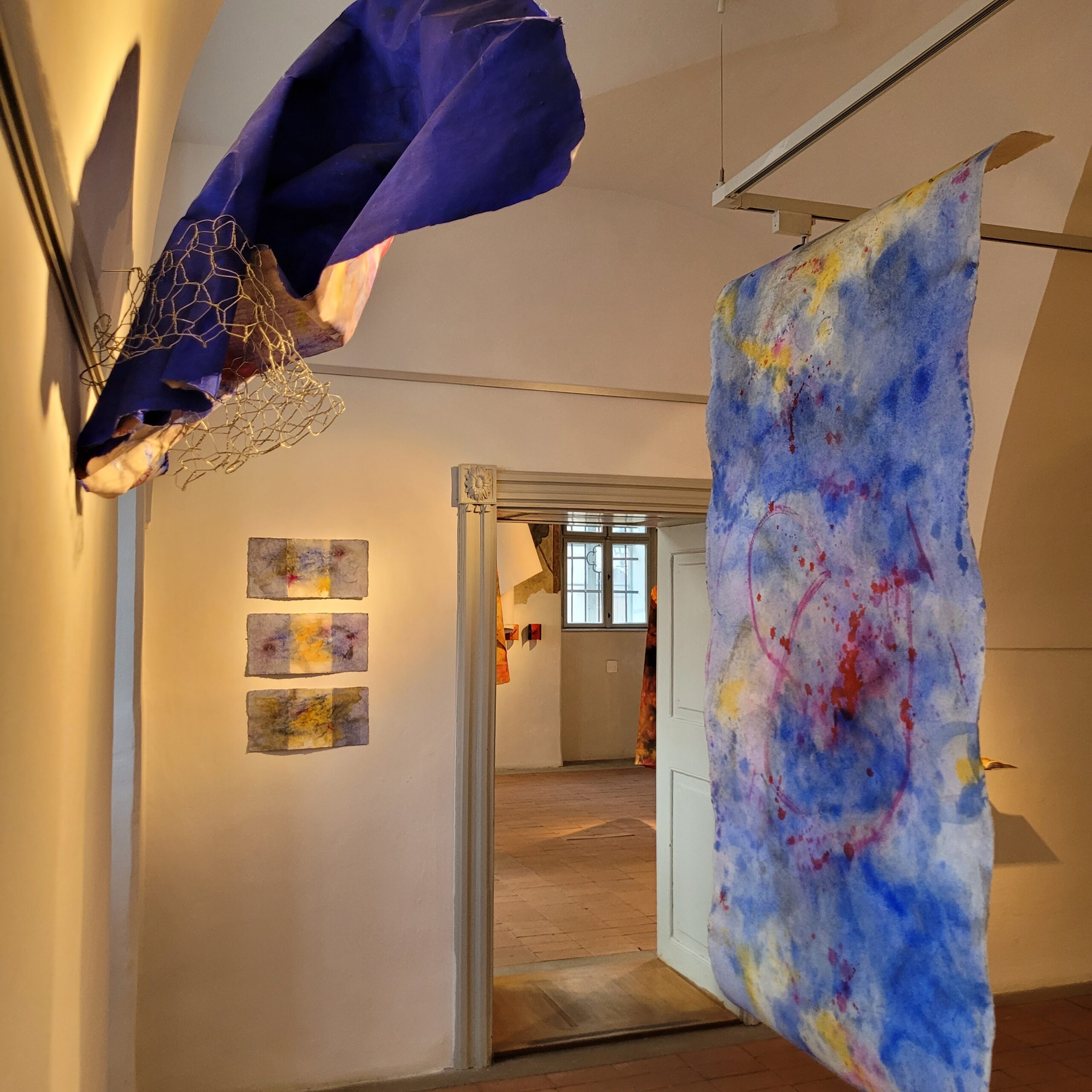
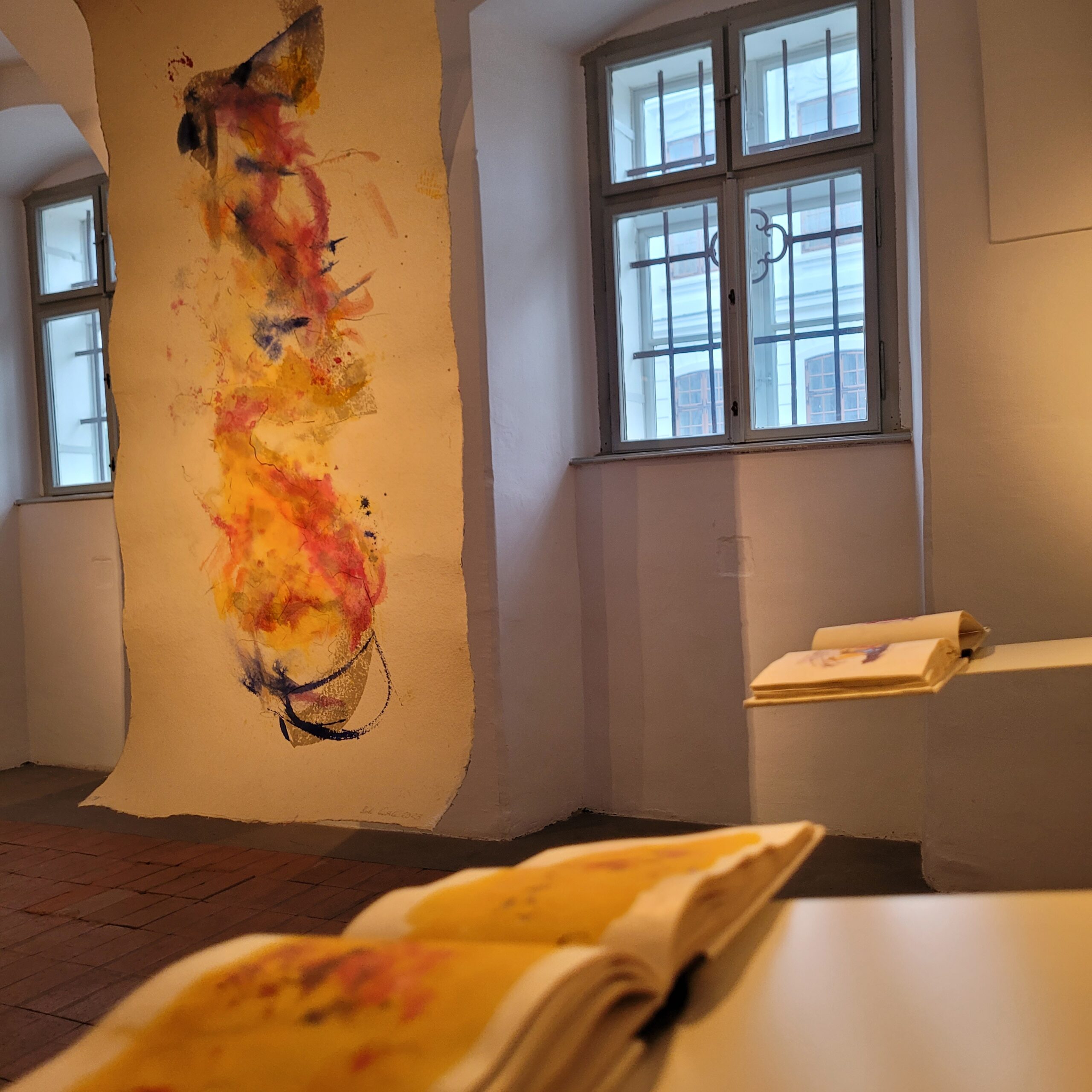
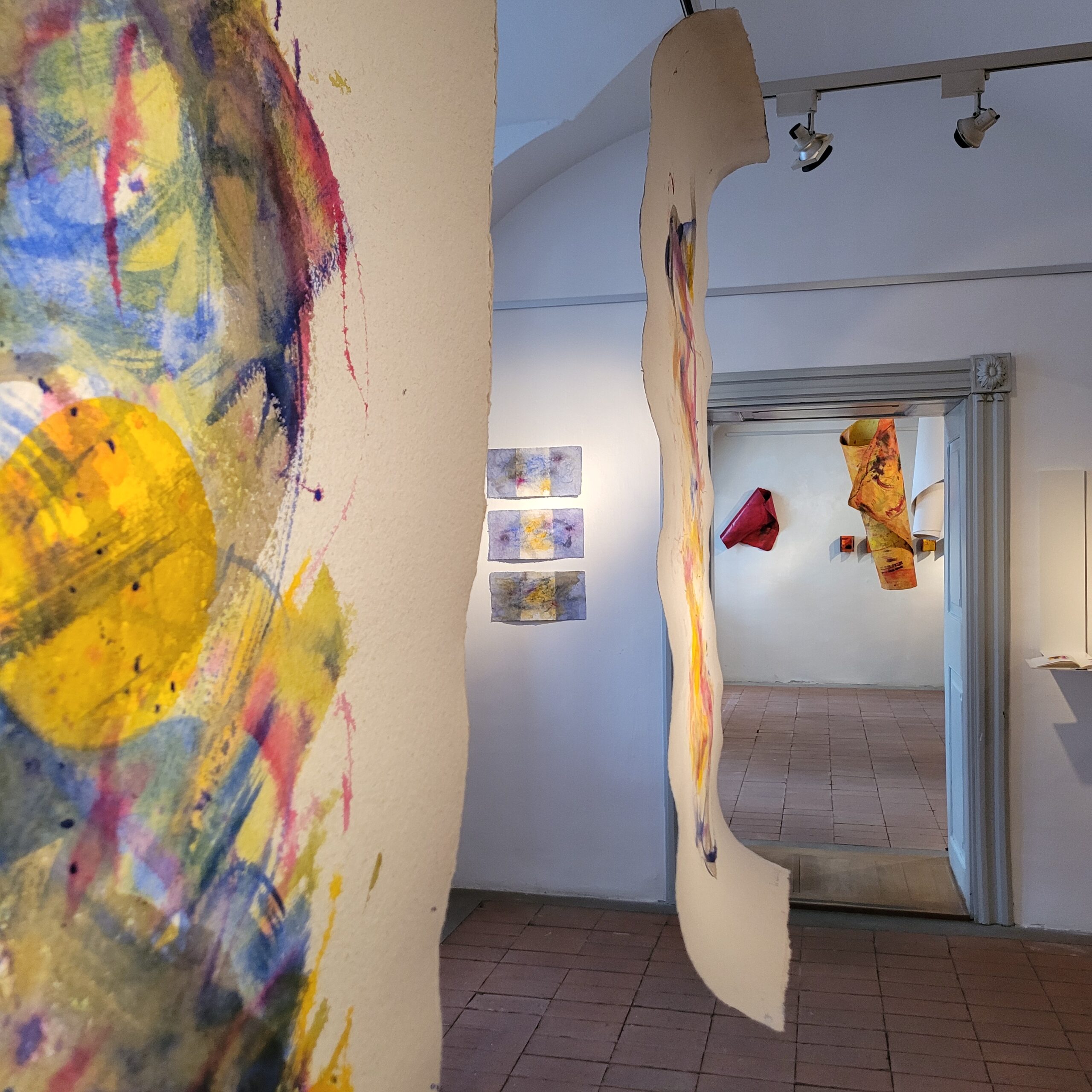
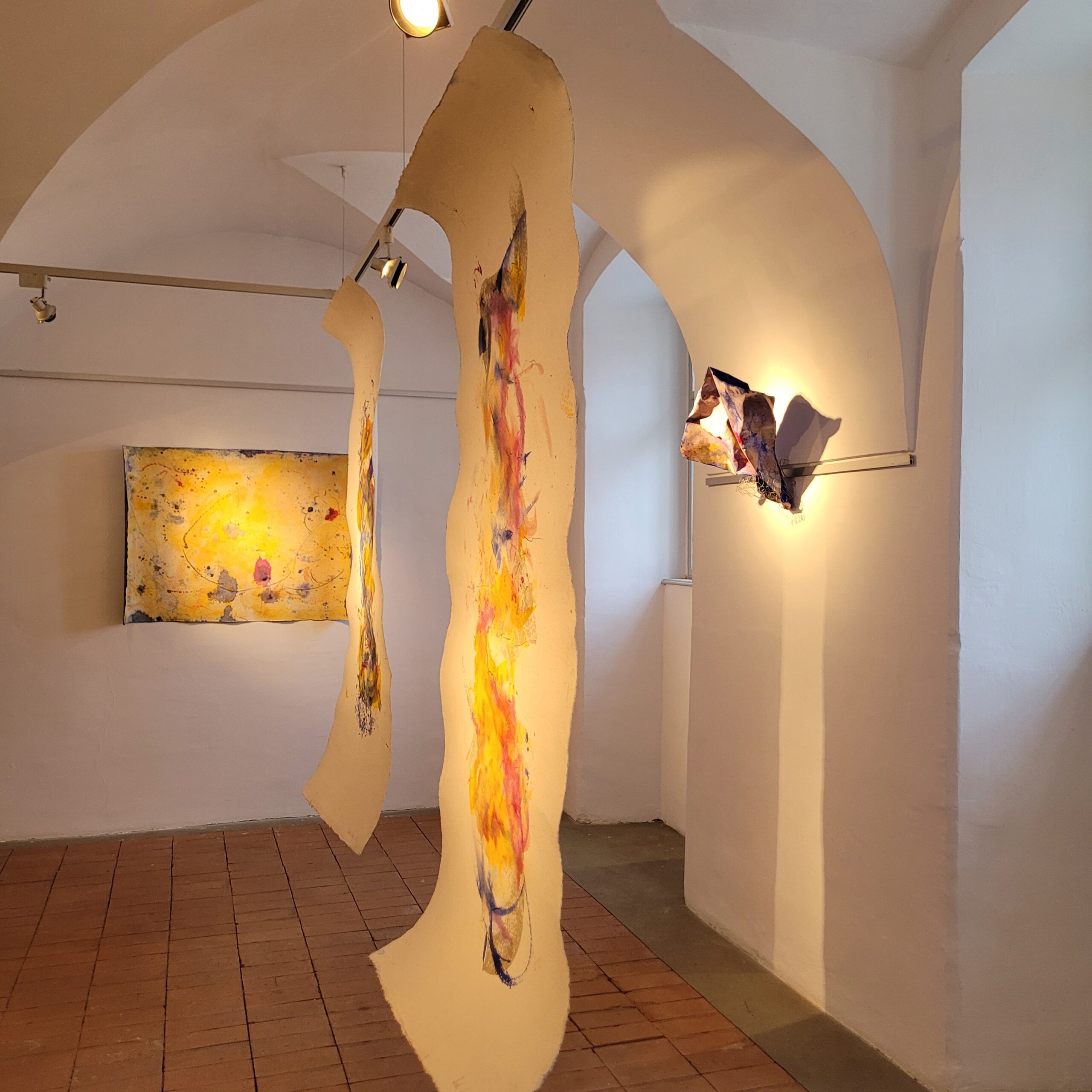
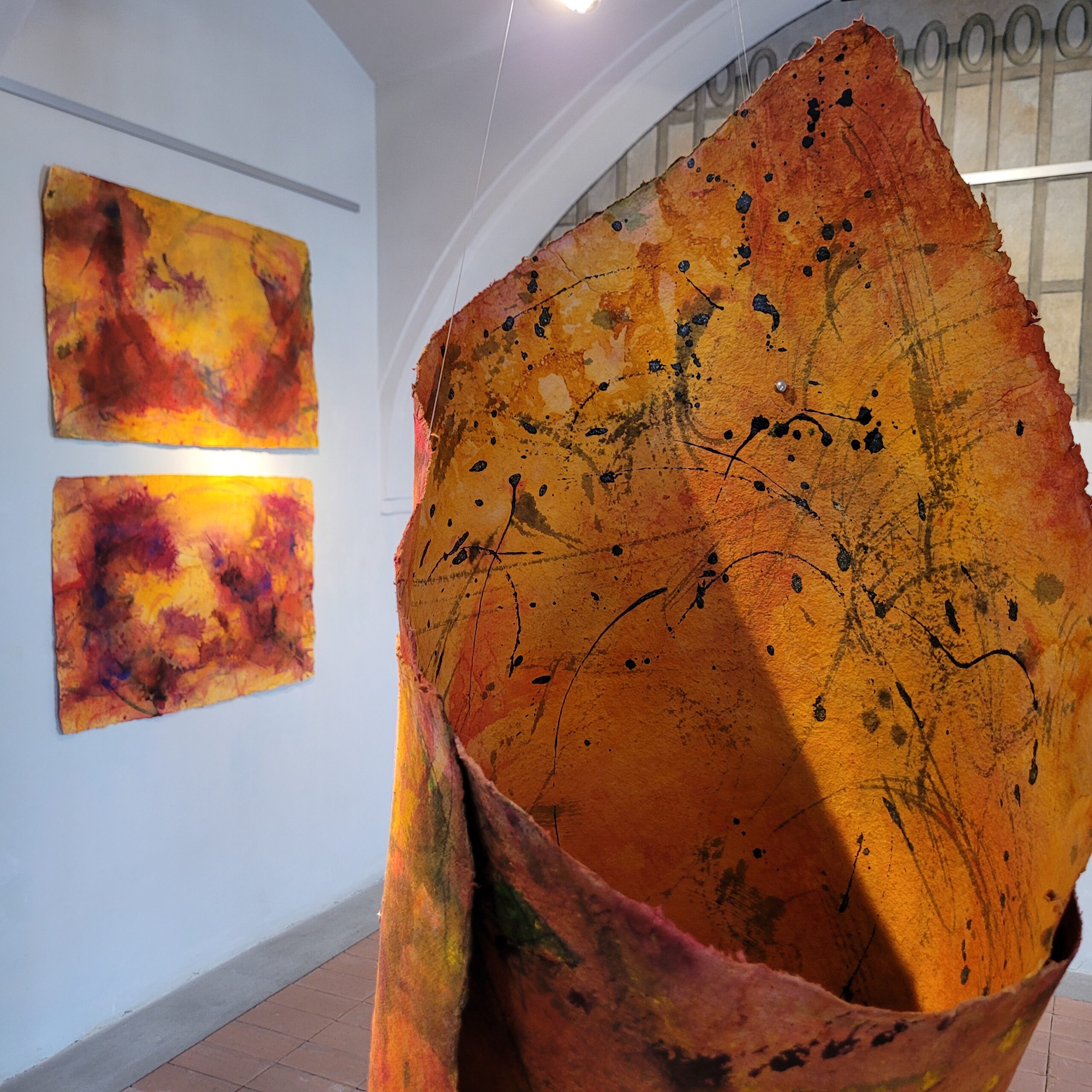
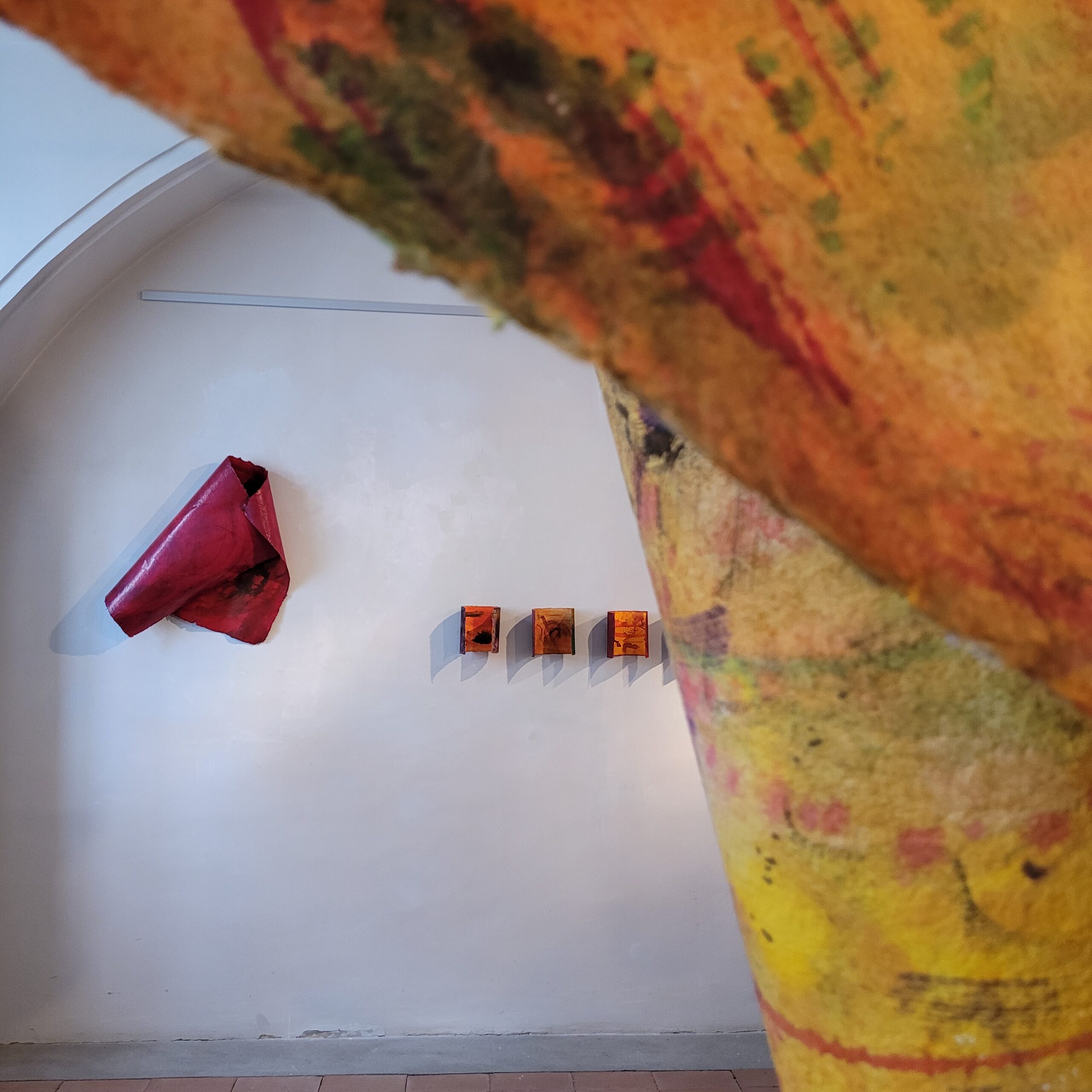
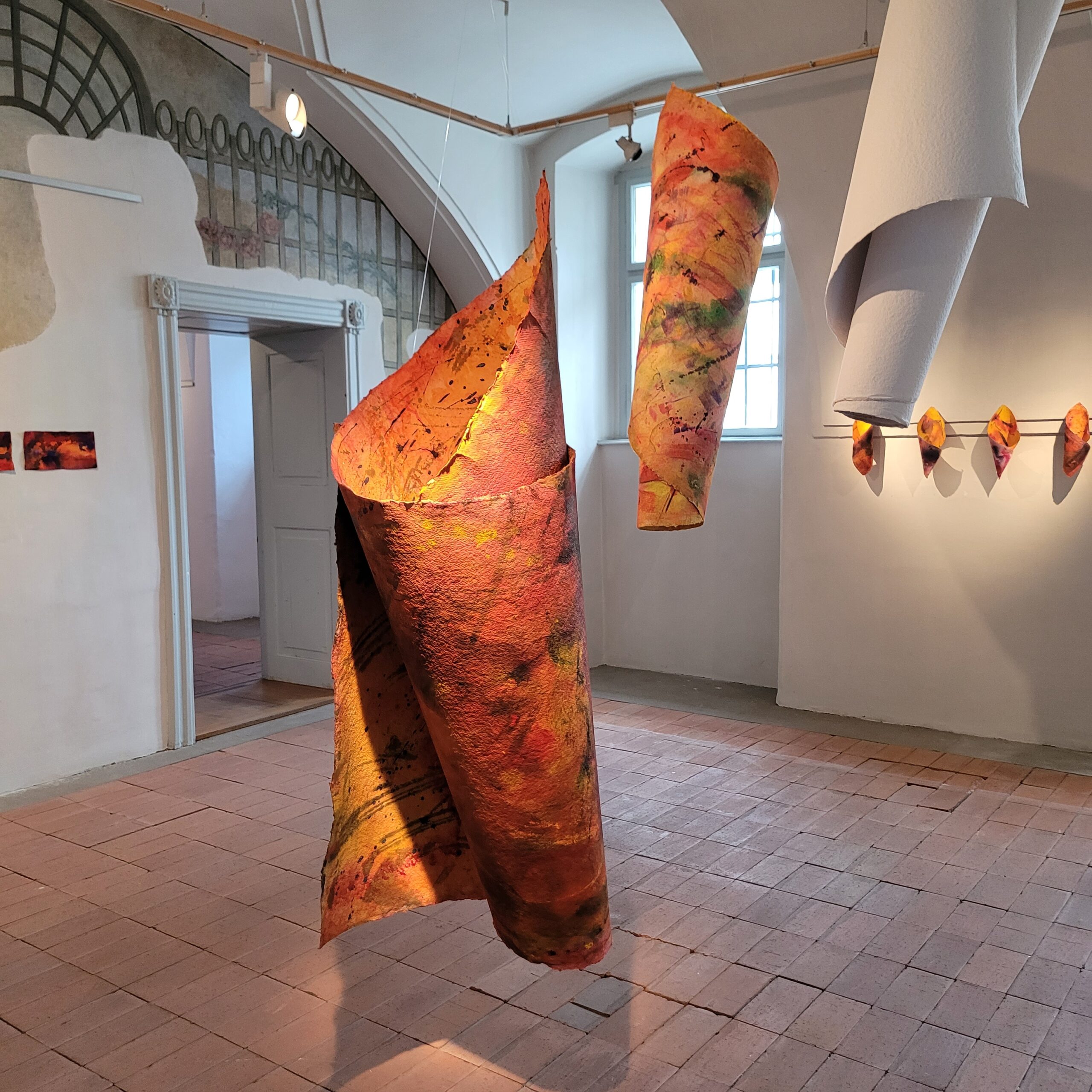
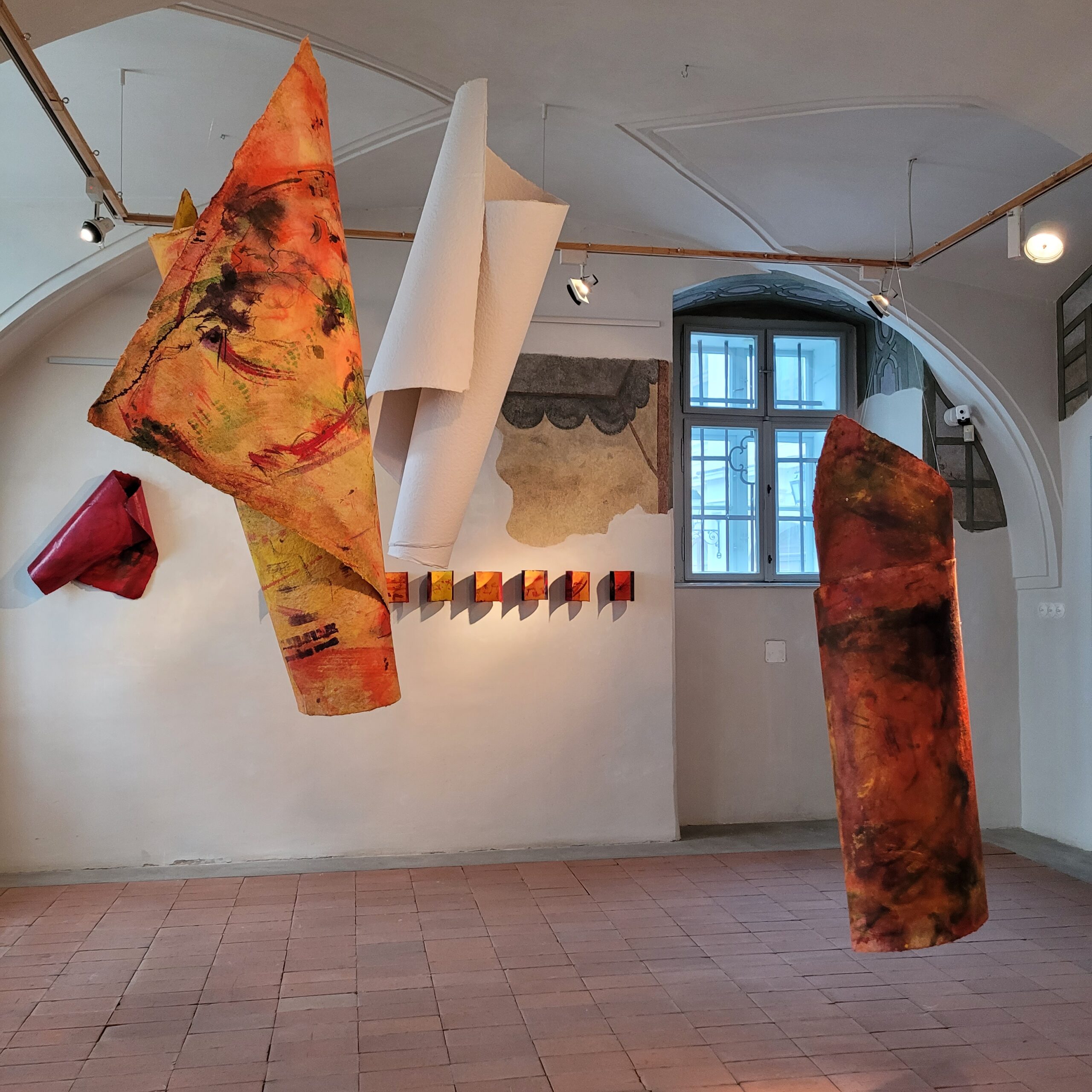
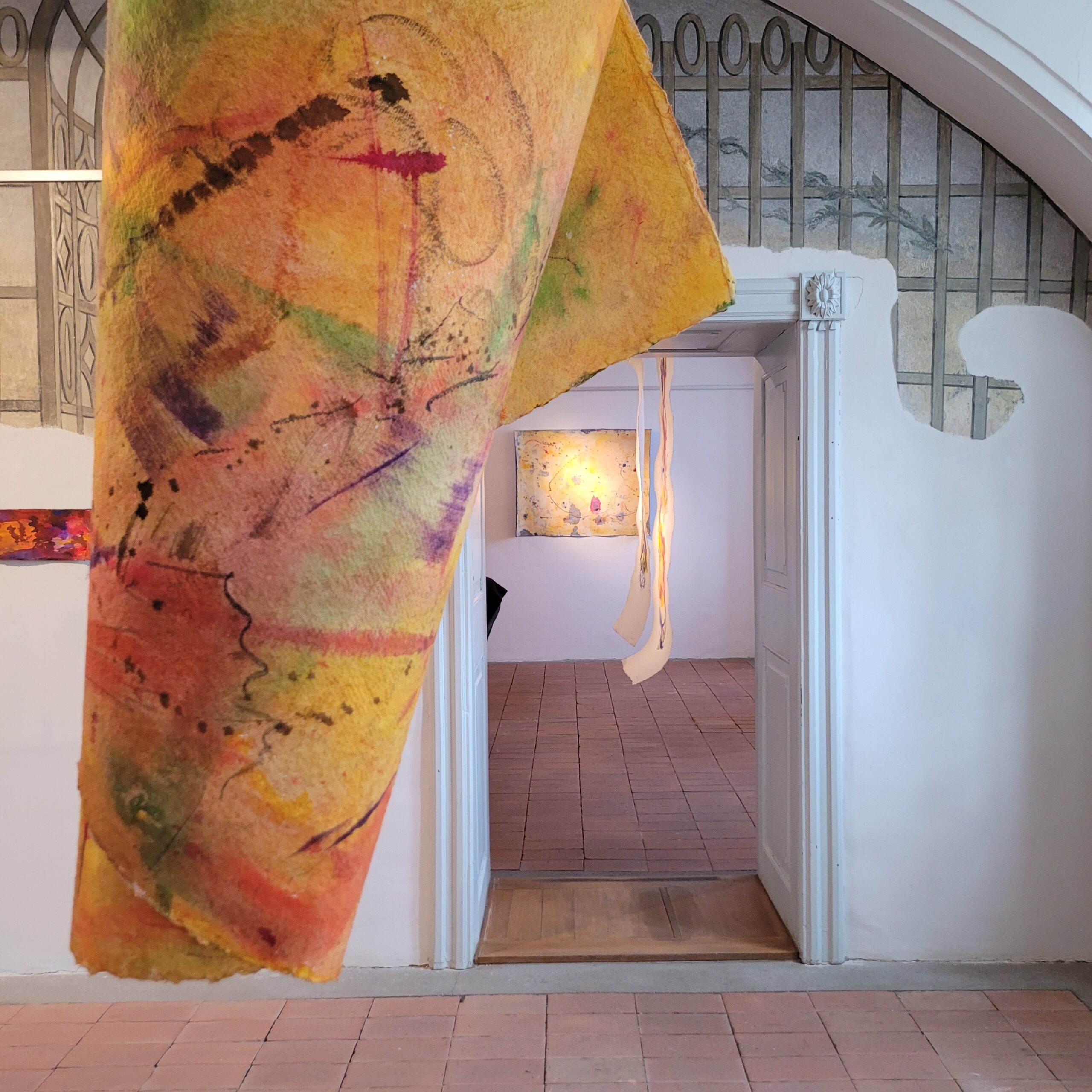
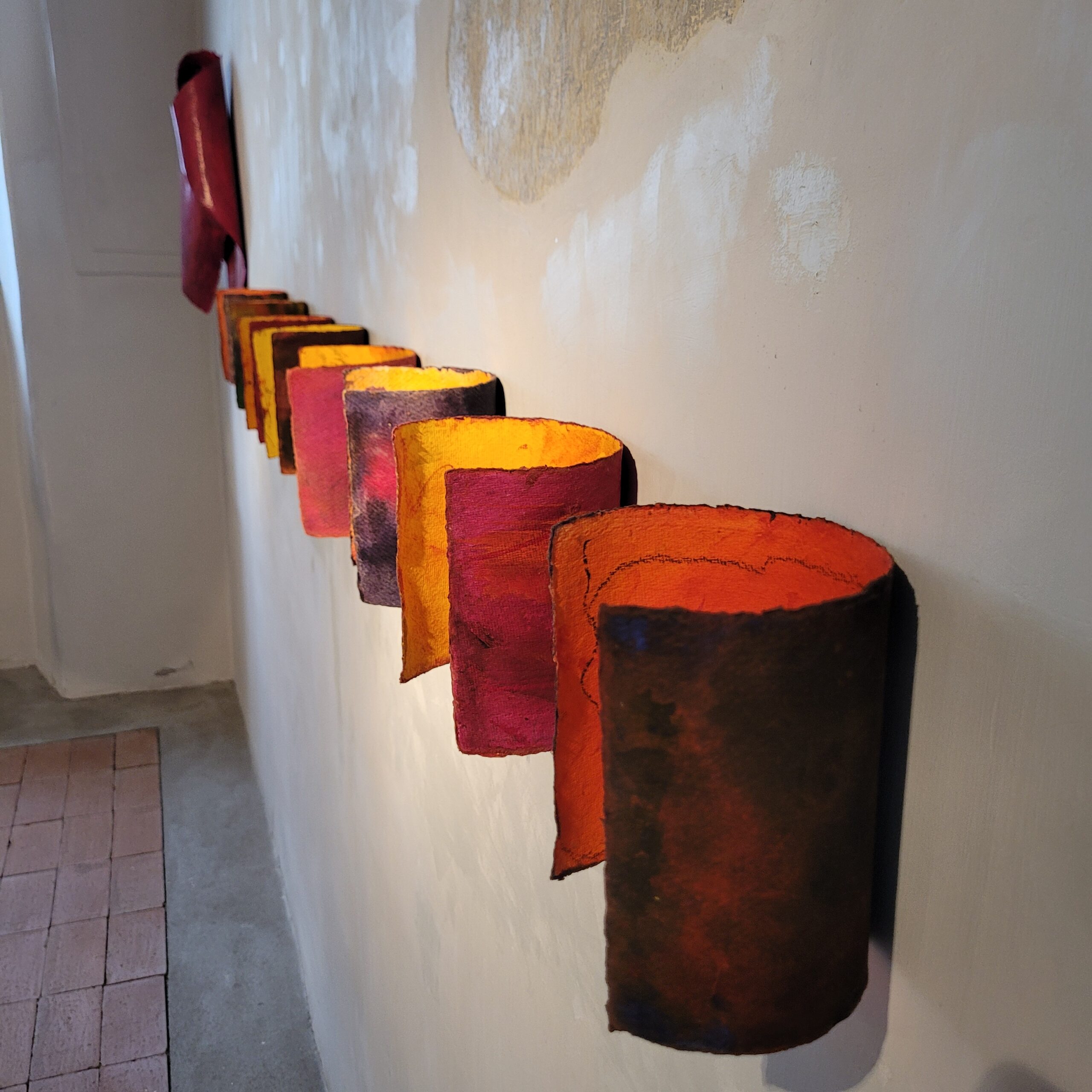
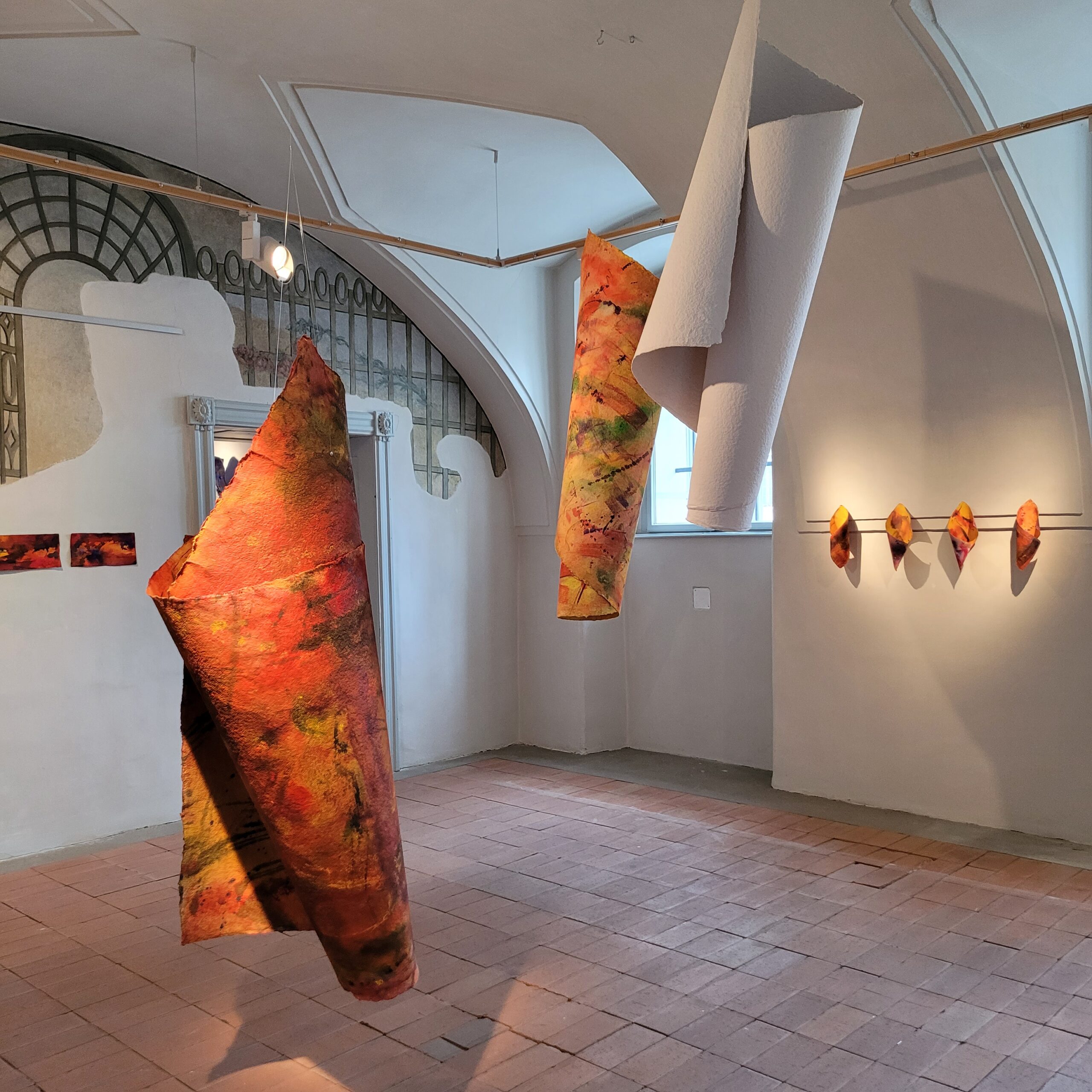
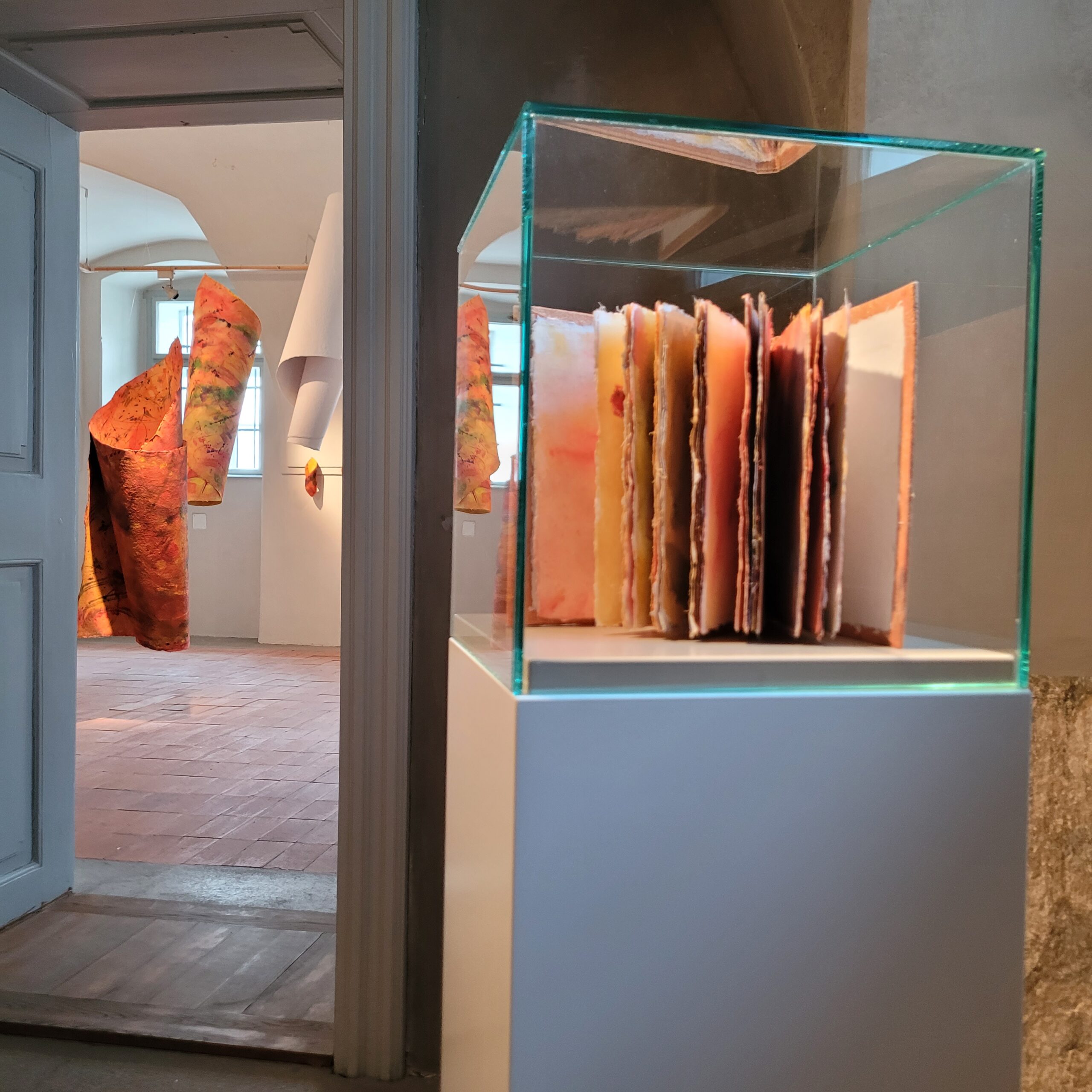
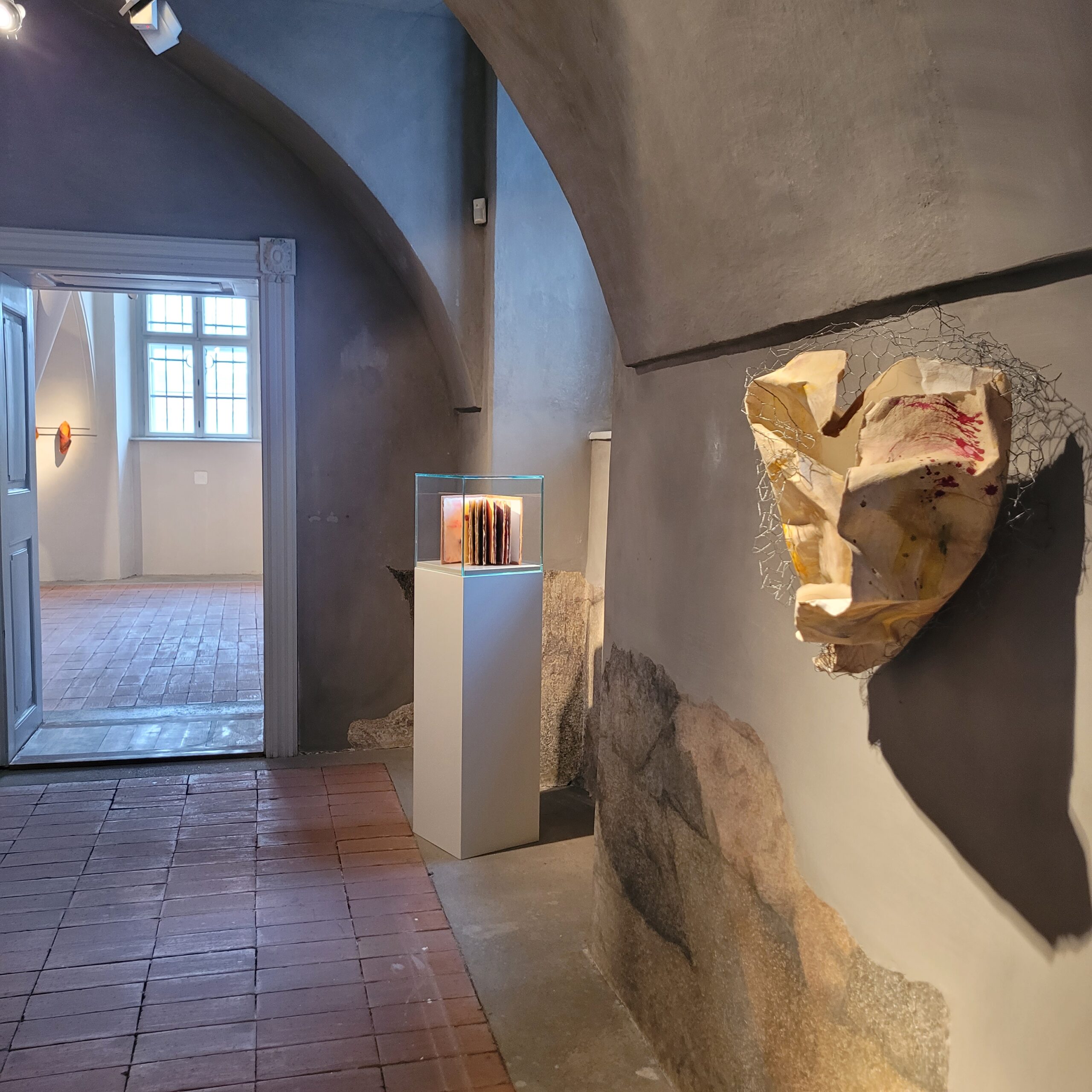
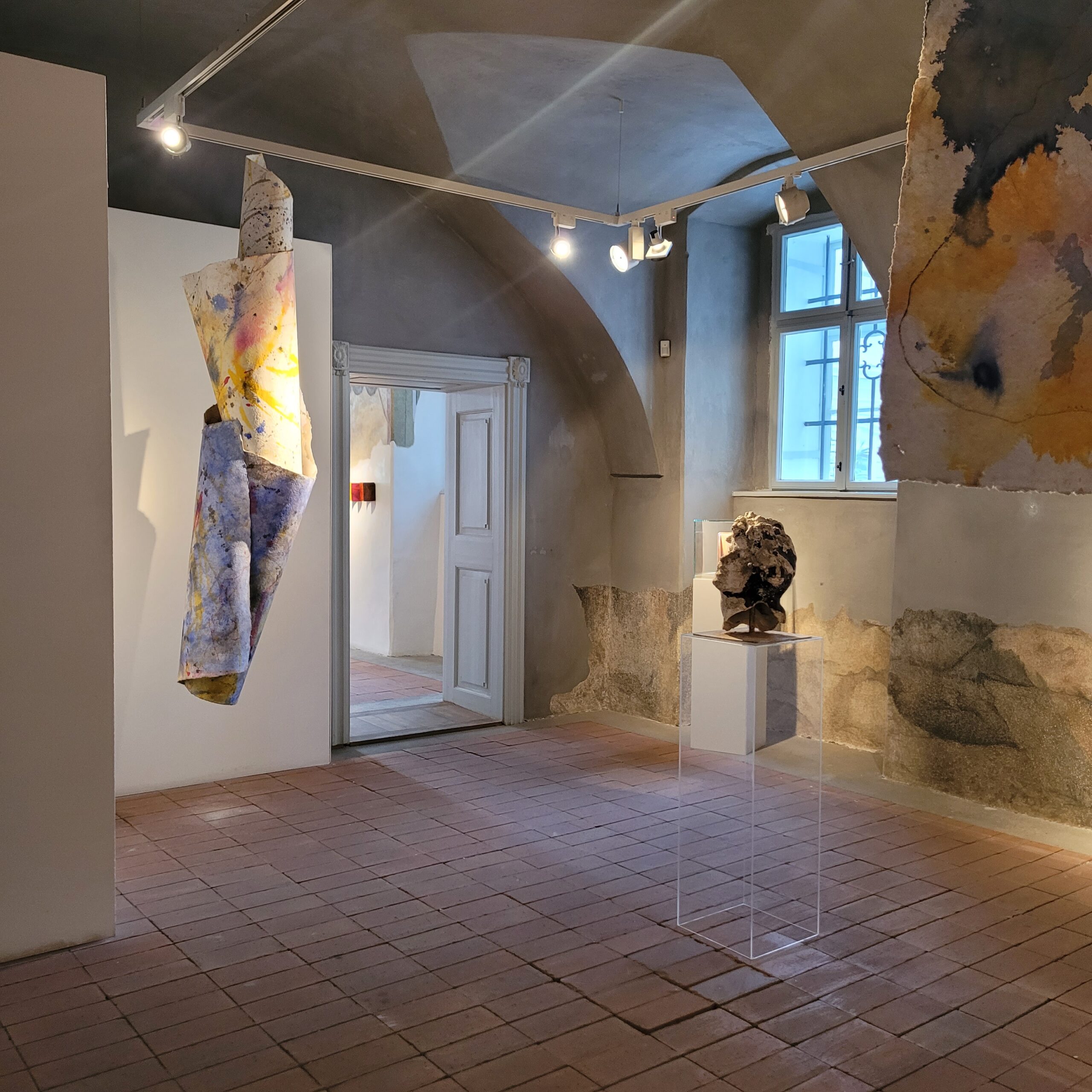
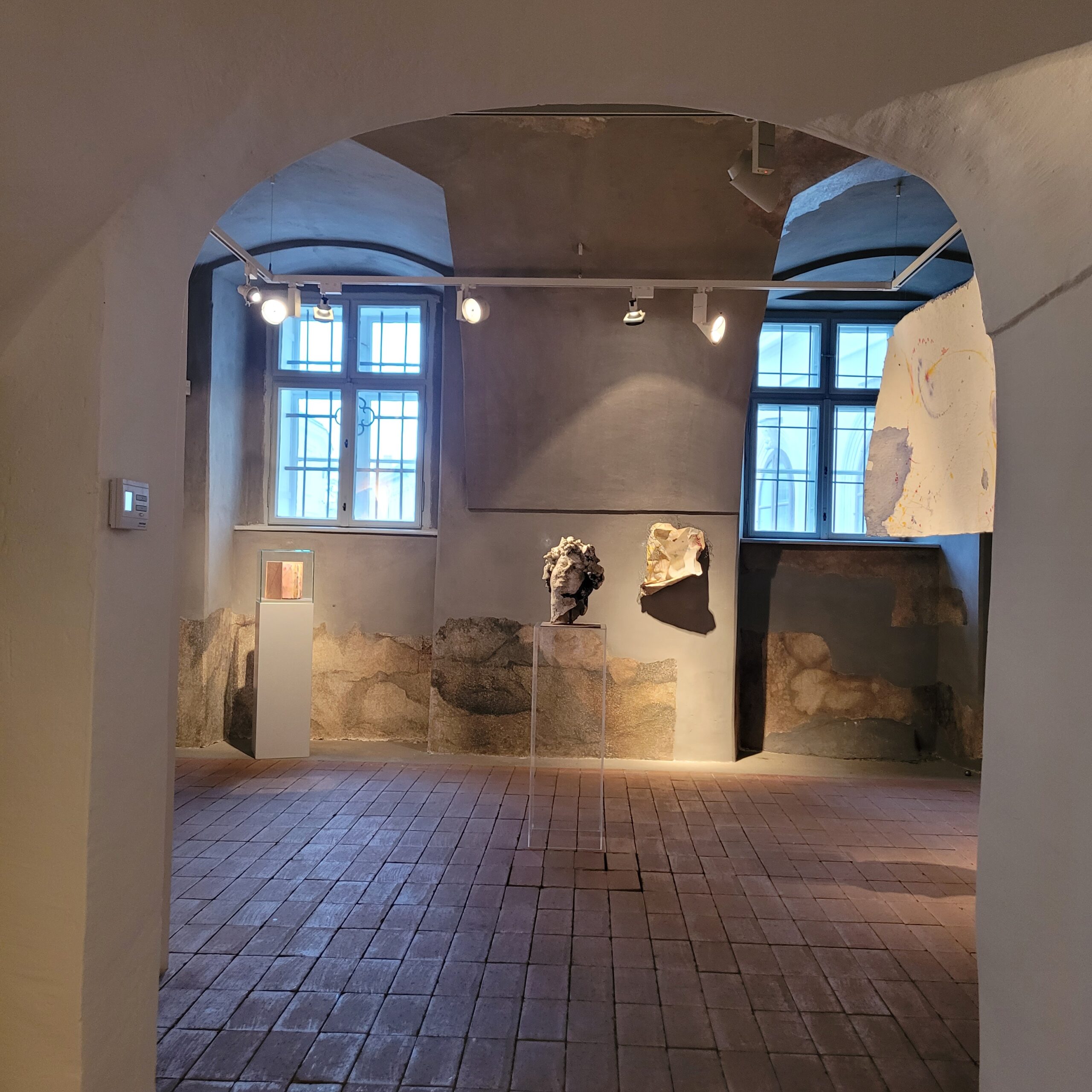
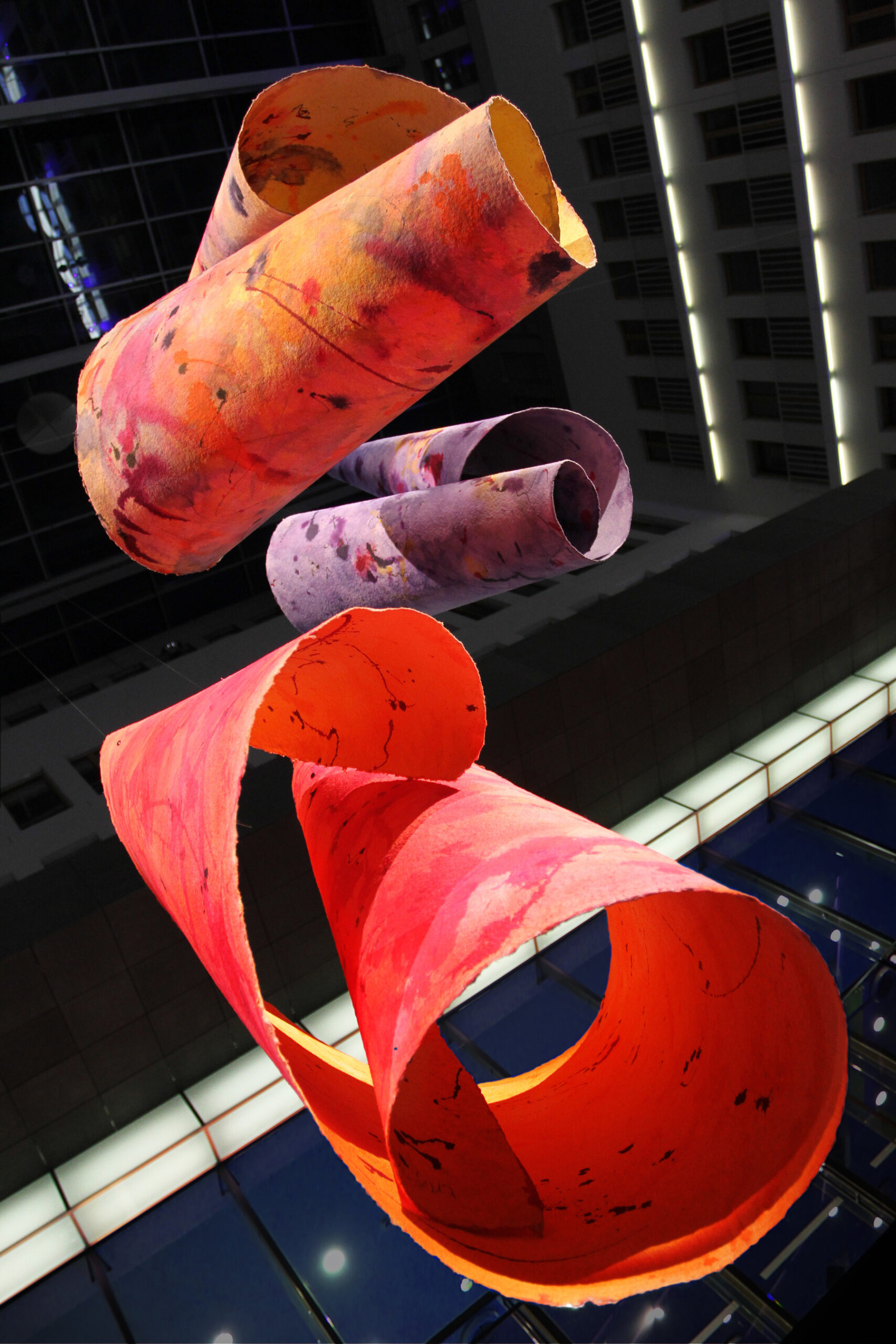
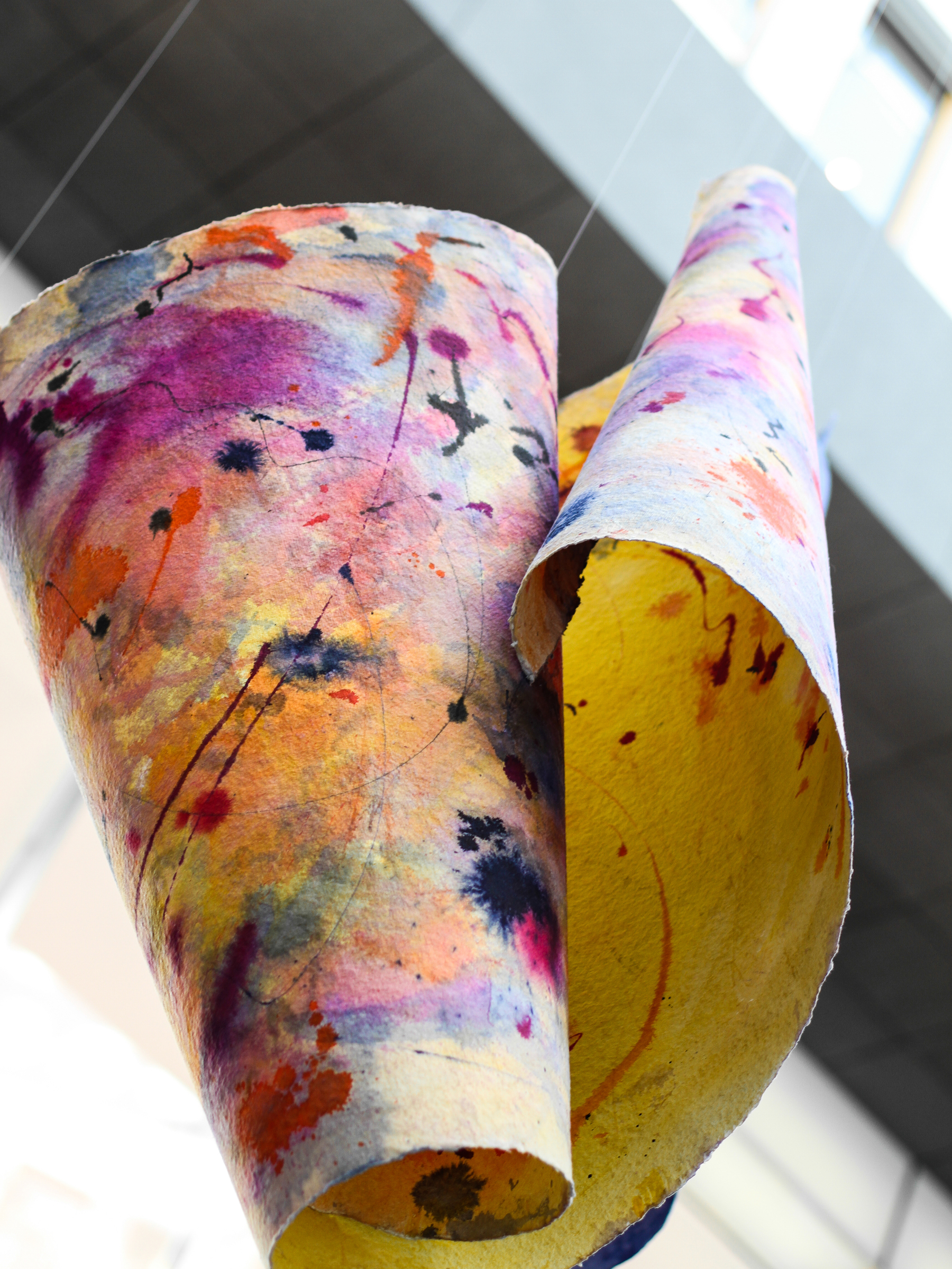
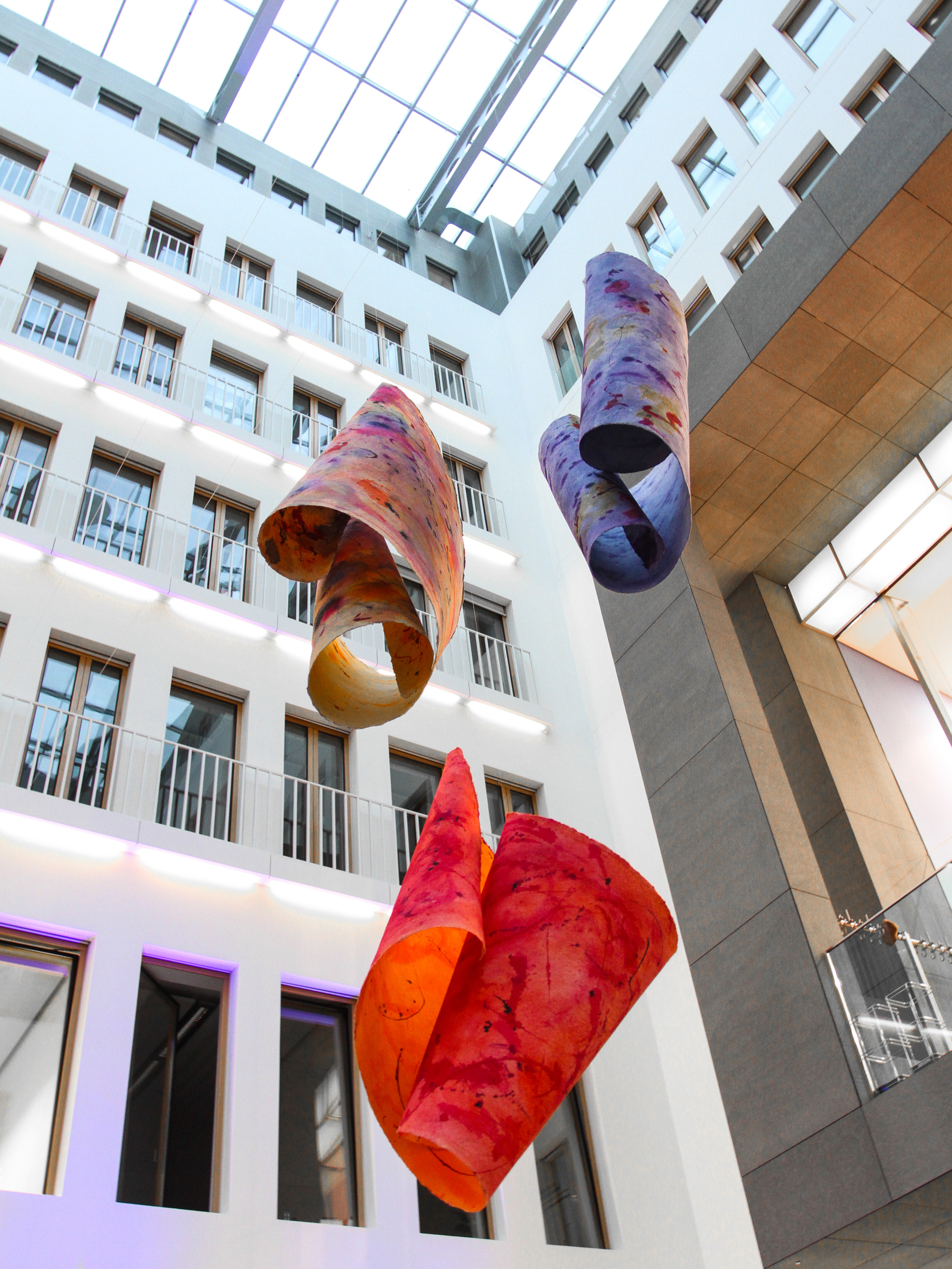
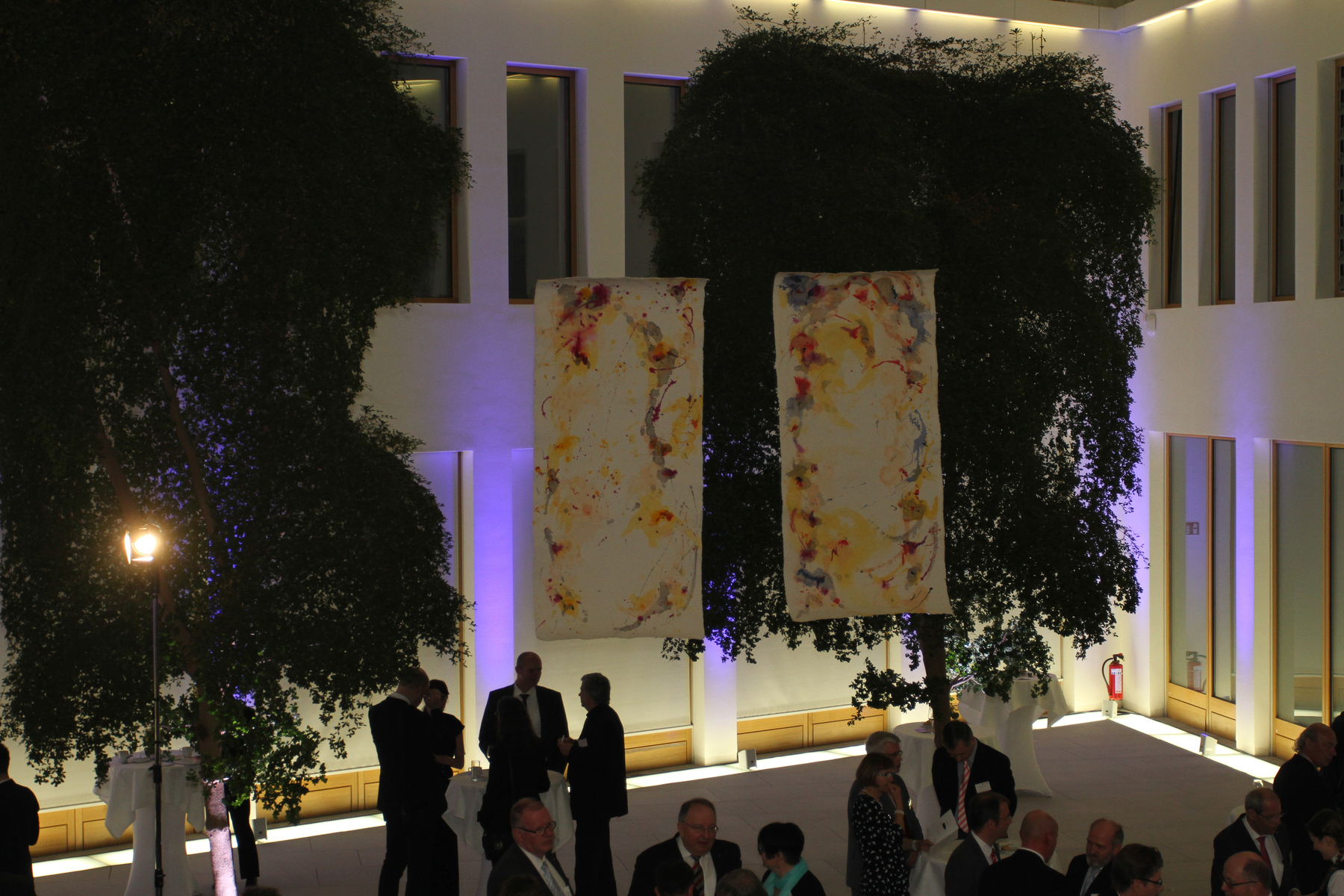
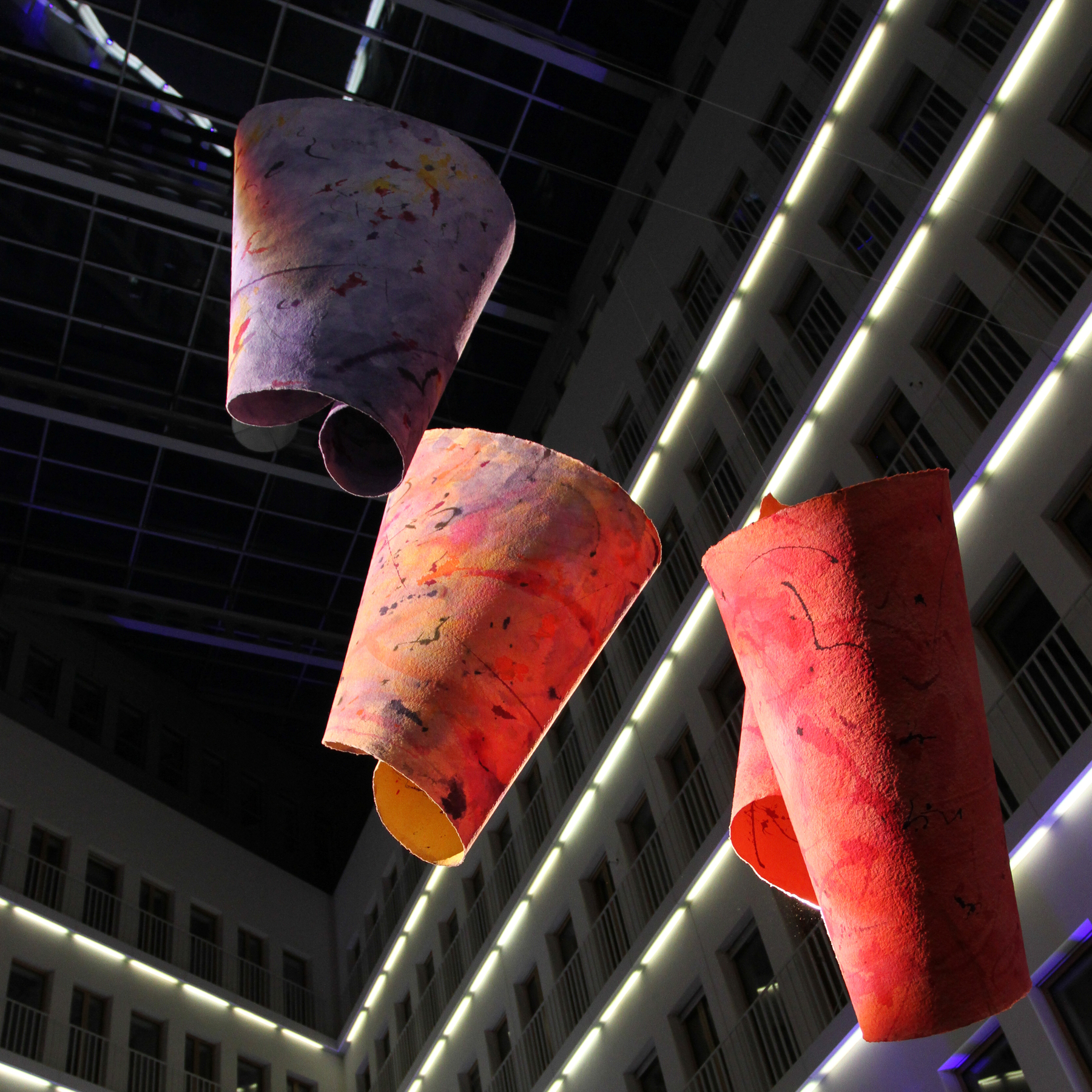
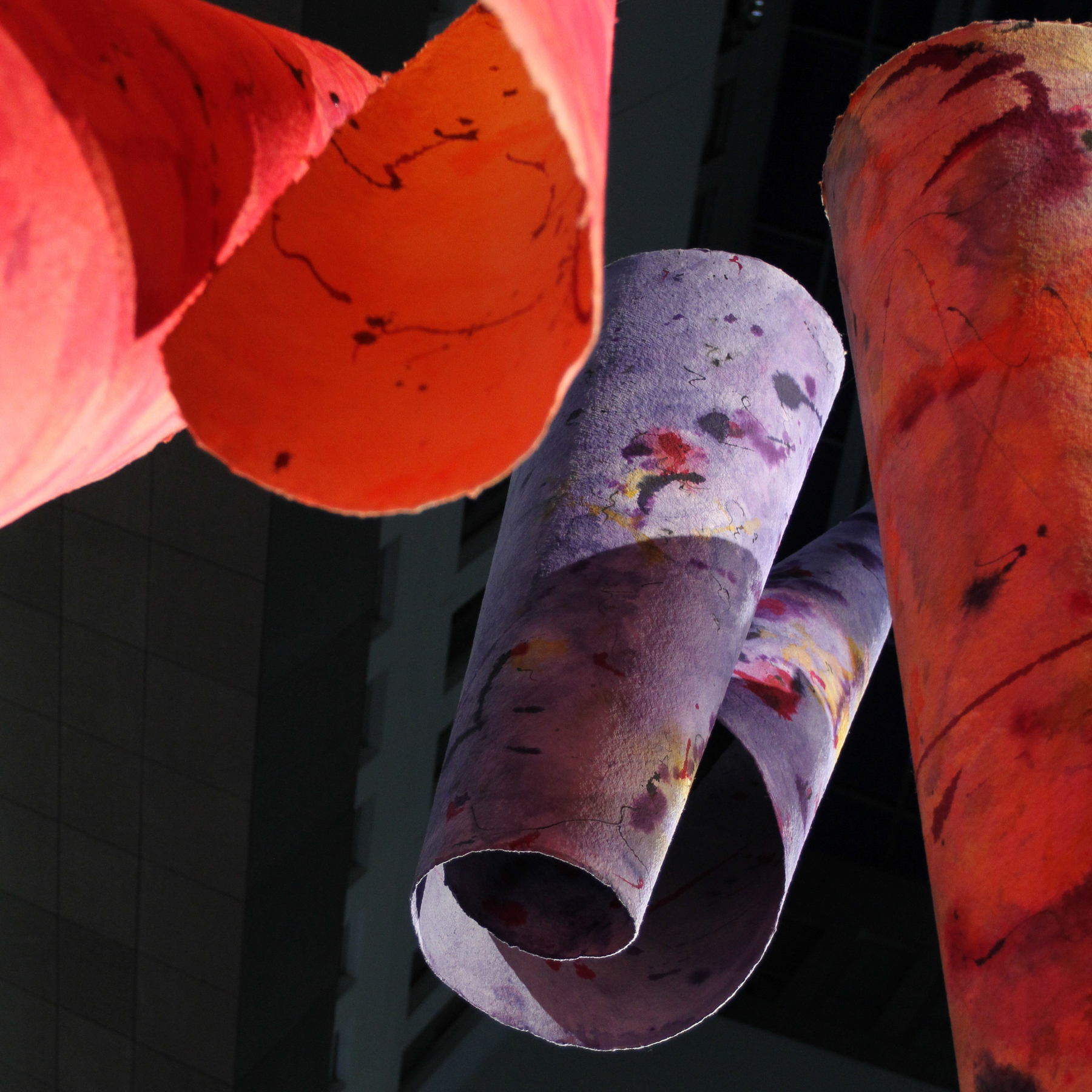
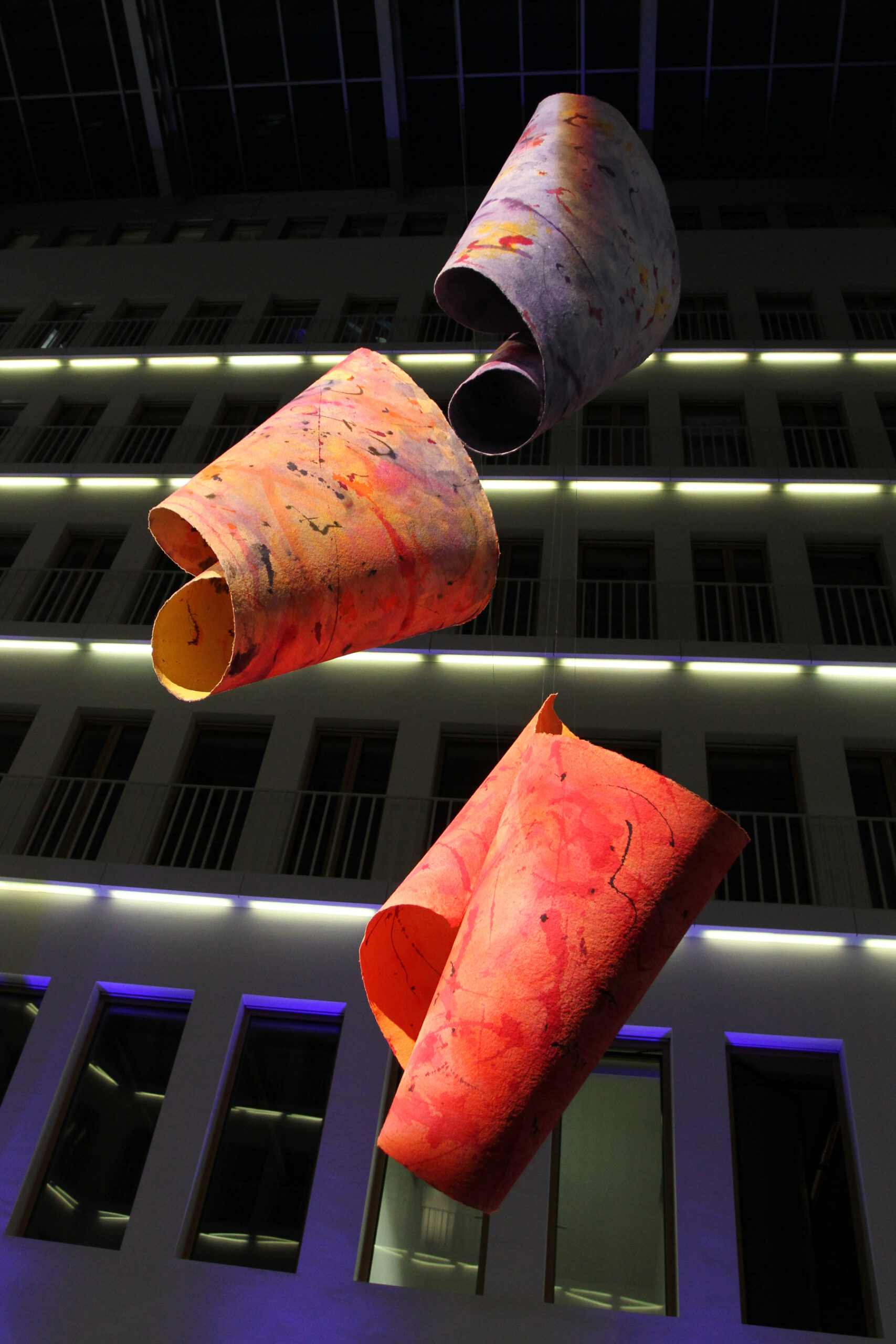
I roll my works of handmade paper in and out, let them float on the ceiling or attach them to the wall in various forms. Parts of my paintings are often hidden—rolled up, closed in books or painted on the back—and yet they exist, even if they are not immediately visible.
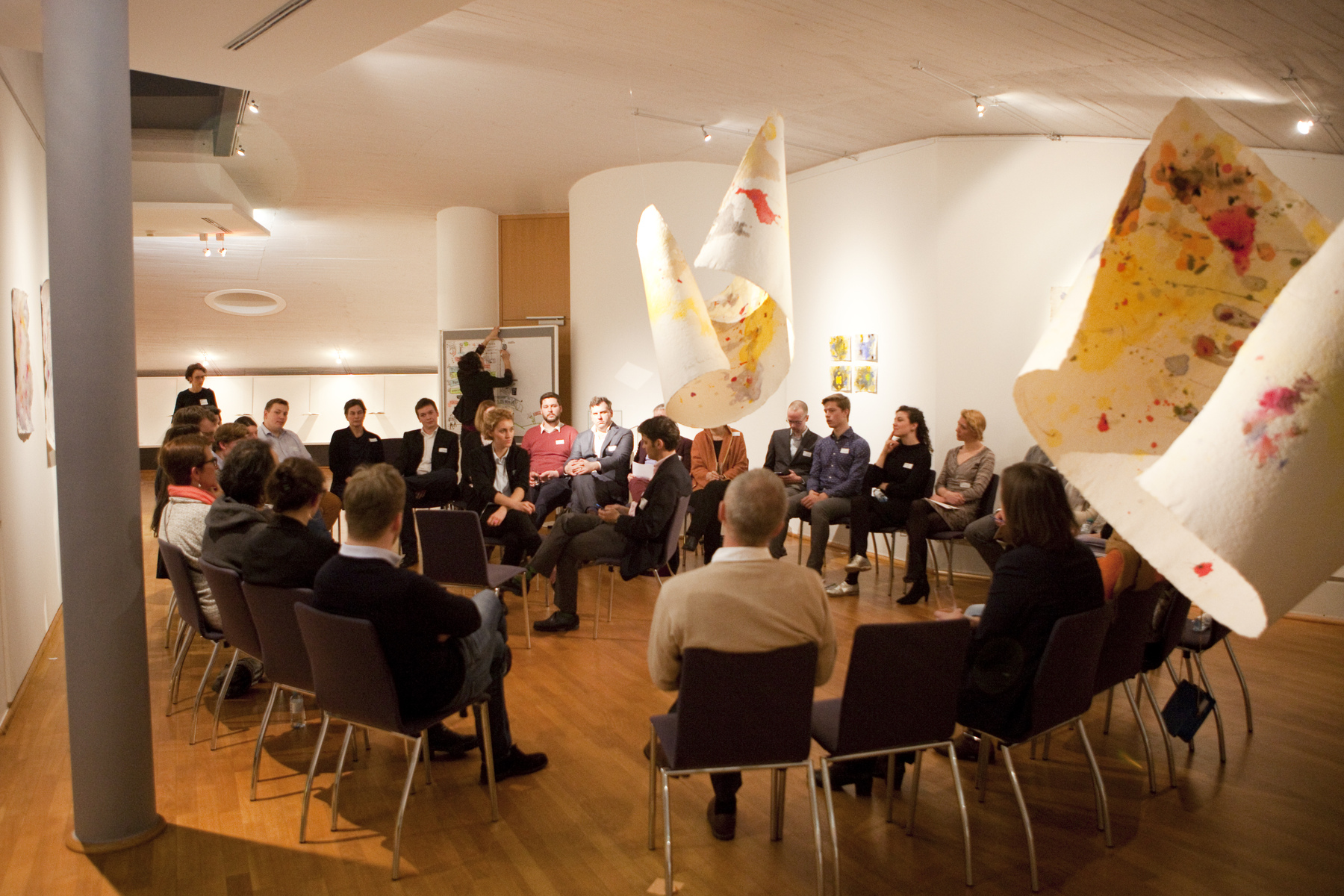
When I hang my rolls of paper in the open space, they become spirals. These shapes reflect the longing and vision of flying, and I draw on one of the oldest symbols in human history: the spiral. I deliberately use white, blank paper—it is a sign of inspiration, a space of “everything can be”.
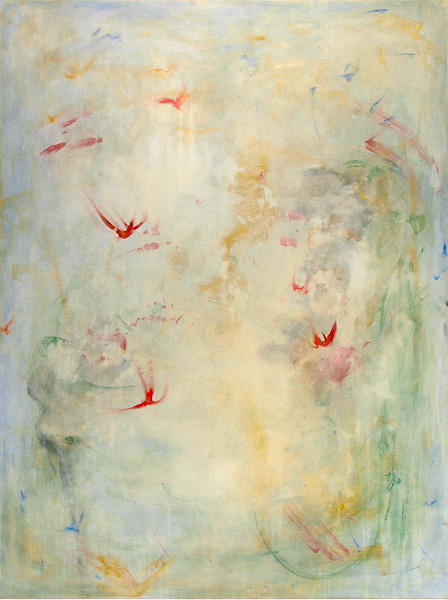
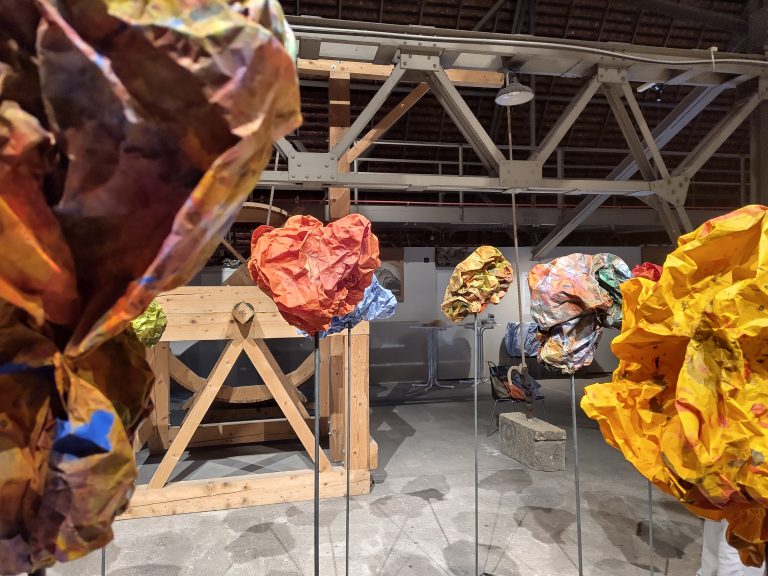
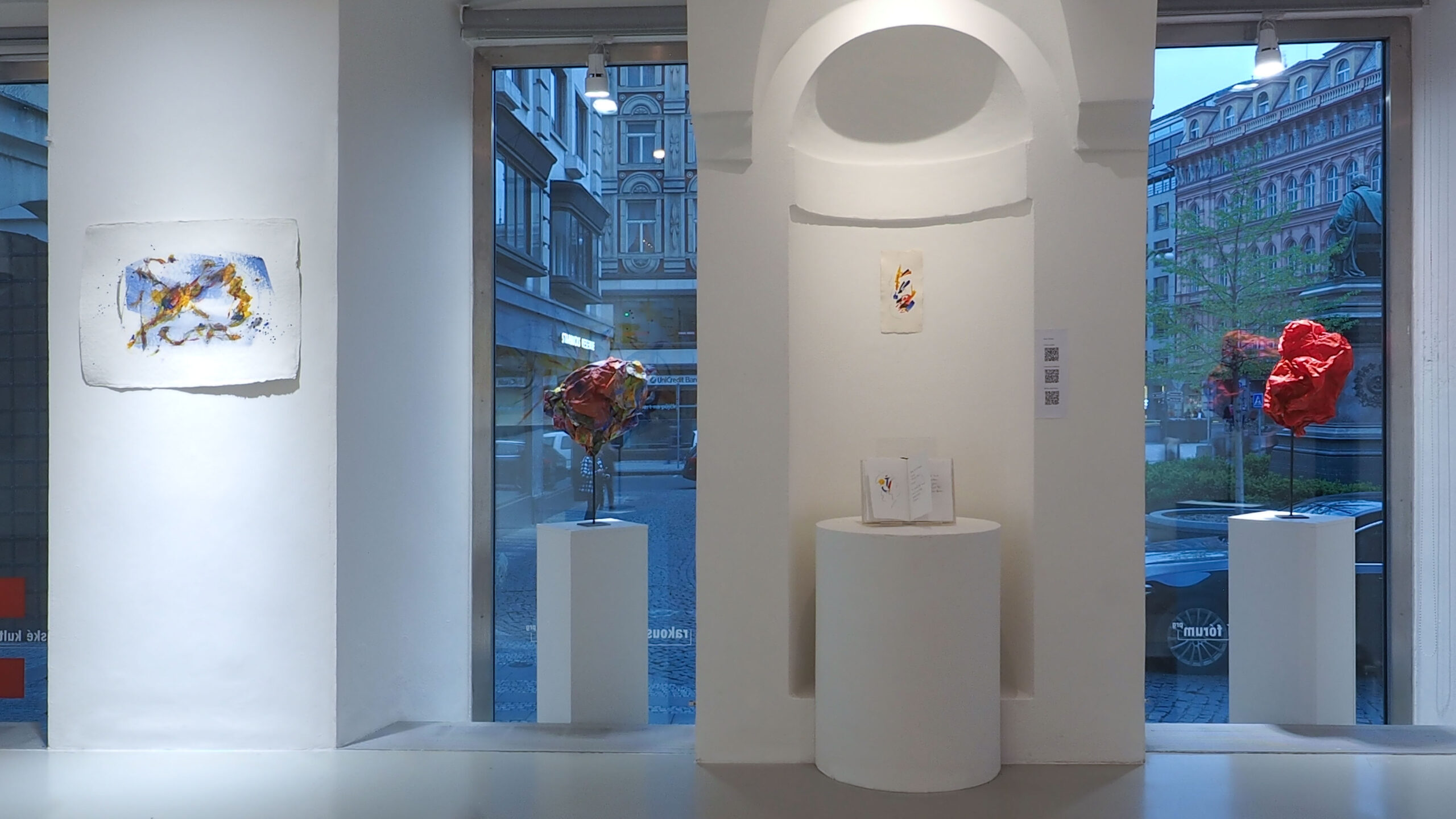
Through the variety of forms in my art—pictures, sculptures, sculptures, paintings, empty spaces as places of possibility—they become symbols of mutability—the art of possibility. They are “open works of art” and also an impulse for our society to react creatively and openly to situations of change. For my understanding of the importance of art, especially in processes of social change, see “Notes on my art” and the author’s page.
Prices of my works: they are for sale and generally range between 200-3600 Euros. Specific prices upon request: kontakt@beate-winkler.net
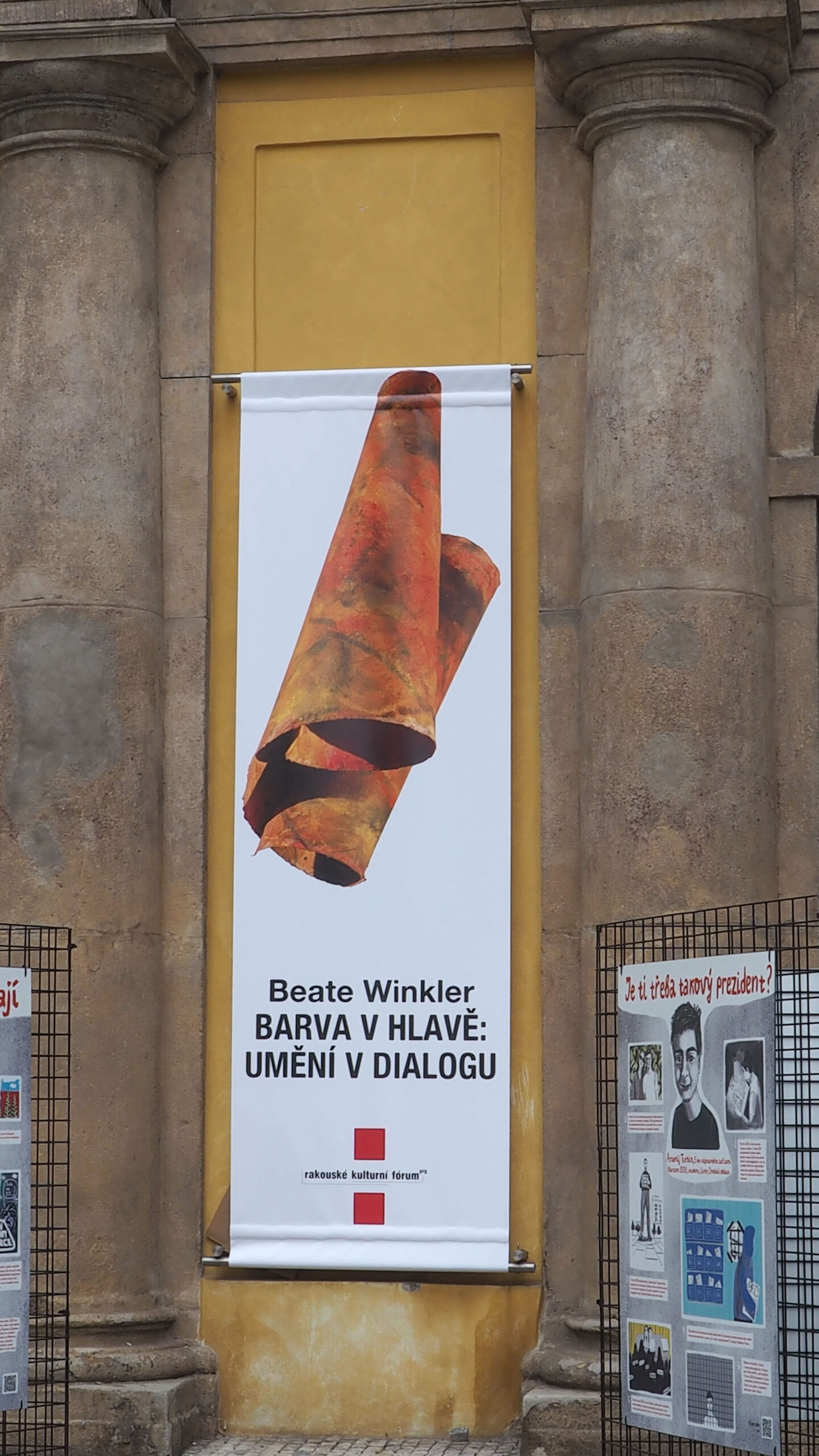
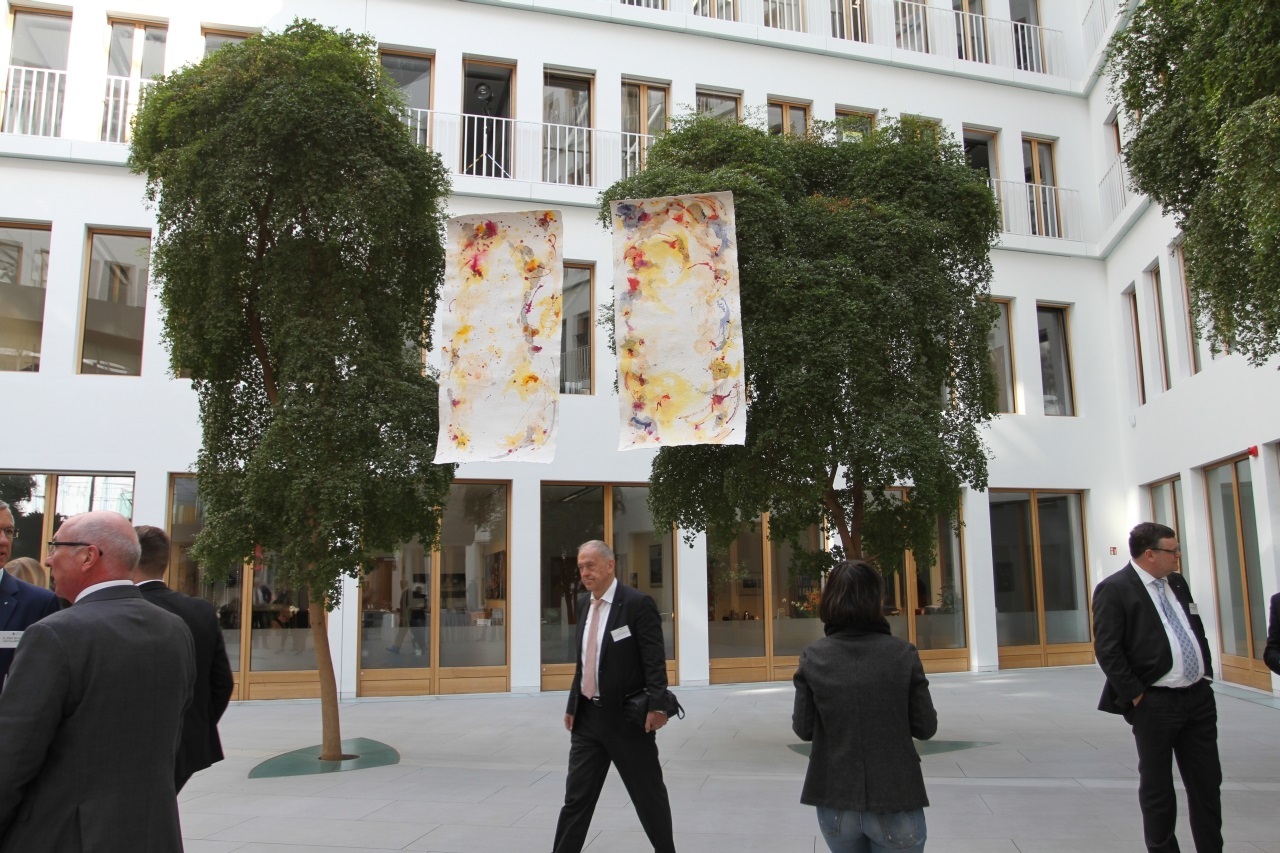
On the occasion of the “Day of German Unity” in October 2026, I created the installation “Farbe im Kopf” at the German Embassy in Vienna, with support from Rudolf Lamprecht (lighting) and Vlad Korman (technology). The day and the place are intertwined with my life: I was born in the GDR, grew up in the Federal Republic of Germany, live in Vienna, and have contributed—both in content and institutionally—to building Europe.
Be creative, develop a range of solutions to our problems, seize opportunities – and take action. We need all of this right now, in these times of change and widespread uncertainty. My exhibition and project, ‘Farbe im Kopf – Art in Dialogue’, encourages us to view our world, our society and ourselves through the lens of alternative realities that we could potentially inhabit. It aims to encourage people to see the transformation we are currently undergoing as an opportunity – through dialogue with visitors and the art itself. It is precisely in times of momentous upheaval, such as those we are currently experiencing, that art plays a central role in shaping how we respond to challenges. It provides scope for new ways of thinking, creativity and innovation. Art conveys meaning and responds to deep human needs. Art and culture strengthen our sense of identity, point the way to a life of freedom, enable us to see things from a different perspective – and, last but not least, they convey a sense of beauty and joie de vivre.
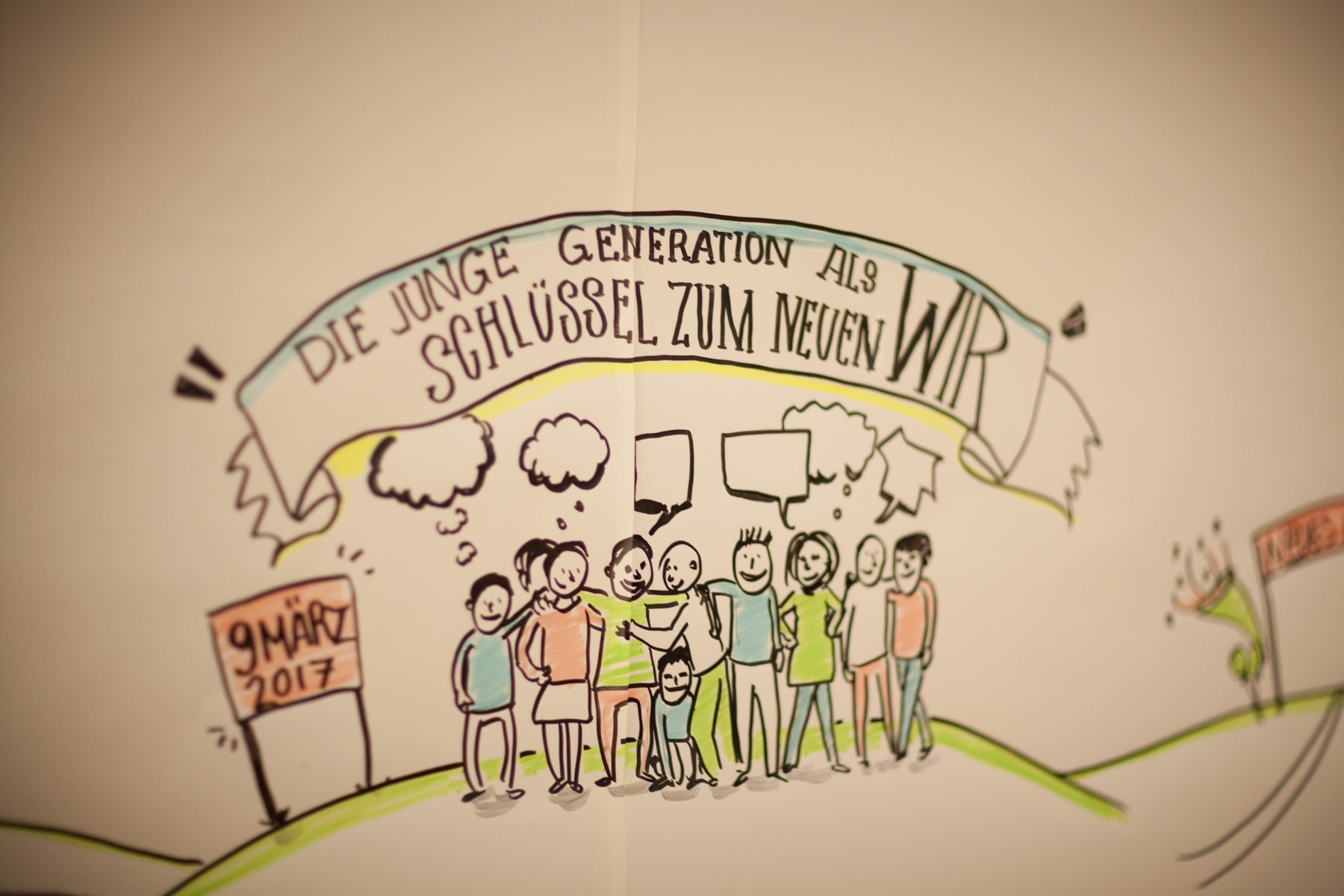
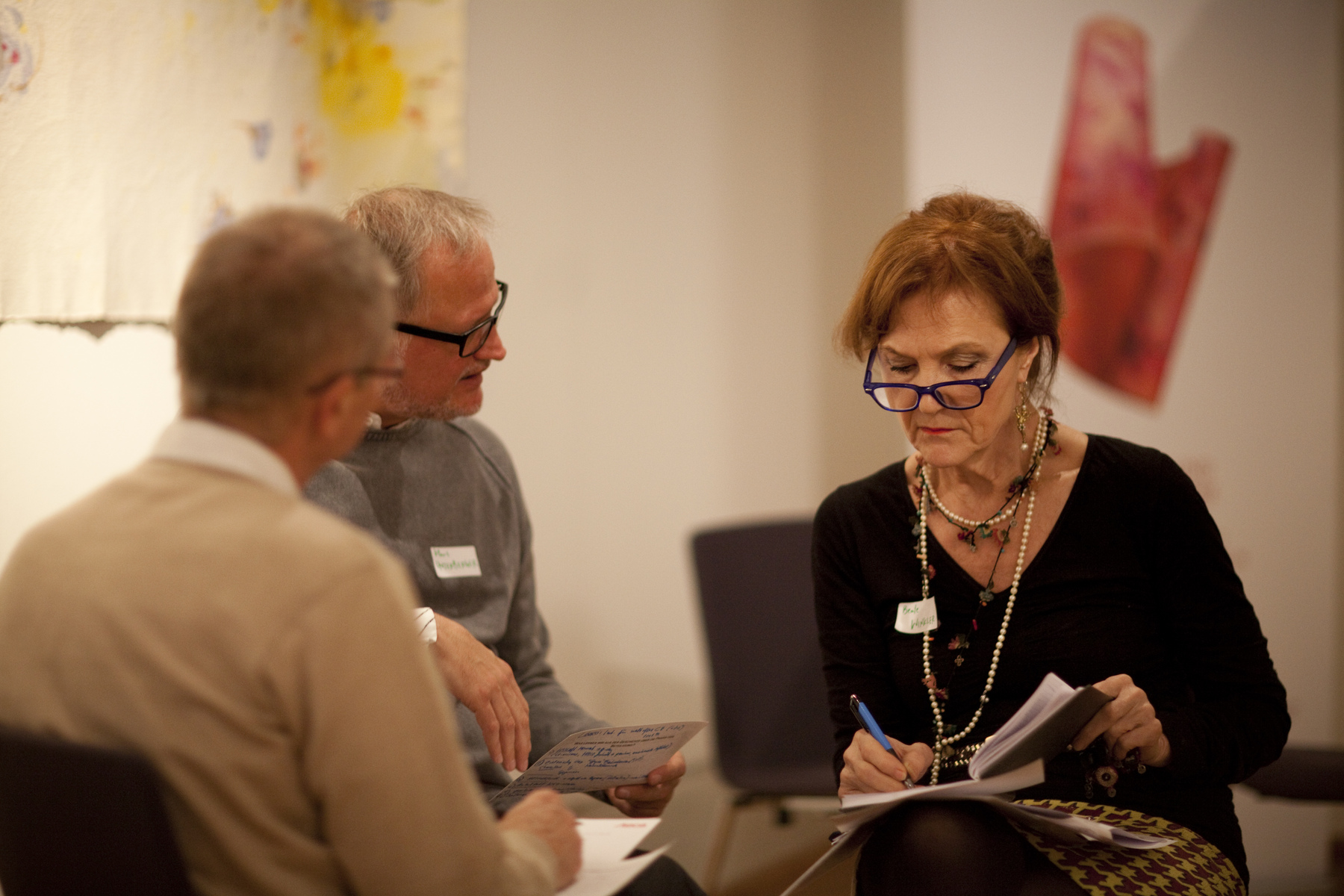
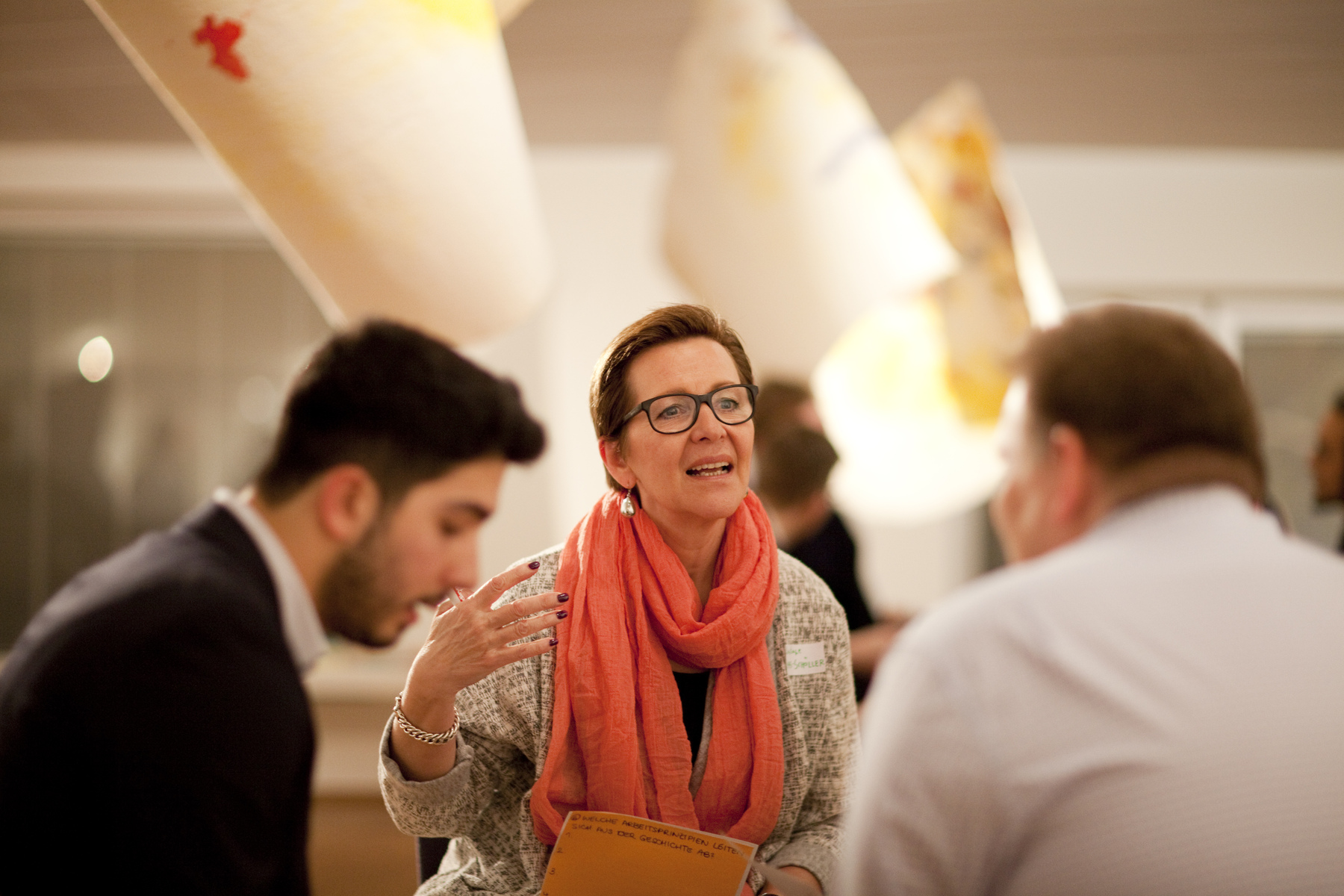
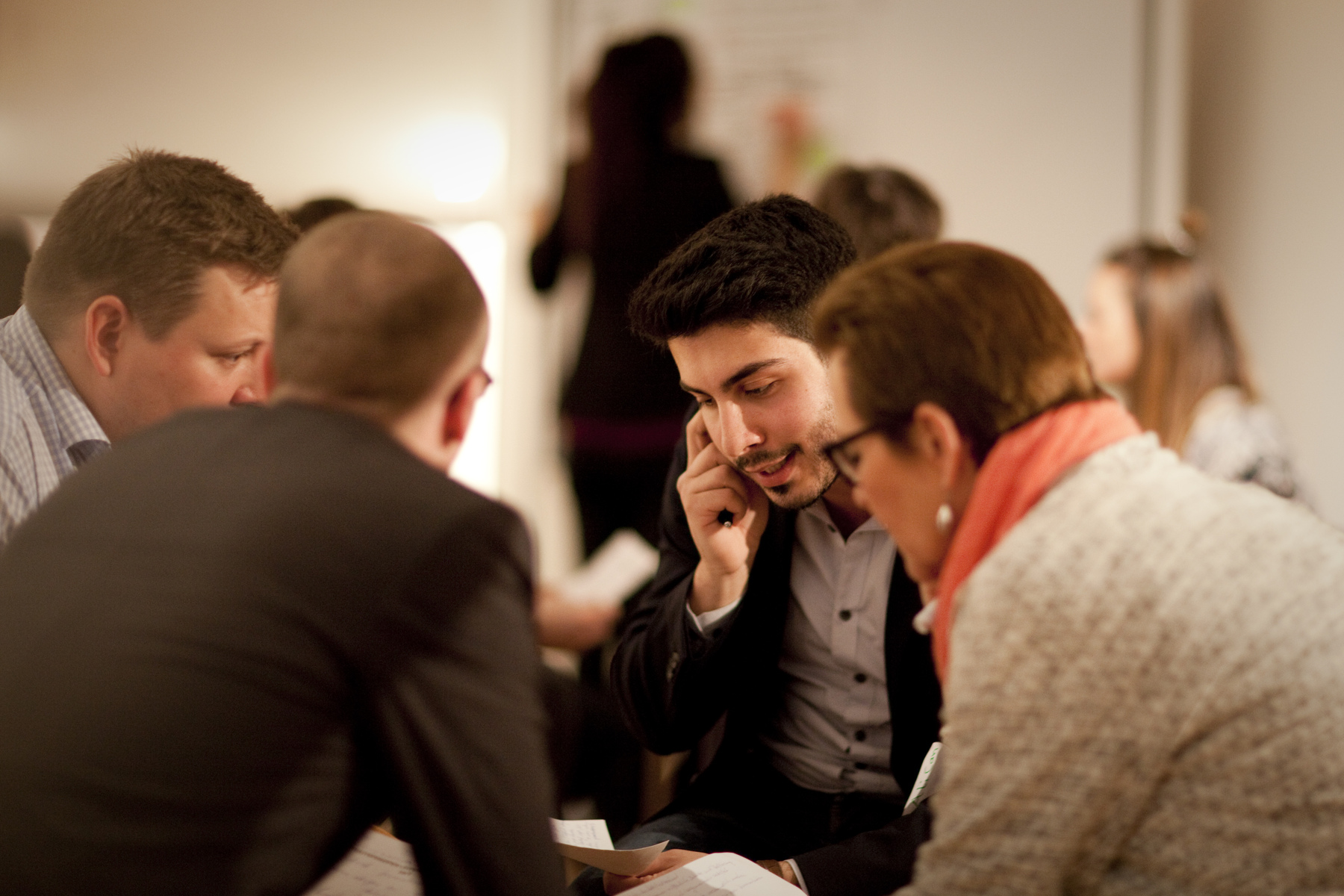
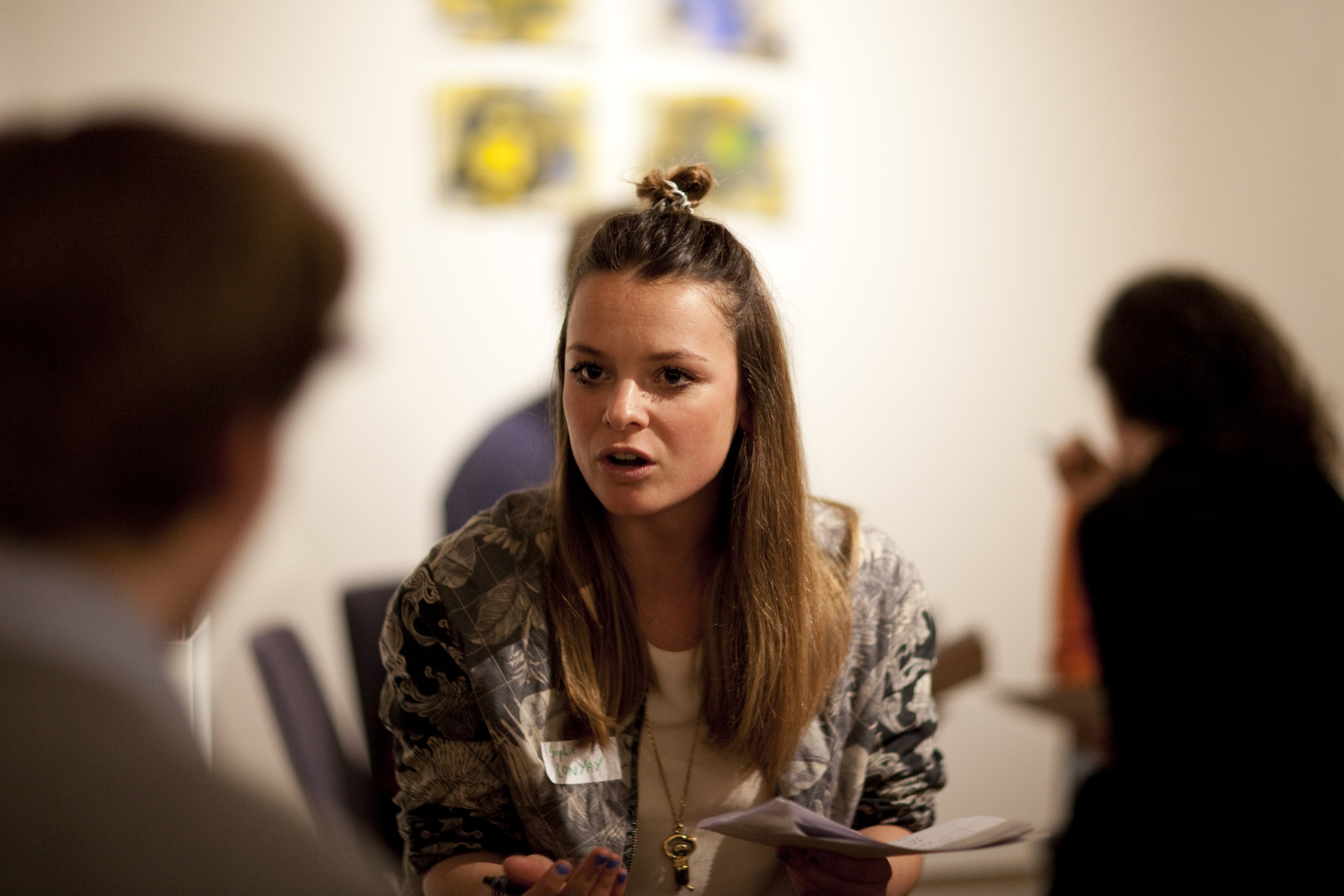
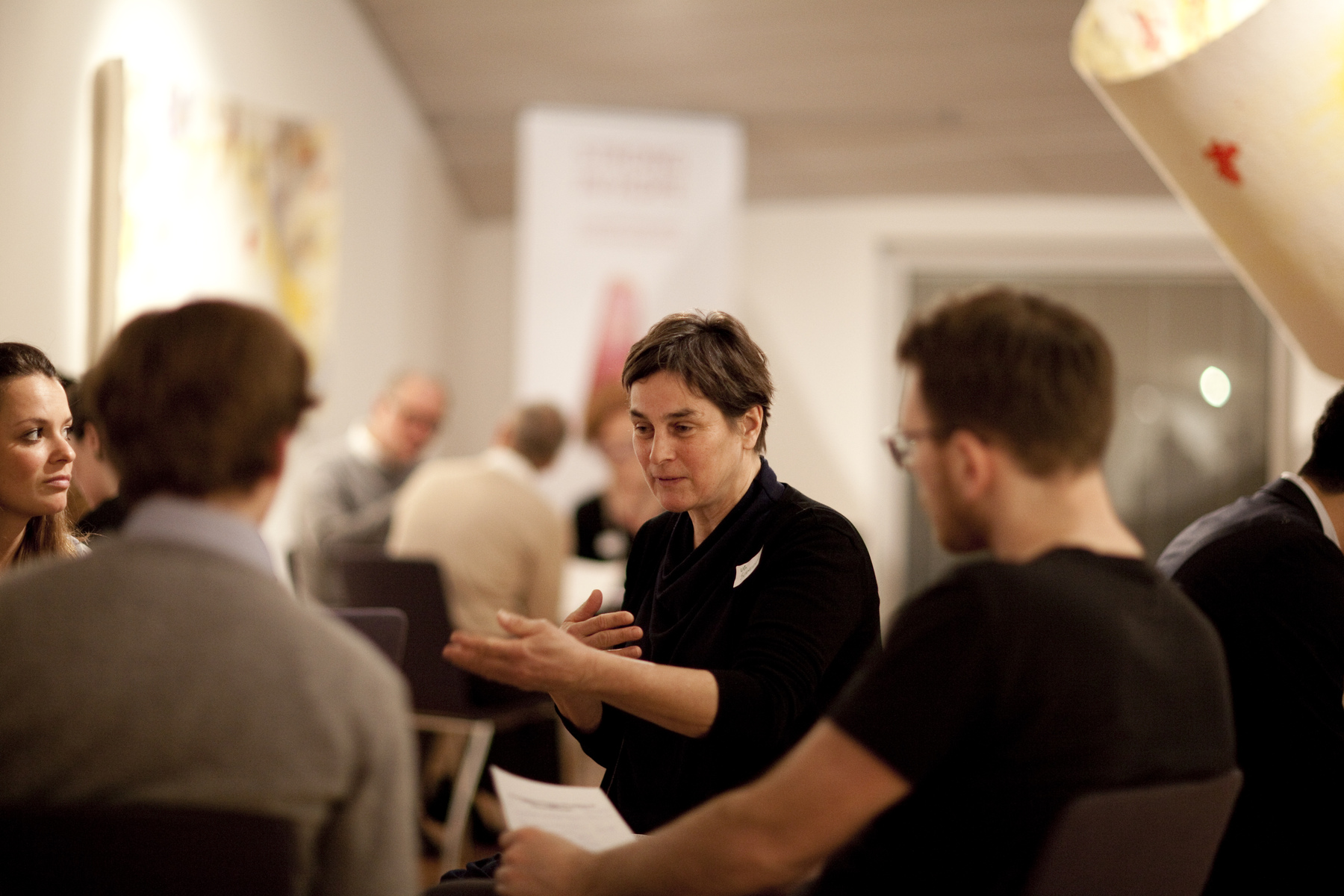
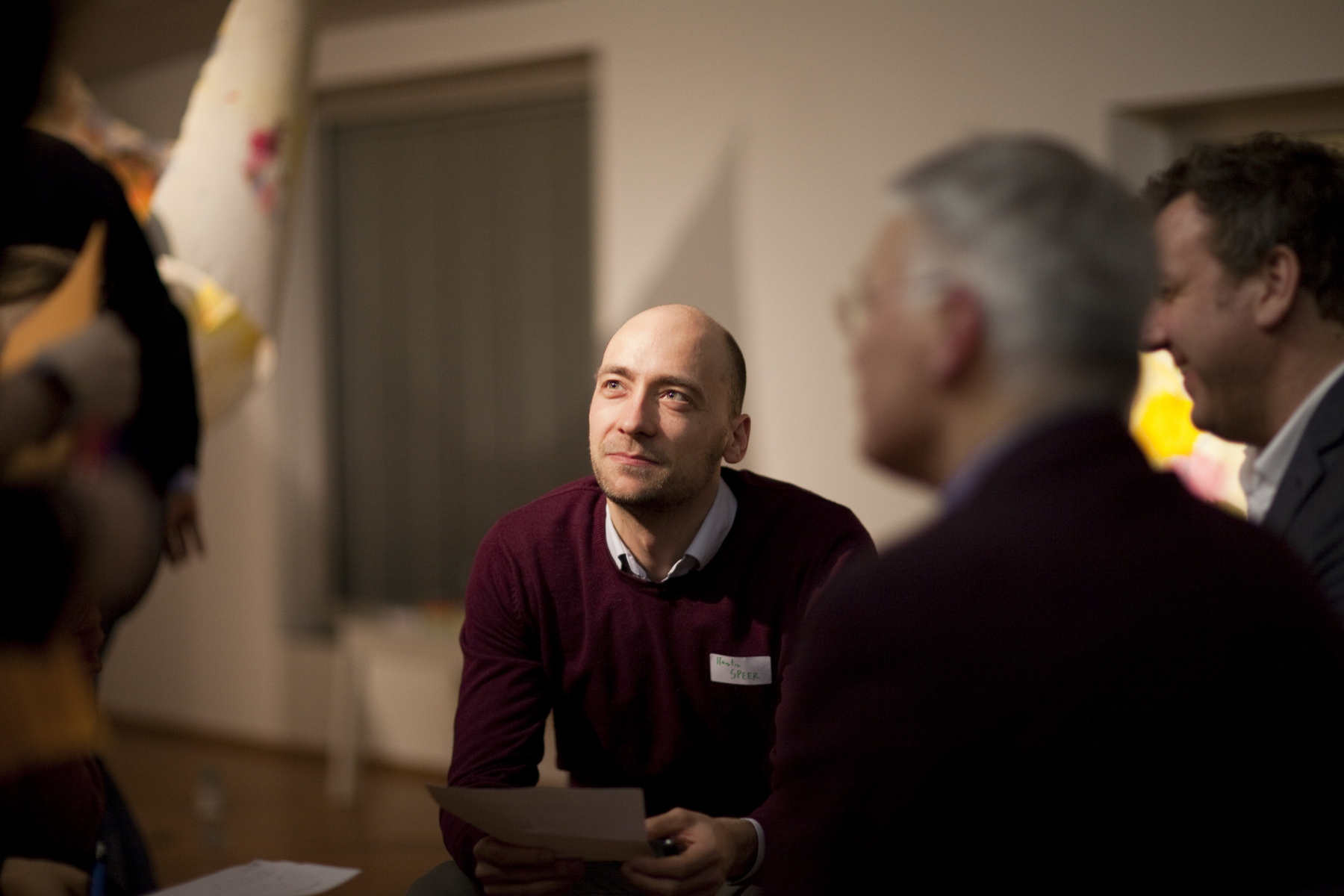
The project is accompanied by discussion events – e.g. on “The potential: The importance of art and culture in change processes” or “Images of women – images of men: How do we want to live together?”, readings and an interaction again on the topic “Images of the future for a new WE”
For the first time in its history, the attic of St. Stephen’s Cathedral is opening its doors to the general public for an art exhibition. As part of the Long Night of Churches on May 29, 2026, Sabine Maier and Beate Winkler will present the installation exhibition “Aufbruch – Dialog in the In-Between” in a space that embodies history, hope, and change.
Our world is changing dramatically. That is why it needs not only spaces for dialogue, but also interstices where encounters and new ways of thinking can take place. It is precisely these possibilities that Maier and Winkler create through their work: between the past and the future, uncertainty and hope, matter and meaning.
In their contrasts – e.g. Sabine Maier works predominantly in black, white and gray and Beate Winkler is intensely colorful in her works; Sabine Maier works on the ground, Beate Winkler’s world is the heights, the floating – both artists complement each other and combine different artistic approaches.
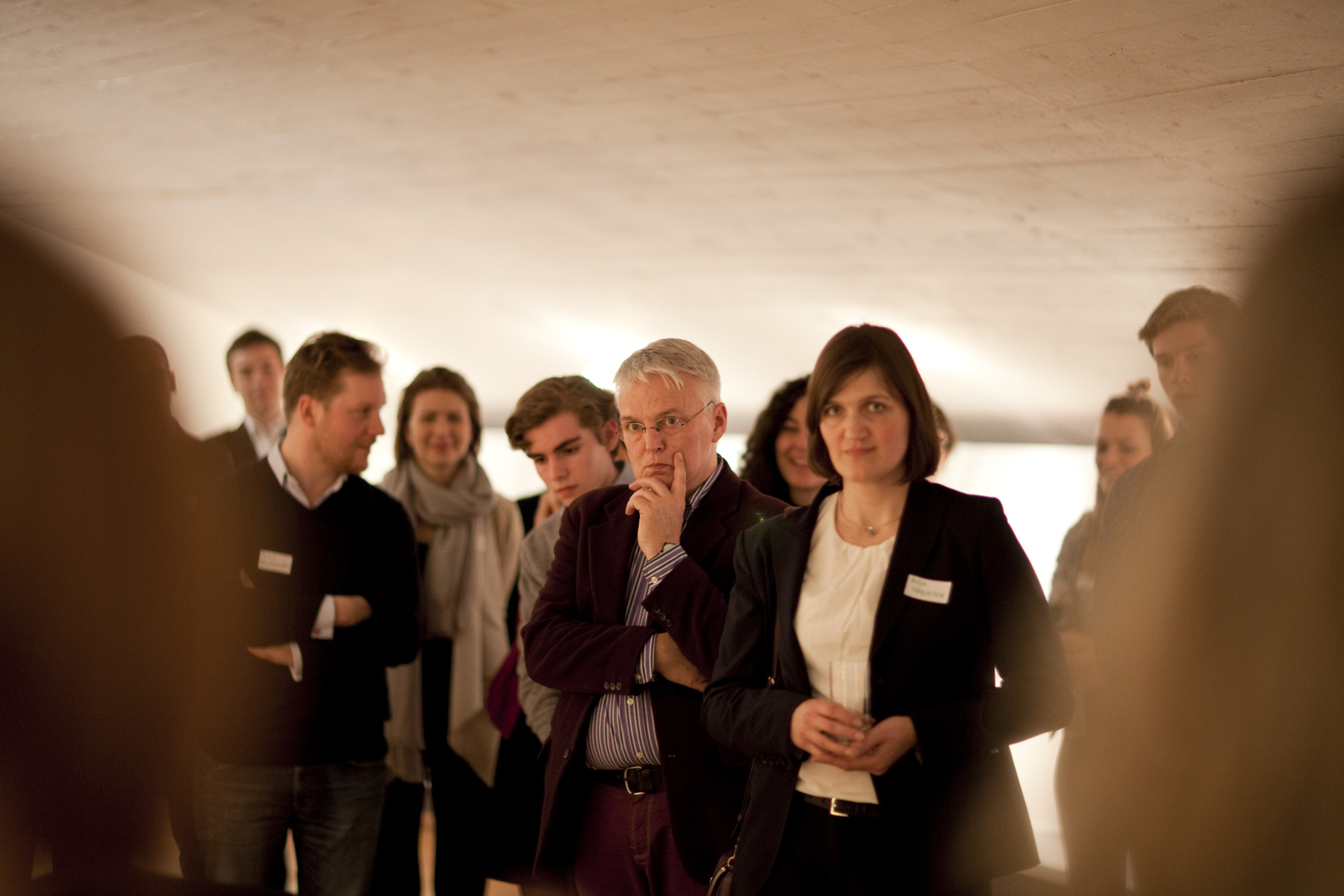
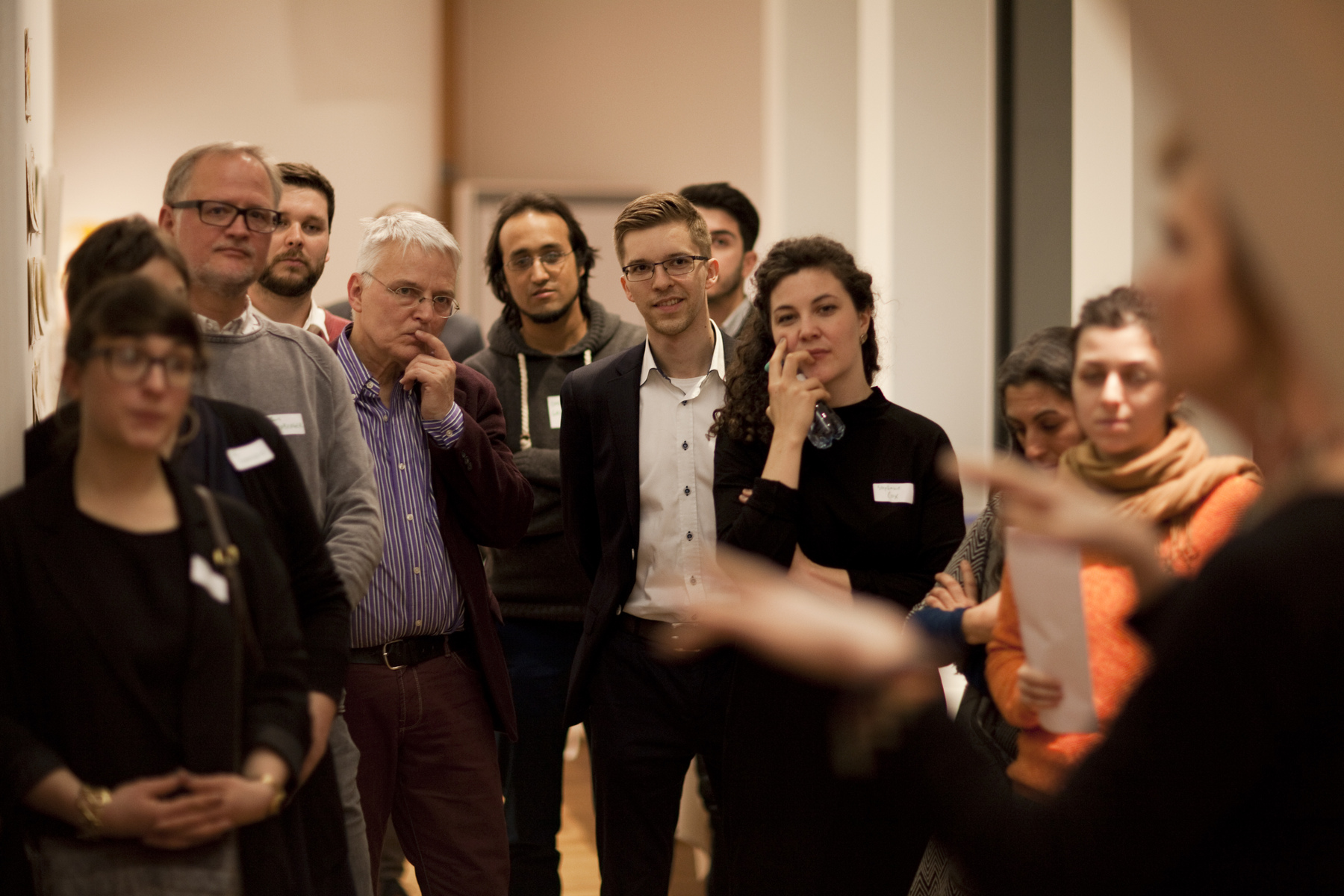
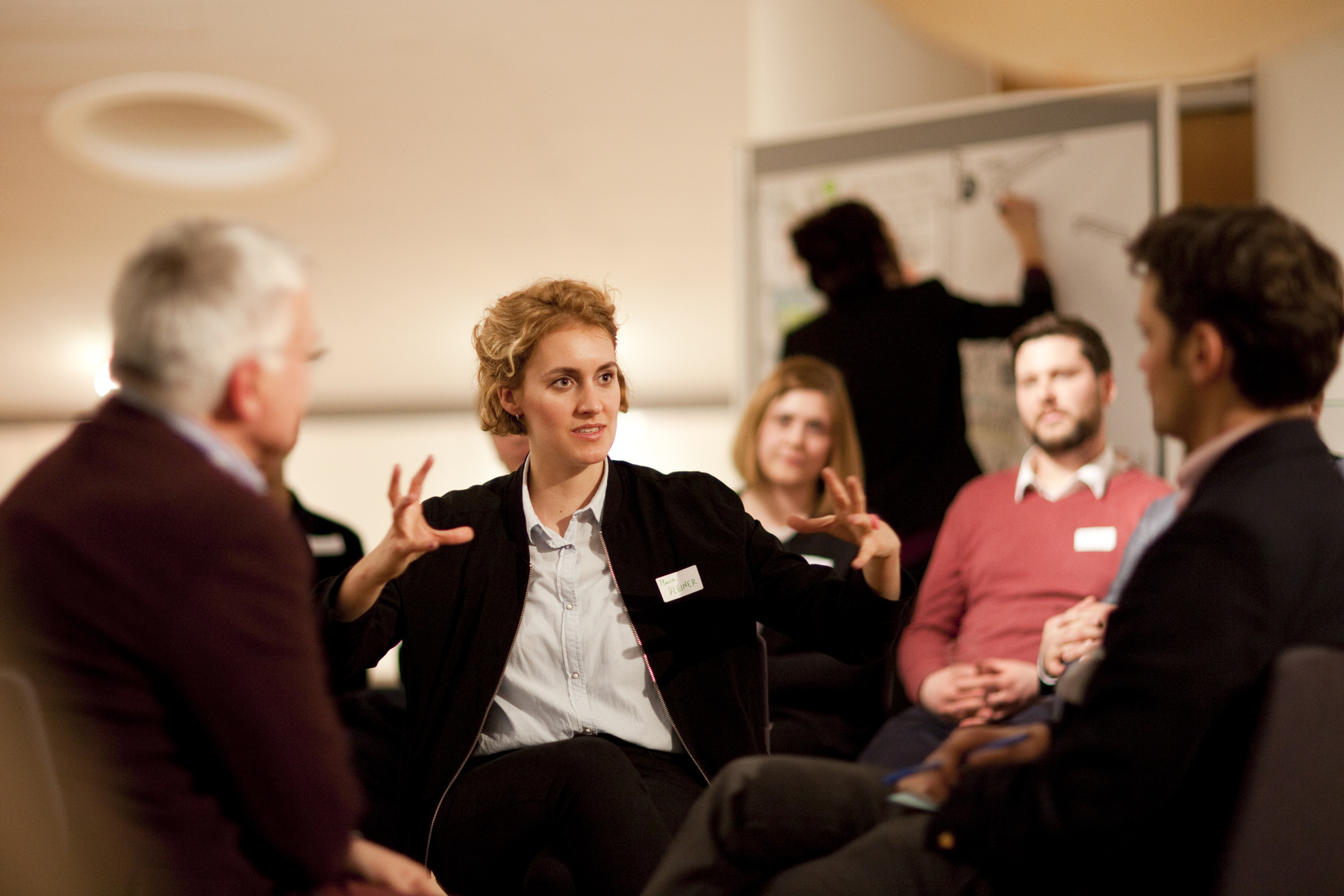
A dialog is created with the space, between the two artists and the visitors, who are involved through interaction. In a place that connects the past and the future, they are asked to share their dreams of a new “WE”.
Sabine Maier collects the invisible – dust and microparticles that carry traces of time, history and memory. Since 2011, she has been developing her long-term project Microcosmos, which takes her from artists’ studios to significant geographical and historical sites. The particles are preserved and arranged in series. In the projection, the fragments appear as floating, luminous image bodies between scientific precision and poetic fragility. It is not photography in the conventional sense, but an artistic translation of matter. Spaces with history preserve invisible traces that can be experienced as fragile image archives. Sabine Maier has been working internationally for over 30 years and her work has been awarded numerous prizes. www.machfeld.net
On 15 September 2022, the exhibition “Transforming” was opened at the Jecza Gallery in Timisoara as the launch event for and part of the “#newTogether” project, in the presence of Mayor Dominik Fritz, Austrian Ambassador Adelheid Folie, gallery owner Sorina Jecza and numerous guests.
This project, organised by the Austrian Cultural Forum in Bucharest in collaboration with Beate Winkler and other organisations, forms part of ‘Timisoara – European Capital of Culture 2023’.
The exhibition “Transforming” is a key component of the #newTogether project, which involved around 100 artists and academics and 24 organisations, and which sought to develop visions of the future and proposed solutions to the problems of our time.
The project also aims to view art as a space for new social initiatives. It covers a range of areas and includes, amongst other things, further artistic works, workshops, a documentary film, interactive elements and, last but not least, a book of visions for a ‘new Together’.
Beate Winkler’s exhibition “TRUST / CHANGE” opened at the Austrian Cultural Forum in Warsaw on 7 March 2019. Here, too, it served as the catalyst and foundation for innovative forms of dialogue. Art as a fundamental resource in times of profound change, shifts in perspective, visions of the future and interaction with visitors were all central themes of the exhibition “Trust/Change”.
The event was accompanied by workshops, a performance and an interactive installation by Beate Winkler. This was summarised under the title “Visions of the Future for a New ‘We’ – Art and Dialogue”.
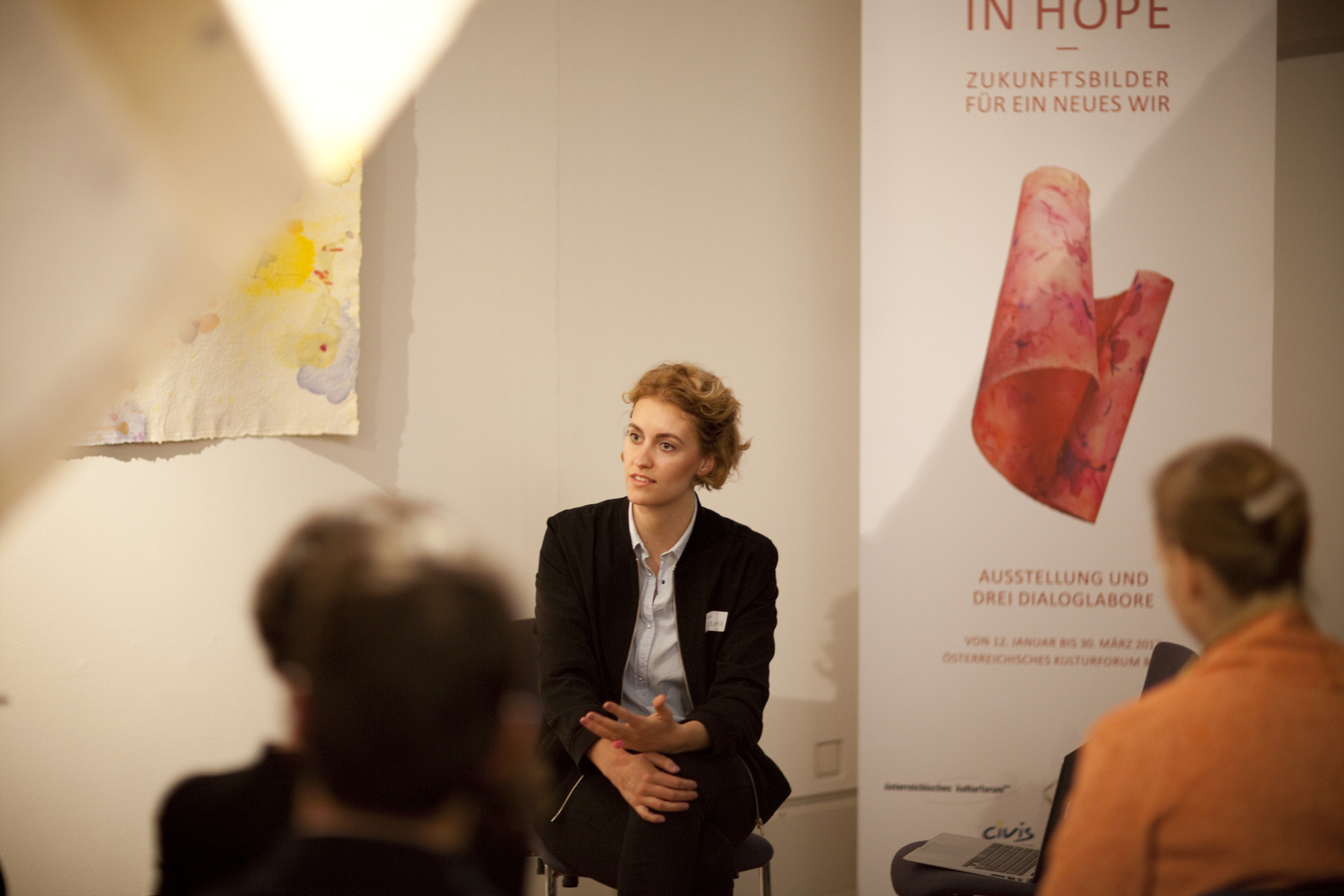
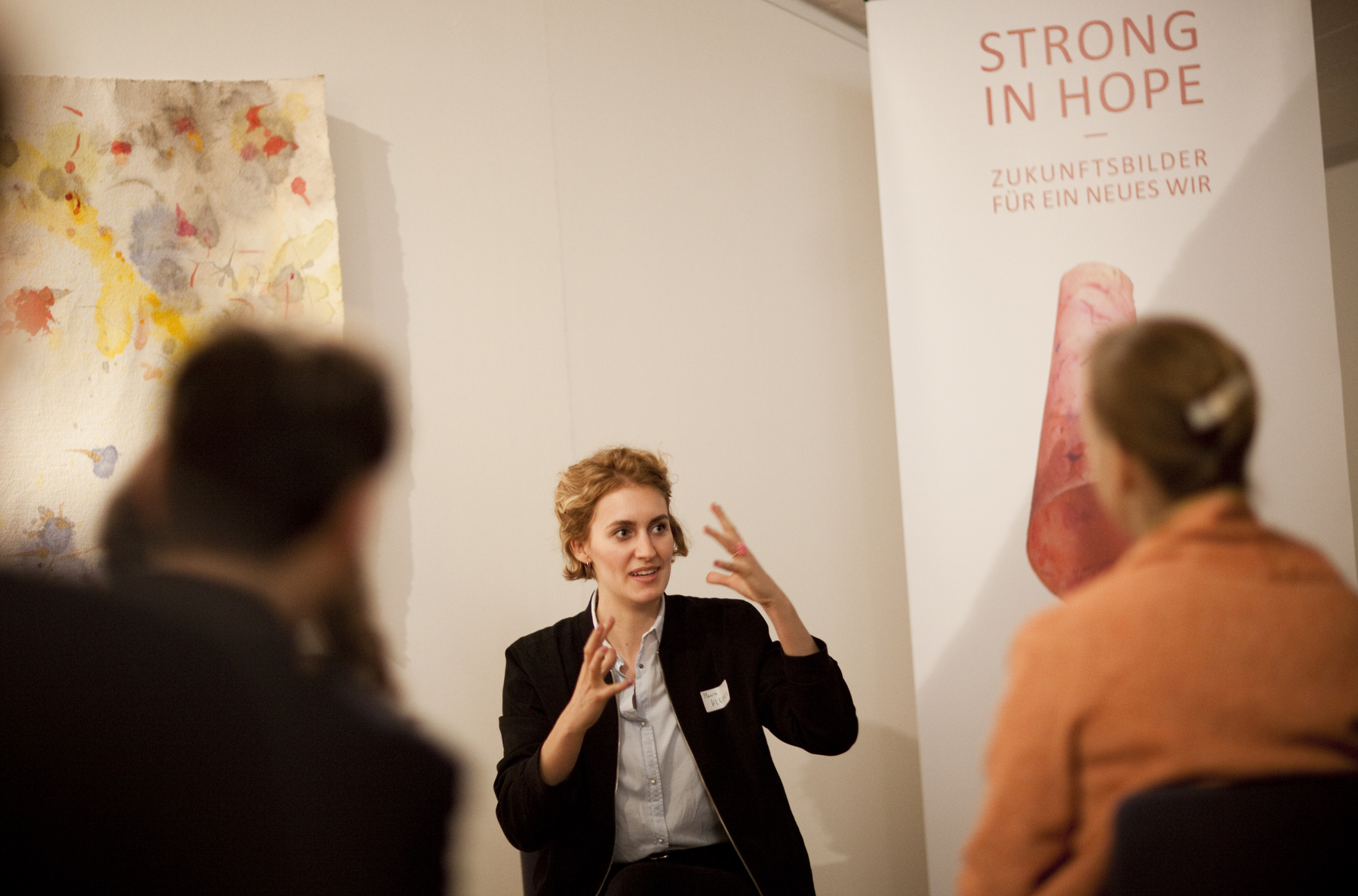
On 11 January 2017, her exhibition “Strong in Hope” opened at the Austrian Cultural Forum in Berlin. The exhibition formed part of the wider project “Strong in Hope – Visions of the Future for a New ‘We’”, which brought together around 100 pioneers from Germany and Austria to develop visions of the future for a new ‘We’.
It is precisely in times of momentous upheaval that art, through its openness and independence, can serve as an important guide to new challenges. Artistic discourse – as Beate Winkler’s work illustrates so beautifully – is not merely a critique of the present or social opposition, but a potent, existential force in general. The less it is reduced to a functional role, the more it can serve as a sensory guide and compass for understanding society.
Carl Aigner, Director of the Lower Austria Museum (St. Pölten), on the exhibition “Strong in Hope”
On 28 March 2017, Beate Winkler exhibited her installation “The Art of Change” at the Federal Press Conference Centre in Berlin. Here, too, she combined her art with a talk.
Pictures by Beate Winkler have been exhibited in Graz, for example. The exhibition “Welten – Tore” was on display at the Graz Airport Gallery from May 21 to July 12, 2012.